


Hyaluronic acid in the treatment of dry eye disease
- PMID: 35514082
- PMCID: PMC9790727
- DOI: 10.1111/aos.15159
Hyaluronic acid in the treatment of dry eye disease
Abstract
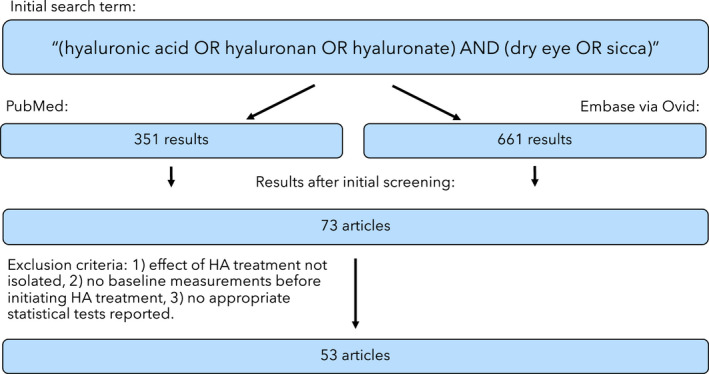
Dry eye disease (DED) is a highly prevalent and debilitating condition affecting several hundred million people worldwide. Hyaluronic acid (HA) is a naturally occurring glycosaminoglycan commonly used in the treatment of DED. This review aims to critically evaluate the literature on the safety and efficacy of artificial tears containing HA used in DED treatment. Literature searches were conducted in PubMed, including MEDLINE, and in Embase via Ovid with the search term: "(hyaluronic acid OR hyaluronan OR hyaluronate) AND (dry eye OR sicca)". A total of 53 clinical trials are included in this review, including eight placebo-controlled trials. Hyaluronic acid concentrations ranged from 0.1% to 0.4%. Studies lasted up to 3 months. A broad spectrum of DED types and severities was represented in the reviewed literature. No major complications or adverse events were reported. Artificial tears containing 0.1% to 0.4% HA were effective at improving both signs and symptoms of DED. Two major gaps in the literature have been identified: 1. no study investigated the ideal drop frequency for HA-containing eyedrops, and 2. insufficient evidence was presented to recommend any specific HA formulation over another. Future investigations assessing the optimal drop frequency for different concentrations and molecular weights of HA, different drop formulations, including tonicity, and accounting for DED severity and aetiology are essential for an evidence-based, individualized approach to DED treatment.
Keywords: artificial tears; dry eye disease; dry eye treatment; hyaluronate; hyaluronic acid.
© 2022 The Authors. Acta Ophthalmologica published by John Wiley & Sons Ltd on behalf of Acta Ophthalmologica Scandinavica Foundation.
Figures
References
-
- Ali M & Byrne ME (2009): Controlled release of high molecular weight hyaluronic acid from molecularly imprinted hydrogel contact lenses. Pharm Res 26: 714–726. - PubMed
Publication types
MeSH terms
Substances
Grants and funding
LinkOut - more resources
Full Text Sources
Other Literature Sources
