


Highly conductive carbon-based aqueous inks toward electroluminescent devices, printed capacitive sensors and flexible wearable electronics
- PMID: 35514818
- PMCID: PMC9064188
- DOI: 10.1039/c9ra01721f
Highly conductive carbon-based aqueous inks toward electroluminescent devices, printed capacitive sensors and flexible wearable electronics
Abstract
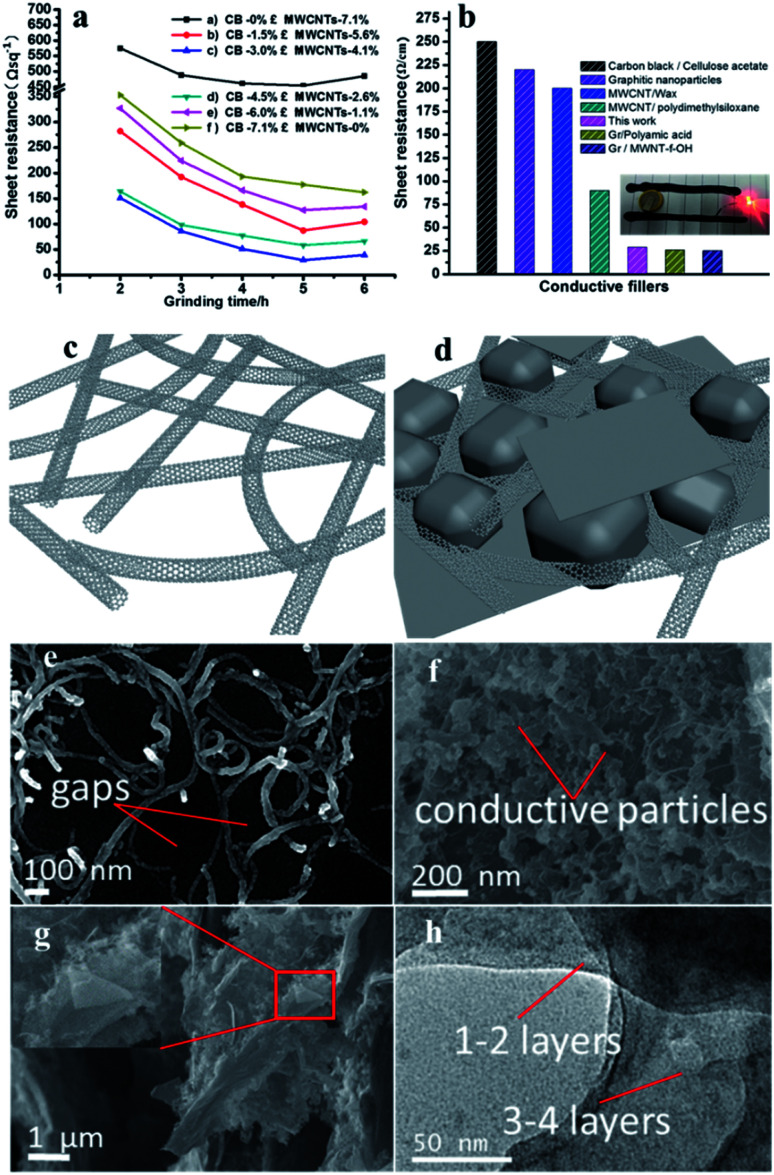
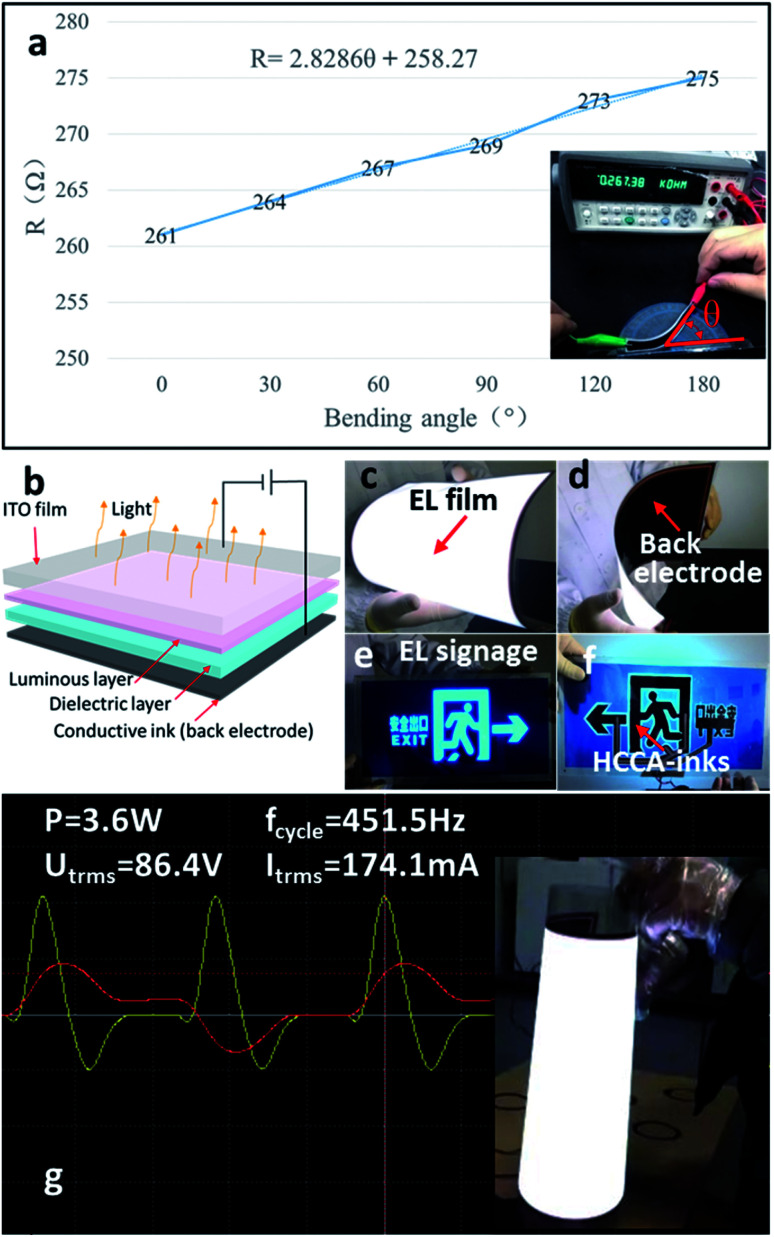
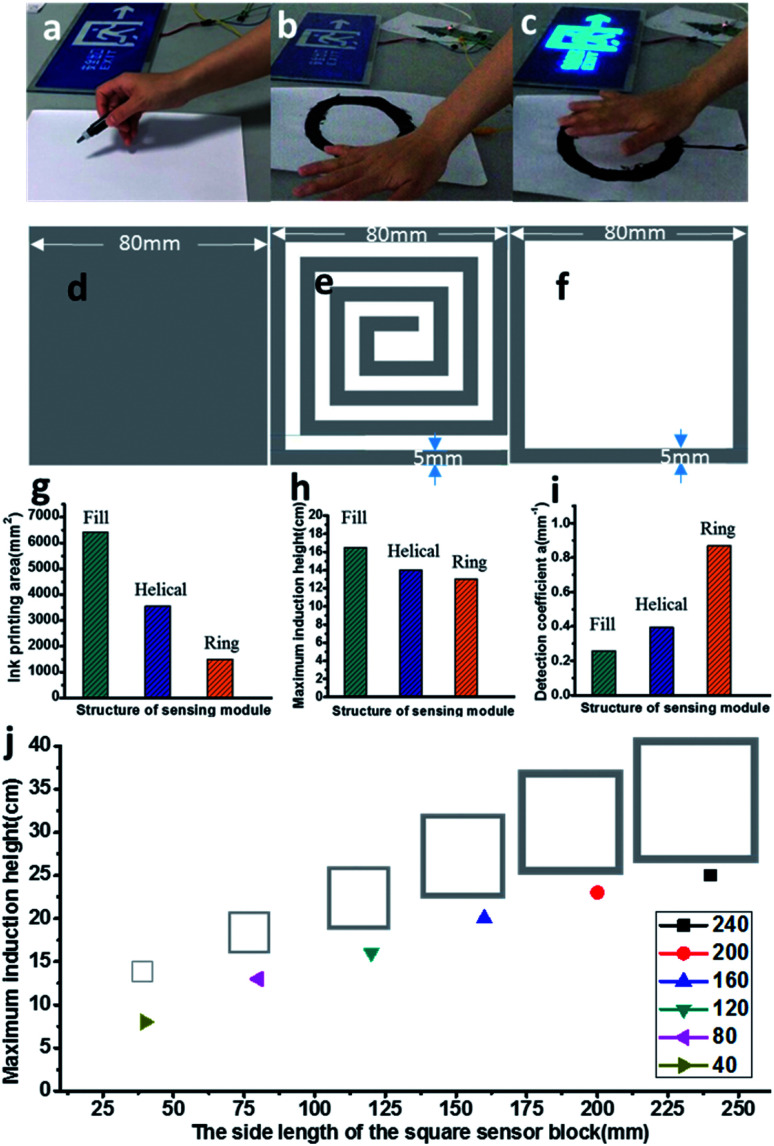
Carbon-based conductive inks are one of the most important materials in the field of printing electronics. However, most carbon-based conductive inks with small electrical resistance are expensive, such as graphene. It limits the commercial use of carbon inks in the fields of flexible electronics and printed electronics. Here, we propose a low-cost and environmentally friendly formula based on dihydroxyphenyl-functionalized multi-walled carbon nanotubes (MWNT-f-OH)/carbon black/graphite as conductive fillers and waterborne acrylic resins as binders for preparing highly conductive carbon-based aqueous inks (HCCA-inks). Our study showed that when the mass fraction of carbon black, graphite and MWNT-f-OH was 3.0%, 10.2% and 4.1%, respectively, on a thickness of 40 μm, optimal conductivity (sheet resistance up to 29 Ω sq-1) was achieved, and the printed HCCA-inks on a paper could withstand extremely high folding cycles (>2000 cycles) while the resistance value of the flexible circuit only increased by 11%. The carbon-based aqueous inks showed high electrical conductivity and excellent mechanical stability, which makes it possible for them to be used as flexible wearable electronics, electroluminescent (EL) devices and printed capacitive sensors.
This journal is © The Royal Society of Chemistry.
Conflict of interest statement
There are no conflicts to declare.
Figures
References
-
- He L. X. Tjong S. C. J. Mater. Chem. C. 2016;4:7043–7051. doi: 10.1039/C6TC01224H. - DOI
-
- Georgakilas V. Demeslis A. Ntararas E. Kouloumpis A. Dimos K. Gournis D. Kocman M. Otyepka M. Zboril R. Adv. Funct. Mater. 2015;25:1481–1487. doi: 10.1002/adfm.201403801. - DOI
-
- Tehrani Z. Korochkina T. Govindarajan S. Thomas D. J. O'Mahony J. Kettle J. Claypole T. C. Gethin D. T. Org. Electron. 2015;26:386–394. doi: 10.1016/j.orgel.2015.08.007. - DOI
LinkOut - more resources
Full Text Sources
