


Medical Students' Non-Technical Skills (Medi-StuNTS): preliminary work developing a behavioural marker system for the non-technical skills of medical students in acute care
- PMID: 35514943
- PMCID: PMC8936547
- DOI: 10.1136/bmjstel-2018-000310
Medical Students' Non-Technical Skills (Medi-StuNTS): preliminary work developing a behavioural marker system for the non-technical skills of medical students in acute care
Abstract
Introduction: Good non-technical skills (NTS) are critical to the delivery of high-quality patient care. It is increasingly recognised that training in such skills should be incorporated into primary medical training curricula. This study aimed to develop an NTS behavioural marker system (BMS), specifically applicable to medical students, for use within simulated acute care scenarios.
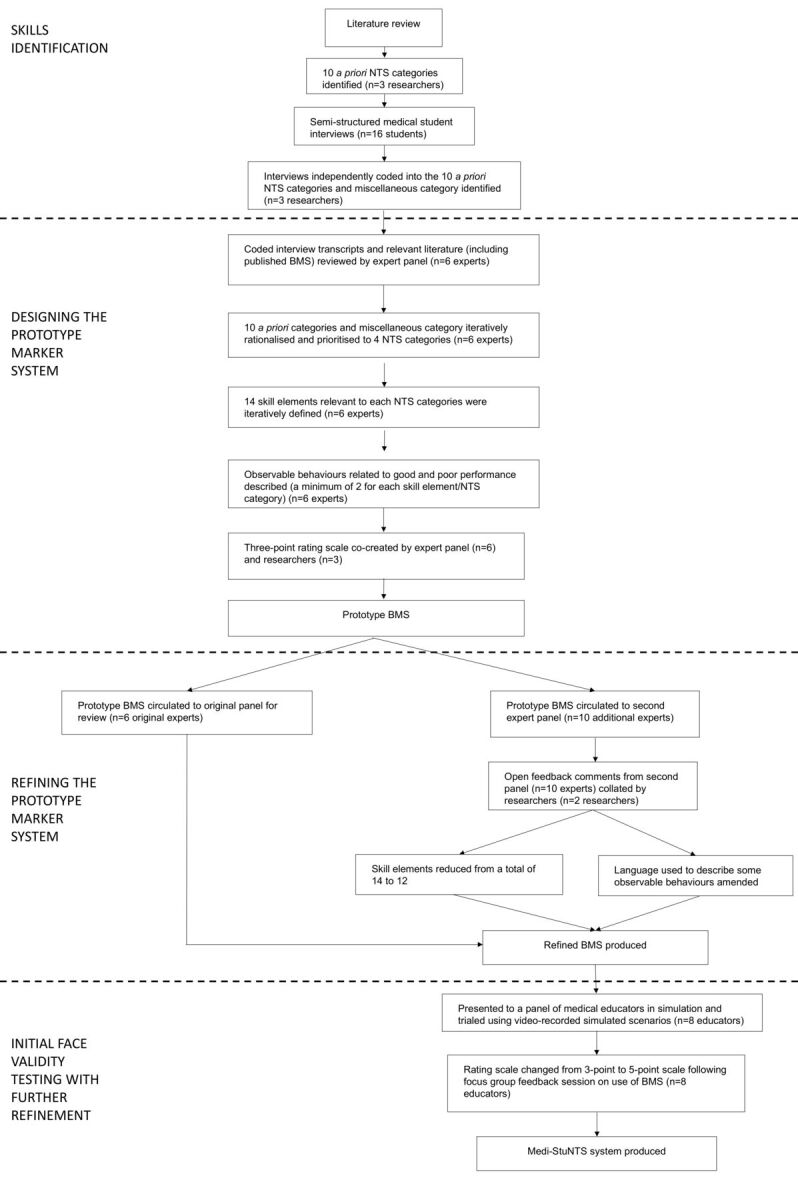
Methods: The methodology used to develop other BMS was adopted and modified. Following ethical approval, 16 final year medical students participated in acute care simulated scenarios. Semistructured interviews were performed to gauge the understanding of NTS. A panel meeting of subject matter experts was convened to translate key NTS into skill elements and observable behaviours. A second expert panel was consulted to refine aspects of the BMS. Further refinement and initial face validity was undertaken by a third panel of experts using the prototype BMS to observe prerecorded simulation scenarios.
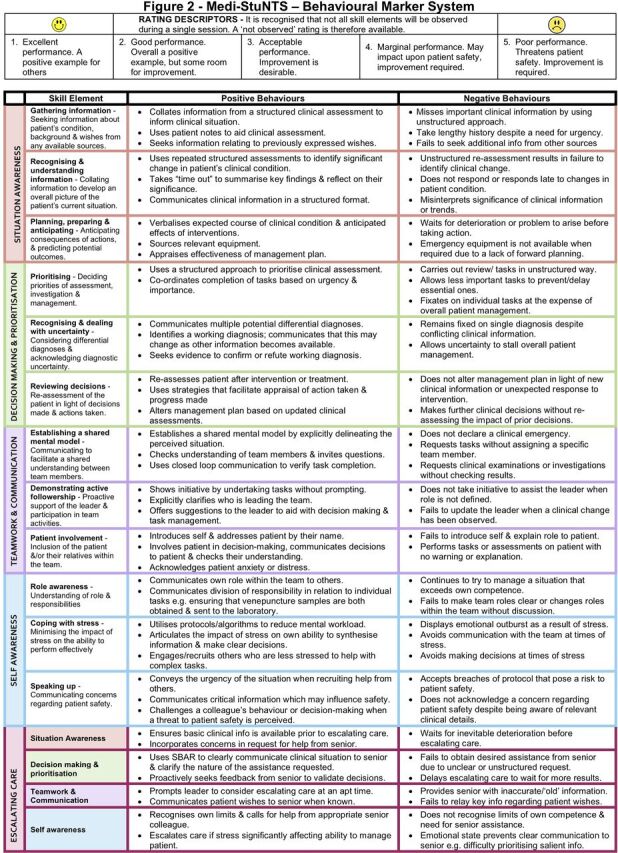
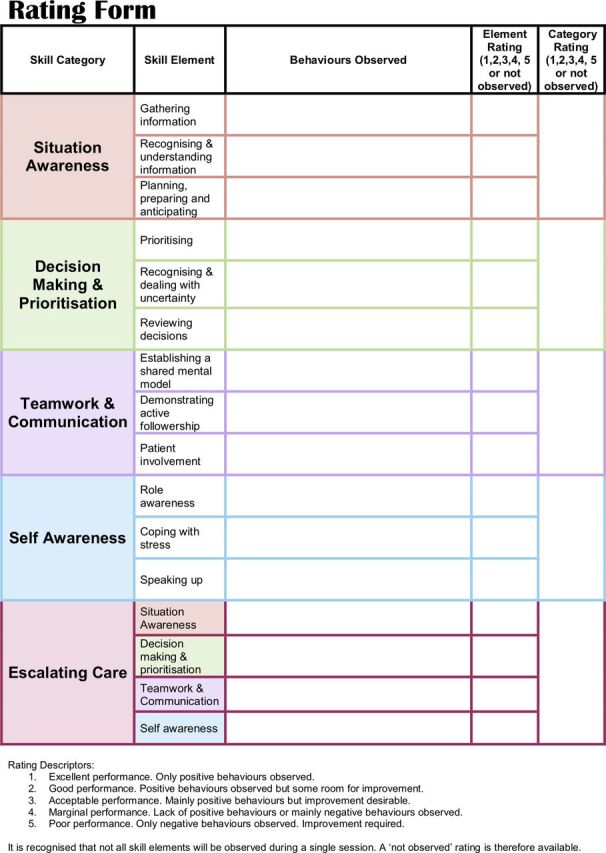
Results: Five categories of NTS were identified: situation awareness, teamwork and communication, decision-making and prioritisation, self-awareness, and escalating care. Observable behaviours in each category describe good and poor performance. Escalating care was identified as a unique component that incorporated behaviours related to each of the other four skill categories. A 5-point rating scale was developed to enable both peer-to-peer and tutor-to-student feedback.
Conclusion: The Medi-StuNTS (Medical Students' Non-Technical Skills) system is the first BMS for the NTS of medical students. It reinforces the importance of escalating care effectively. It provides an exciting opportunity to provide feedback to medical students and may ultimately aid their preparedness for professional practice.
Keywords: acute care; medical students; non-technical skills; simulation.
© Article author(s) (or their employer(s) unless otherwise stated in the text of the article) 2019. All rights reserved. No commercial use is permitted unless otherwise expressly granted.
Conflict of interest statement
Competing interests: None declared.
Figures
References
-
- Flin RH, O’Connor P, Crichton M. Safety at the sharp end: a guide to non-technical skills: Aldershot, England; Burlington, VT: Ashgate, 2008:317.
-
- Institute of Medicine (US) Committee on Quality of Health Care in America. To Err is Human: Building a Safer Health System [Internet]. In: Kohn LT, Corrigan JM, Donaldson MS, eds. Washington (DC): National Academies Press (US), 2000. http://www.ncbi.nlm.nih.gov/books/NBK225182/ (accessed 3 Jan 2017). - PubMed
-
- Thomson R. The fifth report from the Patient Safety Observatory - Safer care for the acutely ill patient: learning from serious incident. [Internet]: NHS National Patient Safety Agency, 2007. http://www.nrls.npsa.nhs.uk/resources/?EntryId45=59828 (accessed 2 Jan 2017).
LinkOut - more resources
Full Text Sources