


Use of three-dimensional printing for simulation in ultrasound education: a scoping review
- PMID: 35515717
- PMCID: PMC8936891
- DOI: 10.1136/bmjstel-2020-000663
Use of three-dimensional printing for simulation in ultrasound education: a scoping review
Abstract
Background: There is a significant learning curve when teaching ultrasonography to medical trainees; task trainers can help learners to bridge this gap and develop their skills. Three-dimensional printing technology has the potential to be a great tool in the development of such simulators.
Objective: This scoping review aimed to identify what 3D-printed models have been used in ultrasound education to date, how they were created and the pros and limitations involved.
Design: Researchers searched three online databases to identify 3D-printed ultrasound models used in medical education.
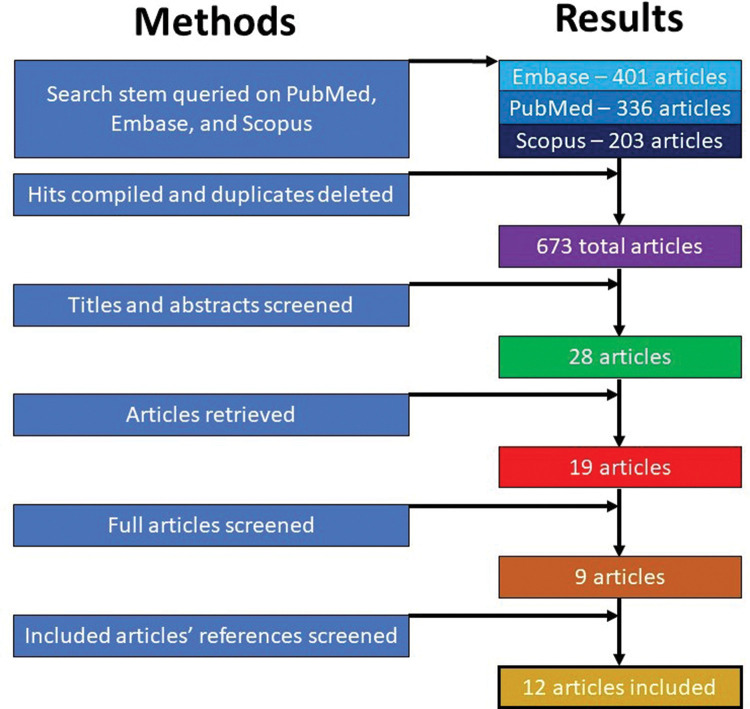
Results: Twelve suitable publications were identified for inclusion in this review. The models from included articles simulated largely low frequency and/or high stakes events, with many models simulating needle guidance procedures. Most models were created by using patient imaging data and a computer-aided design software to print structures directly or print casting molds. The benefits of 3D-printed educational trainers are their low cost, reproducibility, patient specificity and accuracy. The current limitations of this technology are upfront investments and a lack of optimisation of materials.
Conclusions: The use of 3D-printed ultrasound task trainers is in its infancy, and more research is needed to determine whether or not this technology will benefit medical learners in the future.
Keywords: Education; Simulation Based Education; Task Trainers And Clinical Skills Centers; Ultrasound.
© Author(s) (or their employer(s)) 2021. No commercial re-use. See rights and permissions. Published by BMJ.
Conflict of interest statement
Competing interests: None declared.
Figures
References
-
- Law YC, Knott T, Pick, et al. Simulation-based ultrasound training supported by annotations, haptics and linked multimodal views. Eg Vcbm 2015;167–172. 10.2312/vcbm.20151220 - DOI
Publication types
LinkOut - more resources
Full Text Sources
Miscellaneous