


Highly crystalline and uniform conjugated polymer thin films by a water-based biphasic dip-coating technique minimizing the use of halogenated solvents for transistor applications
- PMID: 35517306
- PMCID: PMC9060937
- DOI: 10.1039/c8ra09231a
Highly crystalline and uniform conjugated polymer thin films by a water-based biphasic dip-coating technique minimizing the use of halogenated solvents for transistor applications
Abstract
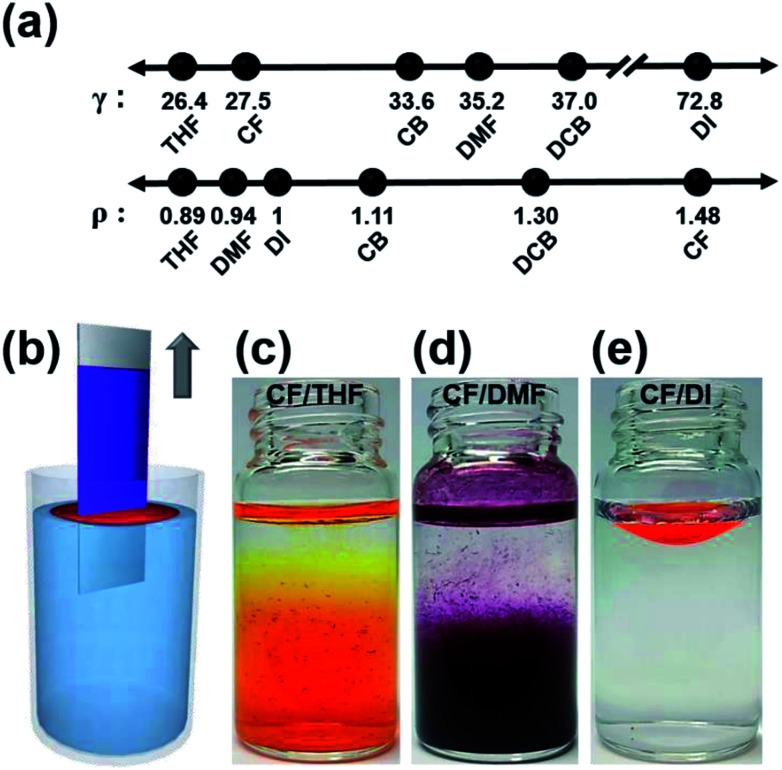
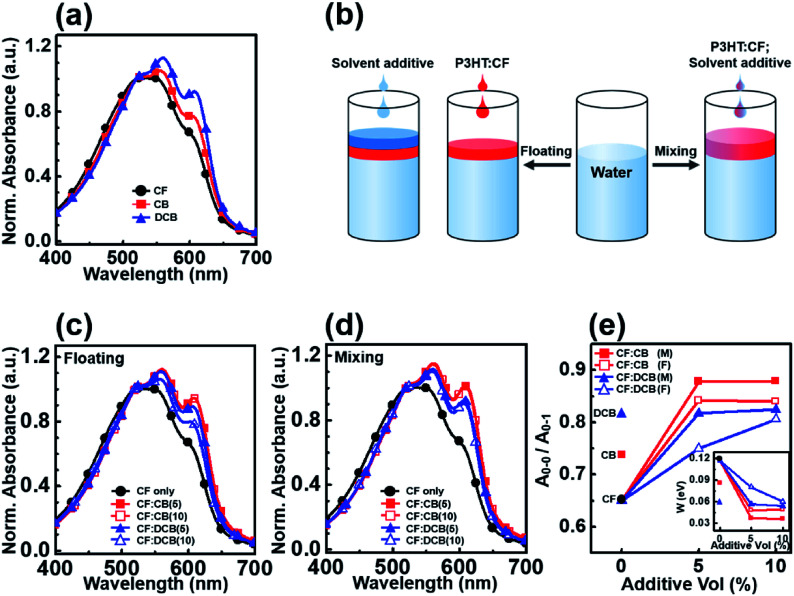
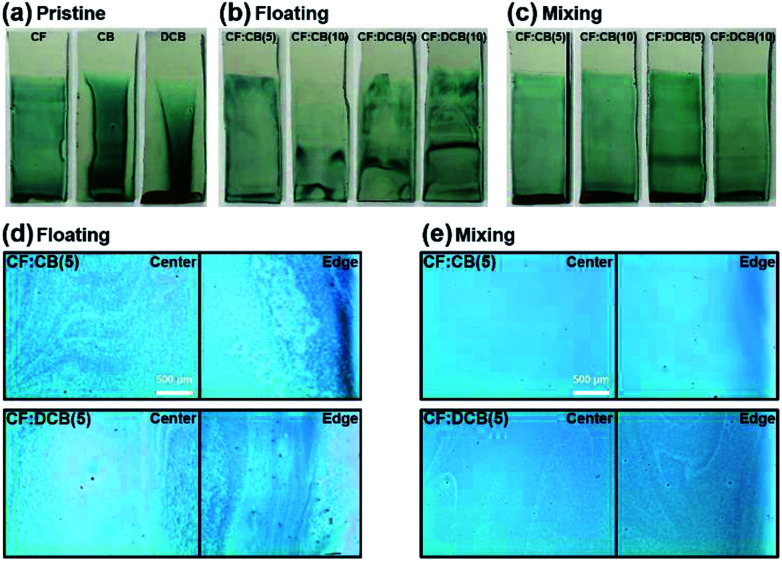
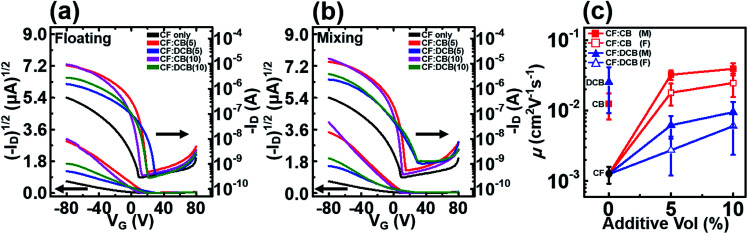
The commercialization of organic electronics will require minimizing the use of halogenated solvents used to solution-process organic semiconductors, which is a crucial step for large-area coating methods, such as the dip-coating method. Here, we report a novel biphasic dip-coating method which uses a water-based biphasic solution and produces a uniform, smooth, and crystalline conjugated polymer thin film in the presence of a solvent additive. We demonstrated that a solvent additive with a high boiling point and solubility parameter similar to that of the solution affected the solvent evaporation rate and improved the crystallinity of the dip-coated polymer thin film. The method used to add the solvent strongly influenced how the solvent additive diffused into the polymer solution, which affected the resulting film morphology. The crystallinity and morphology of the polymer films were correlated with the electrical characteristics, and the most crystalline film displayed a high hole field effect mobility of 0.0391 cm2 V-1 s-1 when processed from the solvent mixture without post-treatment. Our findings provide a direction for the development of reliable and promising organic thin film transistor technologies.
This journal is © The Royal Society of Chemistry.
Conflict of interest statement
There are no conflicts to declare.
Figures

Similar articles
-
Effect of localized UV irradiation on the crystallinity and electrical properties of dip-coated polythiophene thin films.RSC Adv. 2020 Sep 15;10(56):34130-34136. doi: 10.1039/d0ra06339h. eCollection 2020 Sep 10. RSC Adv. 2020. PMID: 35519062 Free PMC article.
-
Cyclopentadithiophene-Benzothiadiazole Donor-Acceptor Polymers as Prototypical Semiconductors for High-Performance Field-Effect Transistors.Acc Chem Res. 2018 May 15;51(5):1196-1205. doi: 10.1021/acs.accounts.8b00025. Epub 2018 Apr 17. Acc Chem Res. 2018. PMID: 29664608
-
A Simple Structure Conjugated Polymer for High Mobility Organic Thin Film Transistors Processed from Nonchlorinated Solvent.Adv Sci (Weinh). 2019 Oct 29;6(24):1902412. doi: 10.1002/advs.201902412. eCollection 2019 Dec. Adv Sci (Weinh). 2019. PMID: 31871875 Free PMC article.
-
Review of the Common Deposition Methods of Thin-Film Pentacene, Its Derivatives, and Their Performance.Polymers (Basel). 2022 Mar 10;14(6):1112. doi: 10.3390/polym14061112. Polymers (Basel). 2022. PMID: 35335442 Free PMC article. Review.
-
Meniscus-Guided Deposition of Organic Semiconductor Thin Films: Materials, Mechanism, and Application in Organic Field-Effect Transistors.Small. 2023 Jun;19(22):e2300151. doi: 10.1002/smll.202300151. Epub 2023 Mar 3. Small. 2023. PMID: 36869409 Review.
References
-
- Mandal S. Noh Y.-Y. Semicond. Sci. Technol. 2015;30:064003. doi: 10.1088/0268-1242/30/6/064003. - DOI
LinkOut - more resources
Full Text Sources
