


PolyReco: A Method to Automatically Label Collinear Regions and Recognize Polyploidy Events Based on the K S Dotplot
- PMID: 35518356
- PMCID: PMC9065682
- DOI: 10.3389/fgene.2022.842387
PolyReco: A Method to Automatically Label Collinear Regions and Recognize Polyploidy Events Based on the K S Dotplot
Abstract
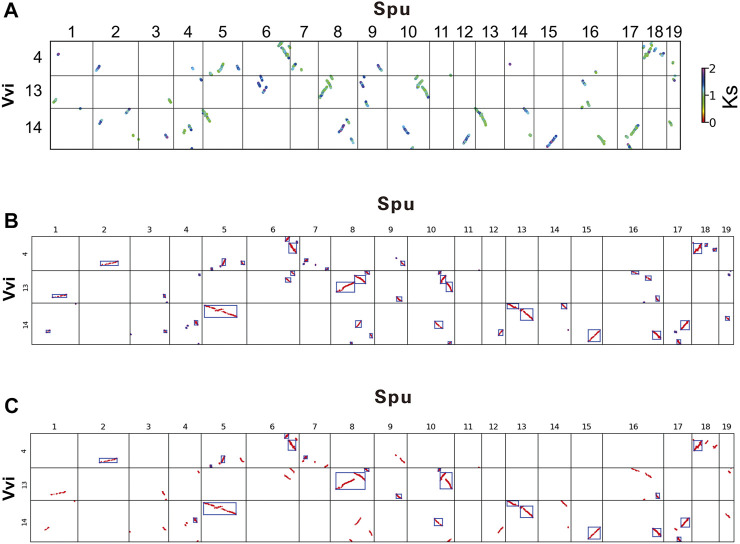
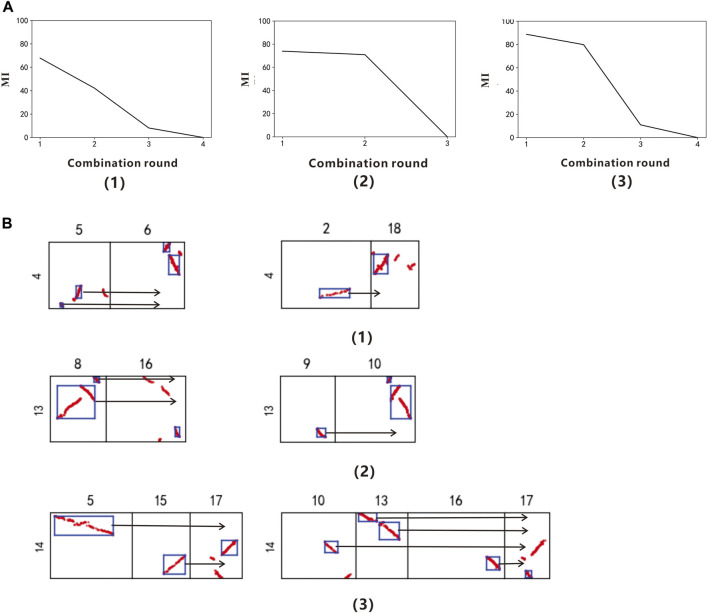
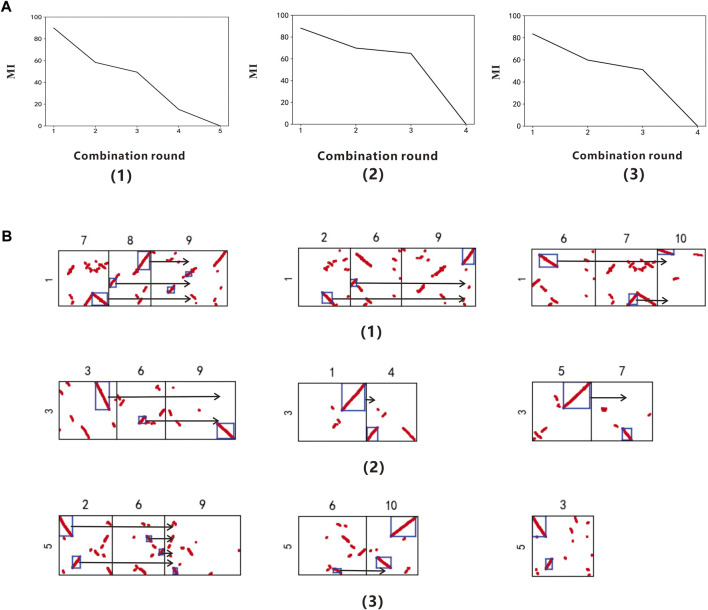
Polyploidization plays a critical role in producing new gene functions and promoting species evolution. Effective identification of polyploid types can be helpful in exploring the evolutionary mechanism. However, current methods for detecting polyploid types have some major limitations, such as being time-consuming and strong subjectivity, etc. In order to objectively and scientifically recognize collinearity fragments and polyploid types, we developed PolyReco method, which can automatically label collinear regions and recognize polyploidy events based on the K S dotplot. Combining with whole-genome collinearity analysis, PolyReco uses DBSCAN clustering method to cluster K S dots. According to the distance information in the x-axis and y-axis directions between the categories, the clustering results are merged based on certain rules to obtain the collinear regions, automatically recognize and label collinear fragments. According to the information of the labeled collinear regions on the y-axis, the polyploidization recognition algorithm is used to exhaustively combine and obtain the genetic collinearity evaluation index of each combination, and then draw the genetic collinearity evaluation index graph. Based on the inflection point on the graph, polyploid types and related chromosomes with polyploidy signal can be detected. The validation experiments showed that the conclusions of PolyReco were consistent with the previous study, which verified the effectiveness of this method. It is expected that this approach can become a reference architecture for other polyploid types classification methods.
Keywords: DBSCAN; chromosome; clustering; collinearity fragment; polyploidy.
Copyright © 2022 Wang, Zhang, Zhang, Liu, Zhang, Jia and Wang.
Conflict of interest statement
The authors declare that the research was conducted in the absence of any commercial or financial relationships that could be construed as a potential conflict of interest.
Figures
References
LinkOut - more resources
Full Text Sources
