


Cirrhosis and Coagulopathy: Mechanisms of Hemostasis Changes in Liver Failure and Their Management
- PMID: 35518552
- PMCID: PMC9063731
- DOI: 10.7759/cureus.23785
Cirrhosis and Coagulopathy: Mechanisms of Hemostasis Changes in Liver Failure and Their Management
Abstract
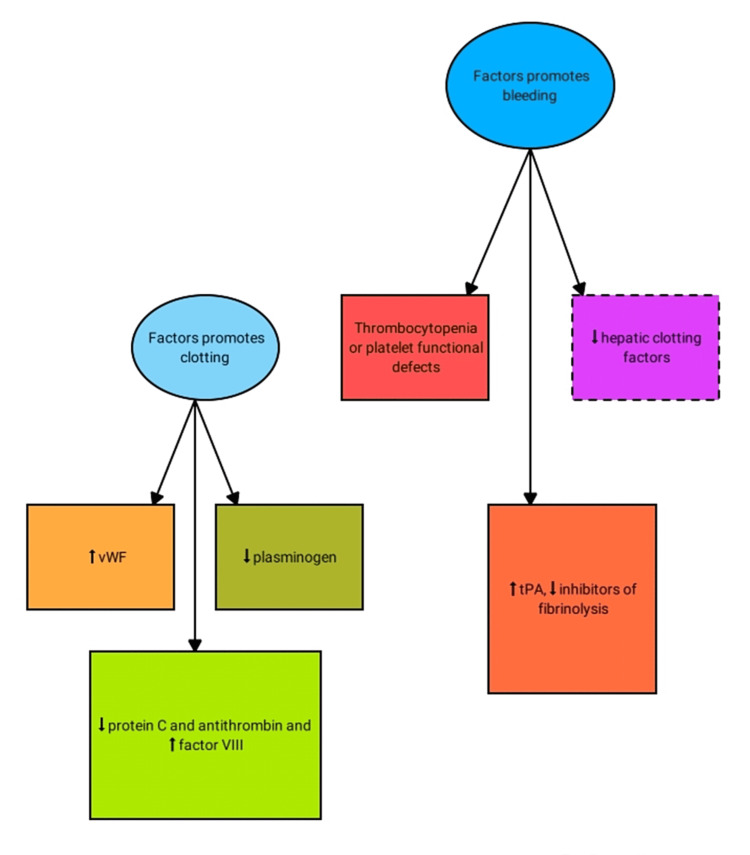
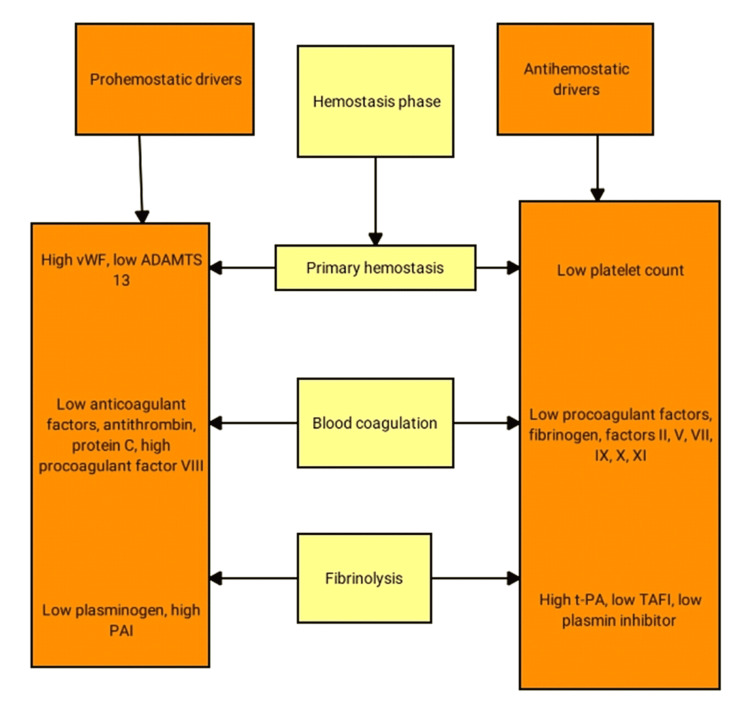
Cirrhosis is an end-stage liver disease that can cause changes in any component of the hemostatic system. The net effects of the complicated hemostatic changes have long been unknown due to concurrent changes in pro-and antihemostatic drivers. Coagulation disorders are caused by various factors, including decreased clotting and inhibitor factor synthesis, reduced clearance of activated factors, quantitative and qualitative platelet defects, hyperfibrinolysis, and increased intravascular coagulation. This review discusses the pathogenesis of coagulopathy and multiple studies related to its clinical presentations. This article also highlights an additional problem in the diagnostic and therapeutic approach to this group of patients: the fact that traditional coagulation tests and transfusional strategies may not be reliable for assessing and managing bleeding or thrombotic risks. Hence, multiple management options have been assessed for bleeding and thrombosis in liver disease.
Keywords: antifibrinolytics; blood coagulation factors; cirrhosis; deep vein thrombosis (dvt); direct acting oral anticoagulant; gastrointestinal hemorrhage; hemeostatic system; portal vein thrombosis; thrombocytopenia; venous thromboembolism (vte).
Copyright © 2022, Islam et al.
Conflict of interest statement
Dr. Ibrahim Sange, who is the final author of the paper, contributed to writing the abstract and serves as a mentor in writing. He was also consulted on the editing and proofreading of the manuscript. For his services, a basic fee was paid to him.
Figures
References
-
- Hepatic lipocytes, TIMP-1 and liver fibrosis. Arthur MJ, Iredale JP. https://www.ncbi.nlm.nih.gov/pmc/articles/PMC5400988/ J R Coll Physicians Lond. 1994;28:200–208. - PMC - PubMed
-
- Haemostatic abnormalities in patients with liver disease. Lisman T, Leebeek FW, de Groot PG. J Hepatol. 2002;37:280–287. - PubMed
-
- Patients with liver cirrhosis suffer from primary haemostatic defects? Fact or fiction? Violi F, Basili S, Raparelli V, Chowdary P, Gatt A, Burroughs AK. J Hepatol. 2011;55:1415–1427. - PubMed
Publication types
LinkOut - more resources
Full Text Sources