


Construction of a necroptosis-related lncRNA signature to predict the prognosis and immune microenvironment of head and neck squamous cell carcinoma
- PMID: 35522142
- PMCID: PMC9169178
- DOI: 10.1002/jcla.24480
Construction of a necroptosis-related lncRNA signature to predict the prognosis and immune microenvironment of head and neck squamous cell carcinoma
Abstract
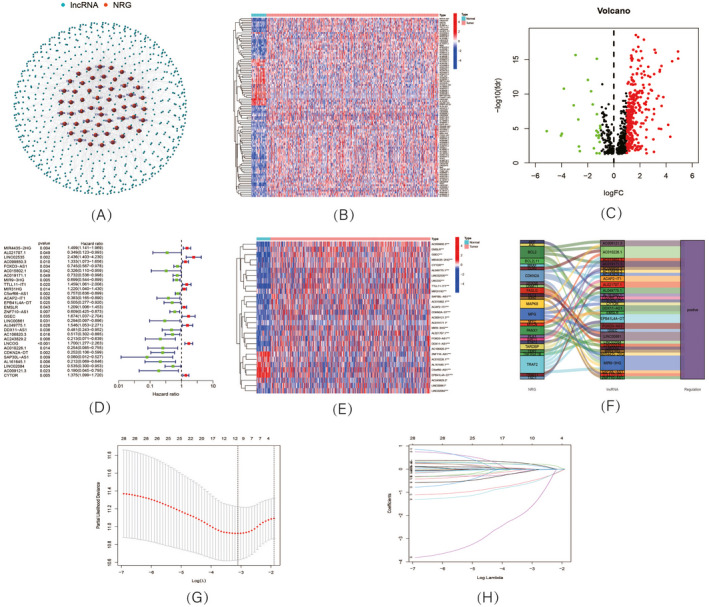
Background: Previous studies have determined that necroptosis-related genes are potential biomarkers in head and neck squamous cell carcinoma (HNSCC). Herein, we established a novel risk model based on necroptosis-related lncRNAs (nrlncRNAs) to predict the prognosis of HNSCC patients.
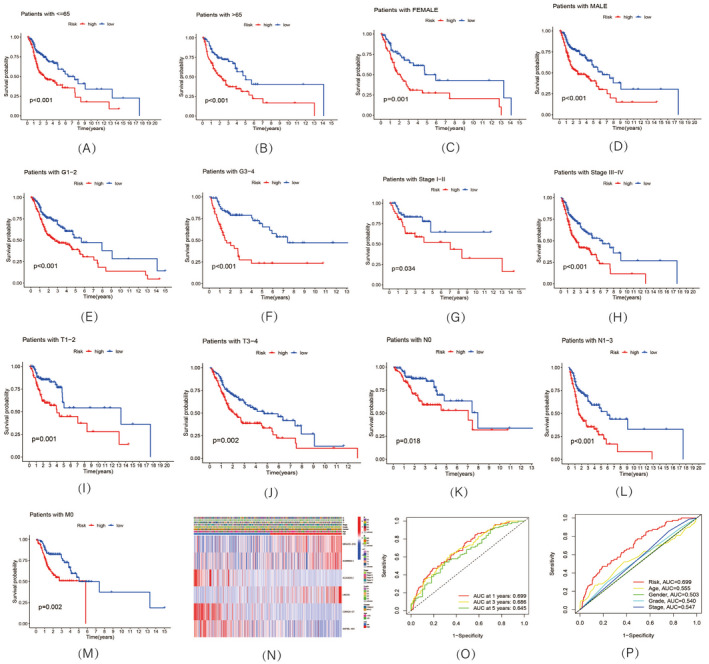
Methods: Transcriptome and related information were obtained from TCGA database, and an nrlncRNA signature was established based on univariate Cox analysis and least absolute shrinkage and selection operator Cox regression. Kaplan-Meier analysis and time-dependent receiver operating characteristic (ROC) analysis were used to evaluate the model, and a nomogram for survival prediction was established. Gene set enrichment analysis, immune analysis, drug sensitivity analysis, correlation with N6-methylandenosin (m6A), and tumor stemness analysis were performed. Furthermore, the entire set was divided into two clusters for further discussion.
Results: A novel signature was established with six nrlncRNAs. The areas under the ROC curves (AUCs) for 1-, 3-, and 5-year overall survival (OS) were 0.699, 0.686, and 0.645, respectively. Patients in low-risk group and cluster 2 had a better prognosis, more immune cell infiltration, higher immune function activity, and higher immune scores; however, patients in high-risk group and cluster 1 were more sensitive to chemotherapy. Moreover, the risk score had negative correlation with m6A-related gene expression and tumor stemness.
Conclusion: According to this study, we constructed a novel signature with nrlncRNA pairs to predict the survival of HNSCC patients and guide immunotherapy and chemotherapy. This may possibly promote the development of individualized and precise treatment for HNSCC patients.
Keywords: head and neck squamous cell carcinoma; immunotherapy; long non-coding RNA; necroptosis; prognosis.
© 2022 The Authors. Journal of Clinical Laboratory Analysis published by Wiley Periodicals LLC.
Conflict of interest statement
None.
Figures




References
MeSH terms
Substances
Grants and funding
- 2020KY274/Zhejiang Provincial Medical and Health Science Research Foundation
- 2020RC107/Zhejiang Provincial Medical and Health Science Research Foundation
- 2022KY1086/Zhejiang Provincial Medical and Health Science Research Foundation
- 81670920/National Natural Science Foundation of China
- 2021S170/Ningbo Public Science Research Foundation
LinkOut - more resources
Full Text Sources
Medical
