Influence of peritoneal dialysis catheter type on dislocations and laxative use: a retrospective observational study
- PMID: 35522428
- PMCID: PMC9217771
- DOI: 10.1007/s40620-022-01329-6
Influence of peritoneal dialysis catheter type on dislocations and laxative use: a retrospective observational study
Abstract
Background: There is currently no consensus regarding the optimal type of peritoneal dialysis (PD) catheter. Although few studies showed that weighted catheters result in lower complication rates and superior long-term outcomes than non-weighted catheters, there are no studies on the use of laxatives linked to catheter malfunction, a patient-related outcome potentially affecting the quality of life. Thus, we compared the burden of acute and chronic laxative use in a cohort of PD patients having either weighted or non-weighted catheters.
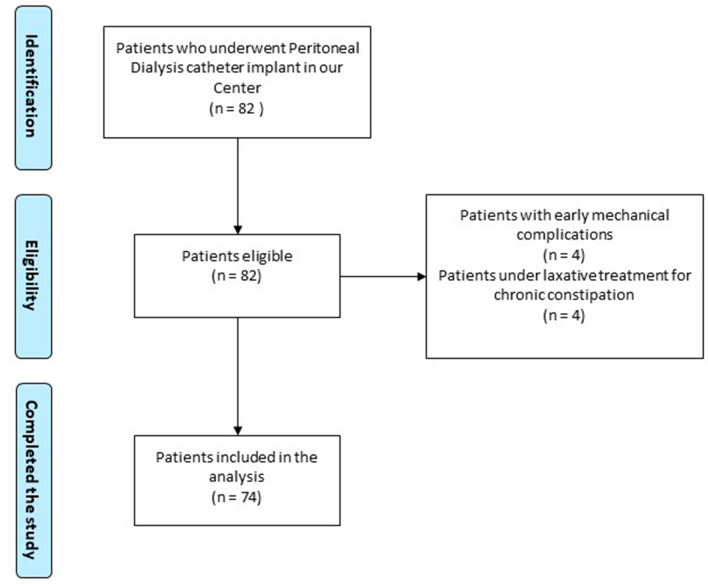
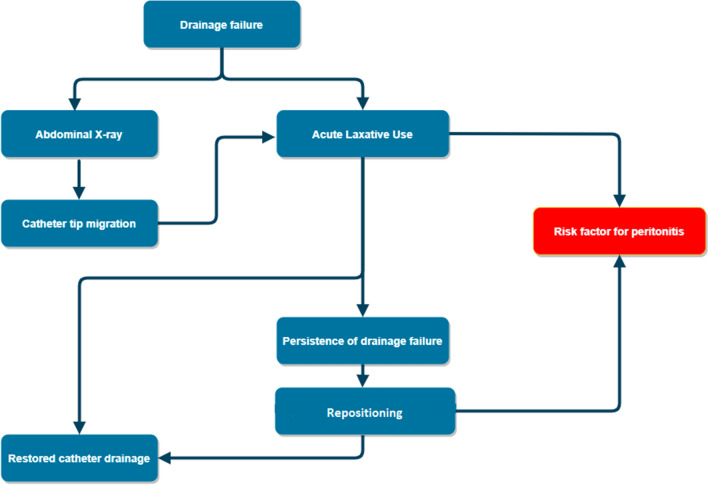
Methods: We performed a single-center, retrospective, observational study in two renal units, comparing acute and chronic laxative therapy related to catheter drainage failure in a cohort of 74 PD patient,s divided by peritoneal dialysis catheter type. In addition, we evaluated the number of patients who experienced minor and major dislocations, catheter-related infection rate, hospitalization for catheter malfunctioning, episodes of catheter repositioning, and dropout from PD.
Results: Laxative use was significantly more common among patients in the non-weighted catheter group (acute: 30.3% vs. 9.8%, p = 0.03; chronic: 36.4% vs. 12.2%; p≤0.02). Furthermore, weighted catheters were superior to non-weighted catheters for all the secondary outcomes (dislocations: 12.2% vs. 45.5%; p = 0.001).
Conclusions: Weighted self-locating catheters have lower drainage failure, thus reducing the need and burden of acute and chronic laxative use among PD patients.
Keywords: Drug burden; Laxative; Peritoneal catheter; Peritoneal dialysis.
© 2022. The Author(s).
Conflict of interest statement
MG's institution, the University of Milano, received consulting fees from B. Braun Avitum Italy, the company manufacturing the weighted catheter. The other authors have nothing to disclose.
Figures