


Use of a Convex Pouching System in the Postoperative Period: A National Consensus
- PMID: 35523239
- PMCID: PMC9093727
- DOI: 10.1097/WON.0000000000000874
Use of a Convex Pouching System in the Postoperative Period: A National Consensus
Abstract
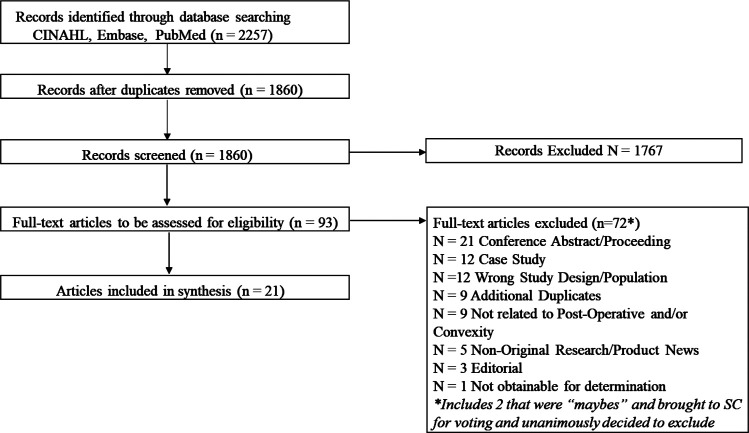
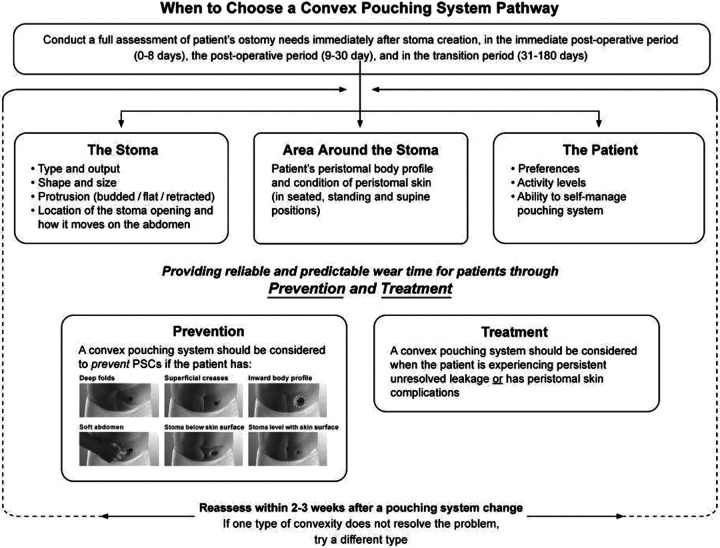
Convex pouching systems have been available for ostomy patients for decades; however, controversy remains over the use of convexity in the postoperative period. A group of 10 nurses and physicians with expertise caring for patients with an ostomy completed a scoping review identifying research-based evidence and gaps in our knowledge of the safety and effectiveness related to the use of a convex pouching system following ostomy surgery. Results of this scoping review demonstrated the need for a structured consensus to define best practices when selecting a pouching system that provides a secure and reliable seal around the stoma, avoids undermining and leakage of effluent from the pouching system, and contributes to optimal health-related quality of life for patients following ostomy surgery. The expert panel reached consensus on 8 statements for the use of convex products immediately after surgery and throughout the first 6 months after stoma creation, as well as describing goals in choosing the best pouching system for the patient with an ostomy.
Copyright © 2022 The Authors. Published by Wolters Kluwer Health, Inc. on behalf of the Wound, Ostomy, and Continence Nurses Society.
Figures
References
-
- United Ostomy Associations of America. Living with an ostomy: FAQs. http://www.ostomy.org/living-with-an-ostomy. Accessed February 14, 2022.
-
- James-Reid S, Bain K, Hansen AS, Vendelbo G, Droste W, Colwell J. Creating consensus-based practice guidelines with 2000 nurses. Br J Nurs. 2019;28(22):S18–S25. - PubMed
-
- Herlufsen P, Olsen AG, Carlsen B, et al. Study of peristomal skin disorders in patients with permanent stomas. Br J Nurs. 2006;15(16):854–862. - PubMed
-
- Porrett T, Nováková S, Schmitz K, Klimekova E, Aaes H. Leakage and ostomy appliances: results from a large-scale, open-label study in clinical practice. Gastrointest Nurs. 2011;9(suppl 2):19–23.
-
- Salvadalena G. Incidence of complications of the stoma and peristomal skin among individuals with colostomy, ileostomy, and urostomy: a systematic review. J Wound Ostomy Continence Nurs. 2008;35(6):596–607. - PubMed
MeSH terms
LinkOut - more resources
Full Text Sources
Medical
