Review
. 2022 Nov;19(11):723-736.
doi: 10.1038/s41569-022-00703-y. Epub 2022 May 6.

The role of mitochondrial fission in cardiovascular health and disease

Affiliations
Review

The role of mitochondrial fission in cardiovascular health and disease

Justin M Quiles et al. Nat Rev Cardiol. 2022 Nov.

Abstract

Mitochondria are organelles involved in the regulation of various important cellular processes, ranging from ATP generation to immune activation. A healthy mitochondrial network is essential for cardiovascular function and adaptation to pathological stressors. Mitochondria undergo fission or fusion in response to various environmental cues, and these dynamic changes are vital for mitochondrial function and health. In particular, mitochondrial fission is closely coordinated with the cell cycle and is linked to changes in mitochondrial respiration and membrane permeability. Another key function of fission is the segregation of damaged mitochondrial components for degradation by mitochondrial autophagy (mitophagy). Mitochondrial fission is induced by the large GTPase dynamin-related protein 1 (DRP1) and is subject to sophisticated regulation. Activation requires various post-translational modifications of DRP1, actin polymerization and the involvement of other organelles such as the endoplasmic reticulum, Golgi apparatus and lysosomes. A decrease in mitochondrial fusion can also shift the balance towards mitochondrial fission. Although mitochondrial fission is necessary for cellular homeostasis, this process is often aberrantly activated in cardiovascular disease. Indeed, strong evidence exists that abnormal mitochondrial fission directly contributes to disease development. In this Review, we compare the physiological and pathophysiological roles of mitochondrial fission and discuss the therapeutic potential of preventing excessive mitochondrial fission in the heart and vasculature.


Conflict of interest statement

Competing interests

The authors declare no competing interests.

Figures
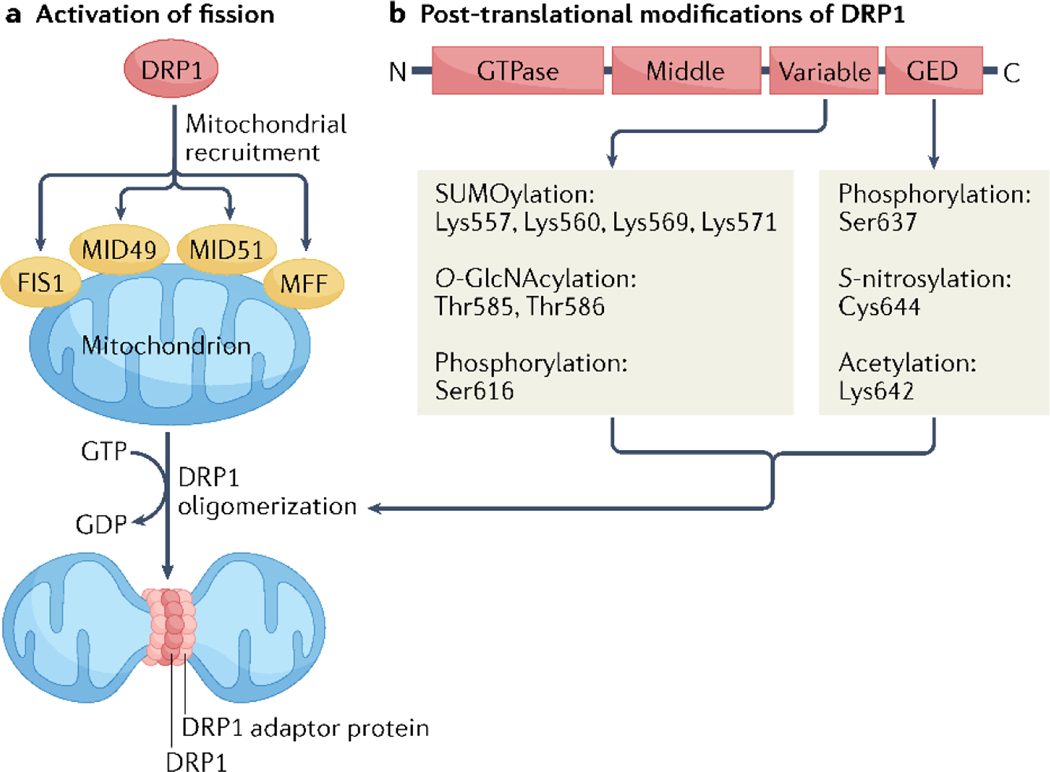
Fig. 1 |
Fig. 1 |. Structure and function of DNM1L in mitochondrial fission.
a | Cytosolic dynamin-1-like protein (DNML1; also known as dynamin-related protein 1 (DRP1) monomers are recruited to the outer mitochondrial membrane by the adaptor proteins mitochondrial fission 1 (FIS1), mitochondrial dynamics protein 49 (MID49) or MID51 and mitochondrial fission factor (MFF), which facilitates the formation of helical ring DNML1 oligomers. GTP hydrolysis by DNML1 stimulates OMM constriction and subsequent scission. b | Several post-translational modifications within the variable region and GTPase effector domain (GED) of DNML1 regulate fission. O-GlcNAcylation, O-linked-N-acetylglucosaminylation.
Fig. 2 |
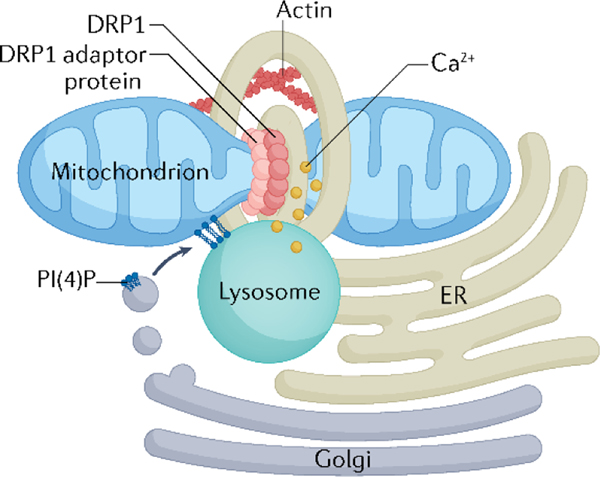
Fig. 2 |. Interorganelle contacts promote mitochondrial fission.
Mitochondria–endoplasmic reticulum (ER) association membranes, in conjunction with polymerized actin, promote DNML1 recruitment and outer mitochondrial membrane OMM constriction. Uptake of calcium (Ca2+) into the mitochondria stimulates inner membrane constriction. phosphatidylinositol 4-phosphate (PI4P) is also critical for the execution of mitochondrial fission and can be transferred to the OMM through lysosomes or trans-Golgi-derived vesicles.
Fig. 3 |
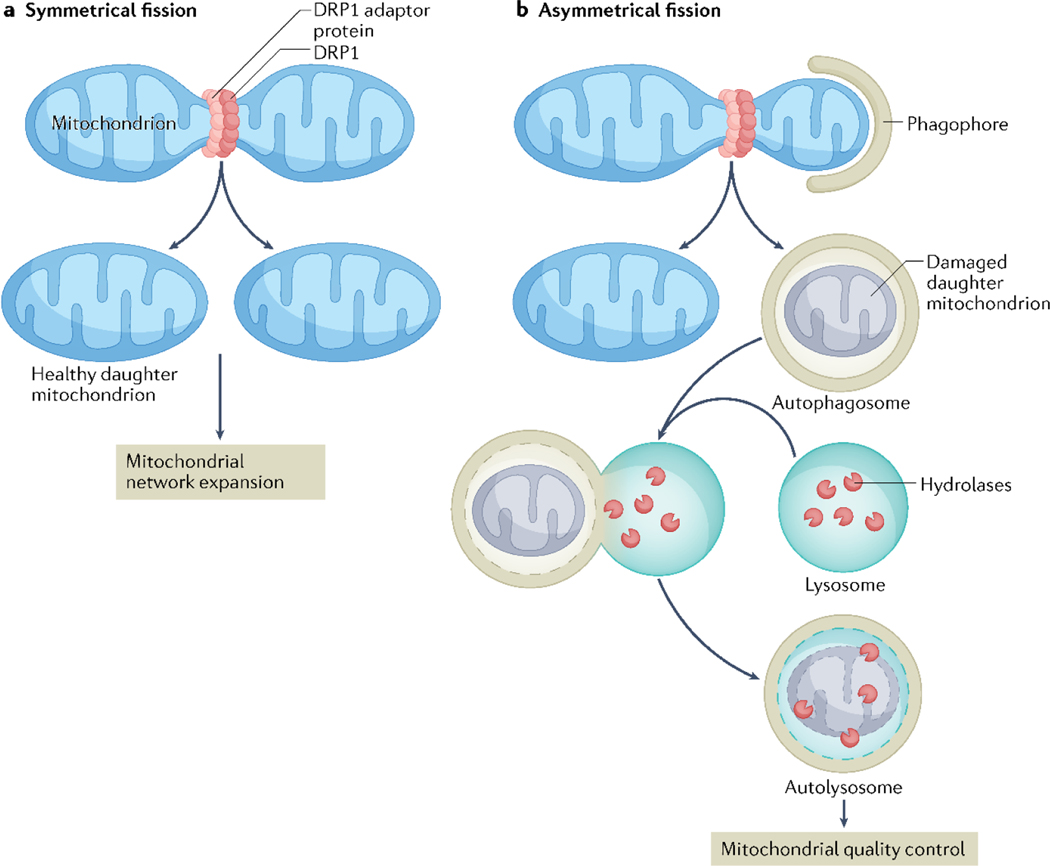
Fig. 3 |. Distinct mitochondrial fission subtypes produce divergent fates.
a | Symmetric fission generates two healthy daughter mitochondria during cellular division. b | Asymmetric fission facilitates engulfment of damaged mitochondria by autophagosomes, which fuse with lysosomes for organelle degradation via mitophagy.
Fig. 4 |
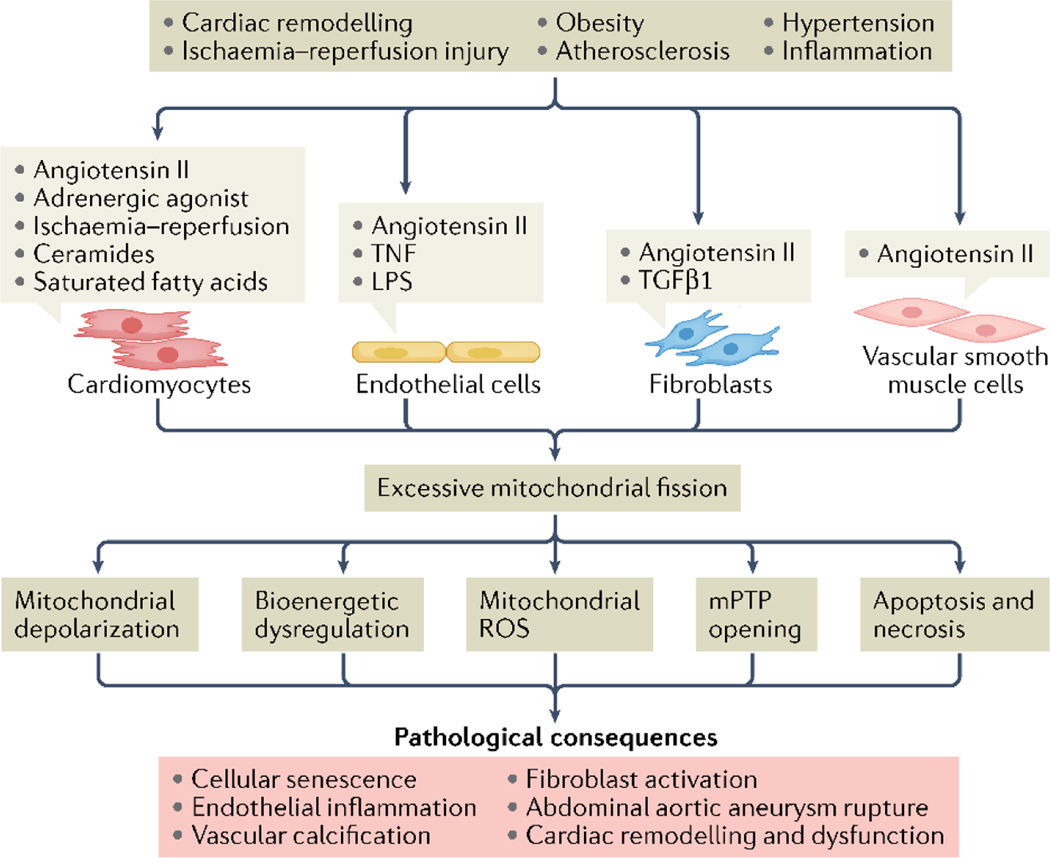
Fig. 4 |. Sustained mitochondrial fission promotes cardiovascular pathophysiology.
Several upstream signals shared and distinct among cardiac myocytes, endothelial cells, fibroblasts and vascular smooth muscle cells (VSMC) cause excessive mitochondrial fission, which culminates in organelle dysfunction and cell death. These effects directly promote cardiac and vascular pathophysiology across multiple disease models. AAA, abdominal aortic aneurysm; FA, fatty acids; LPS, lipopolysaccharide; mPTP, mitochondrial permeability transition pore; ROS, reactive oxygen species; TGF- β1, transforming growth factor β1; TNF, tumour necrosis factor.

References

    1. Bock FJ & Tait SWG Mitochondria as multifaceted regulators of cell death. Nat Rev Mol Cell Biol 21, 85–100, doi:10.1038/s41580-019-0173-8 (2020). - DOI - PubMed
    1. Frank S. et al. The role of dynamin-related protein 1, a mediator of mitochondrial fission, in apoptosis. Developmental cell 1, 515–525 (2001). - PubMed
    1. Coronado M. et al. Physiological mitochondrial fragmentation is a normal cardiac adaptation to increased energy demand. Circulation research 122, 282–295 (2018). - PMC - PubMed
    1. Hoque A. et al. Mitochondrial fission protein Drp1 inhibition promotes cardiac mesodermal differentiation of human pluripotent stem cells. Cell death discovery 4, 1–13 (2018). - PMC - PubMed
    1. Gustafsson AB & Dorn GW, 2nd. Evolving and Expanding the Roles of Mitophagy as a Homeostatic and Pathogenic Process. Physiol Rev 99, 853–892, doi:10.1152/physrev.00005.2018 (2019). - DOI - PMC - PubMed

Publication types