


Categorization of Common Pigmented Skin Lesions (CPSL) using Multi-Deep Features and Support Vector Machine
- PMID: 35524077
- PMCID: PMC9582098
- DOI: 10.1007/s10278-022-00632-9
Categorization of Common Pigmented Skin Lesions (CPSL) using Multi-Deep Features and Support Vector Machine
Abstract
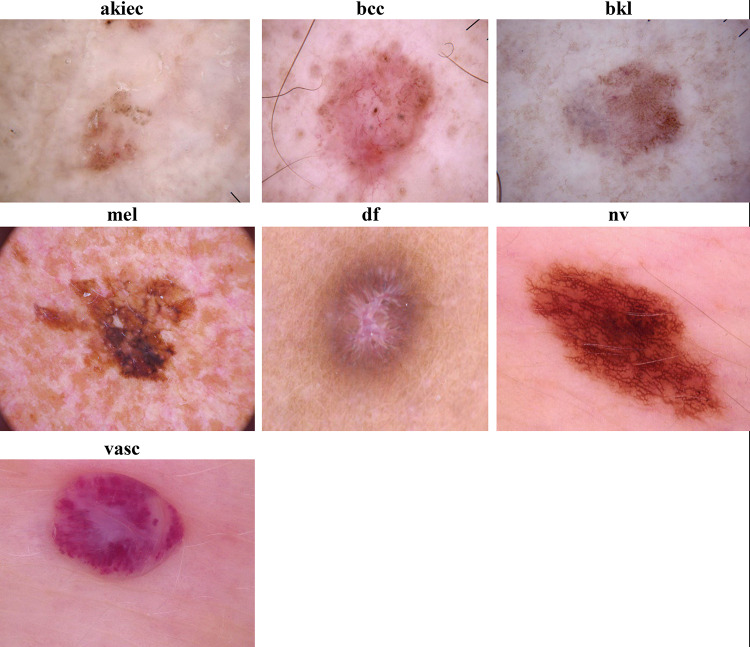
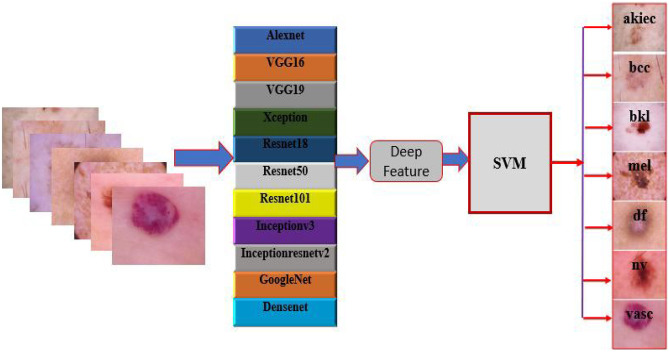
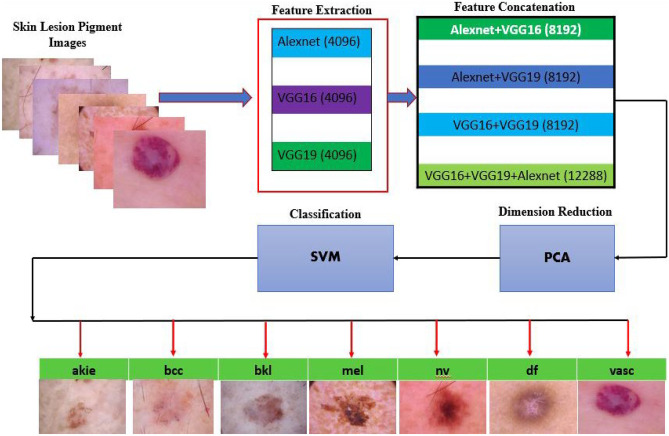
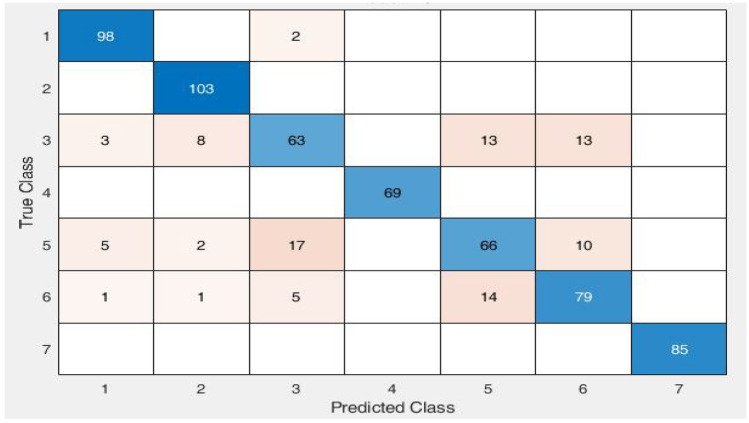
The skin is the main organ. It is approximately 8 pounds for the average adult. Our skin is a truly wonderful organ. It isolates us and shields our bodies from hazards. However, the skin is also vulnerable to damage and distracted from its original appearance: brown, black, or blue, or combinations of those colors, known as pigmented skin lesions. These common pigmented skin lesions (CPSL) are the leading factor of skin cancer, or can say these are the primary causes of skin cancer. In the healthcare sector, the categorization of CPSL is the main problem because of inaccurate outputs, overfitting, and higher computational costs. Hence, we proposed a classification model based on multi-deep feature and support vector machine (SVM) for the classification of CPSL. The proposed system comprises two phases: First, evaluate the 11 CNN model's performance in the deep feature extraction approach with SVM, and then, concatenate the top performed three CNN model's deep features and with the help of SVM to categorize the CPSL. In the second step, 8192 and 12,288 features are obtained by combining binary and triple networks of 4096 features from the top performed CNN model. These features are also given to the SVM classifiers. The SVM results are also evaluated with principal component analysis (PCA) algorithm to the combined feature of 8192 and 12,288. The highest results are obtained with 12,288 features. The experimentation results, the combination of the deep feature of Alexnet, VGG16 and VGG19, achieved the highest accuracy of 91.7% using SVM classifier. As a result, the results show that the proposed methods are a useful tool for CPSL classification.
Keywords: Common Pigmented Skin Lesions; Convolutional neural network; Multi-deep features; Skin cancer; Support vector machine.
© 2022. The Author(s) under exclusive licence to Society for Imaging Informatics in Medicine.
Conflict of interest statement
The authors declare that they have no conflict of interest.
Figures
References
-
- A. C. Society . Cancer Facts & Figures 2018. Atlanta: American Cancer Society; 2018.
-
- Koh HK. Melanoma screening: focusing the public health journey. Archives of dermatology. 2007;143(1):101–103. - PubMed
-
- Nikolaou V, Stratigos AJ. Emerging trends in the epidemiology of melanoma. British Journal of dermatology. 2014;170(1):11–19. - PubMed
-
- A. C. Society . Cancer Facts & Figures 2008. Atlanta: American Cancer Society; 2008.
-
- Safigholi H, Meigooni AS, Song WY. Comparison of 192Ir, 169Yb, and 60Co high-dose-rate brachytherapy sources for skin cancer treatment. Medical Physics. 2017;44(9):4426–4436. - PubMed
MeSH terms
LinkOut - more resources
Full Text Sources
Medical
Research Materials
