


Cerebral autoregulation across the menstrual cycle in eumenorrheic women
- PMID: 35524340
- PMCID: PMC9076937
- DOI: 10.14814/phy2.15287
Cerebral autoregulation across the menstrual cycle in eumenorrheic women
Abstract
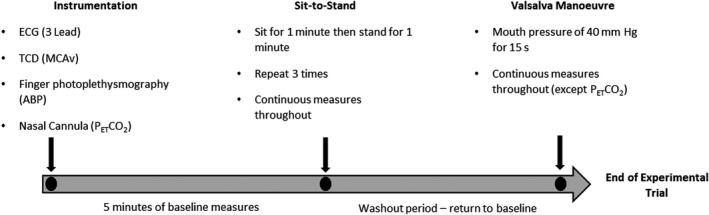
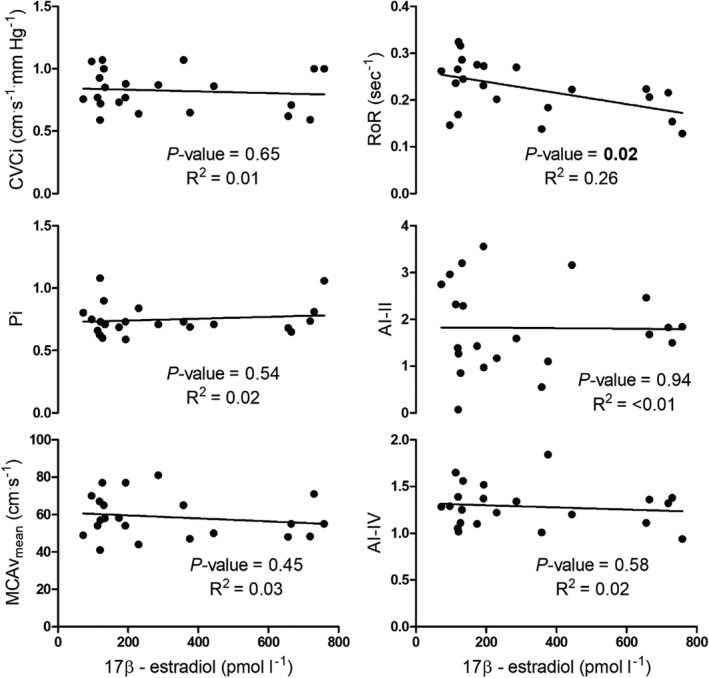
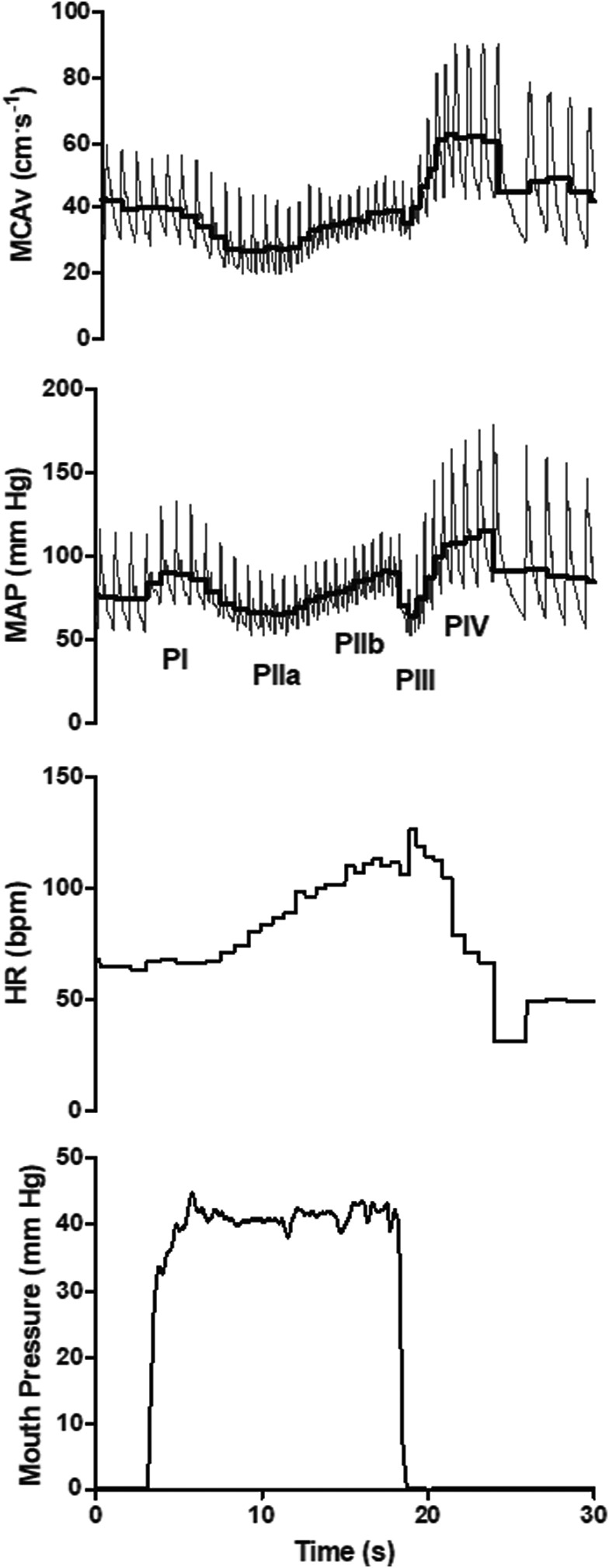
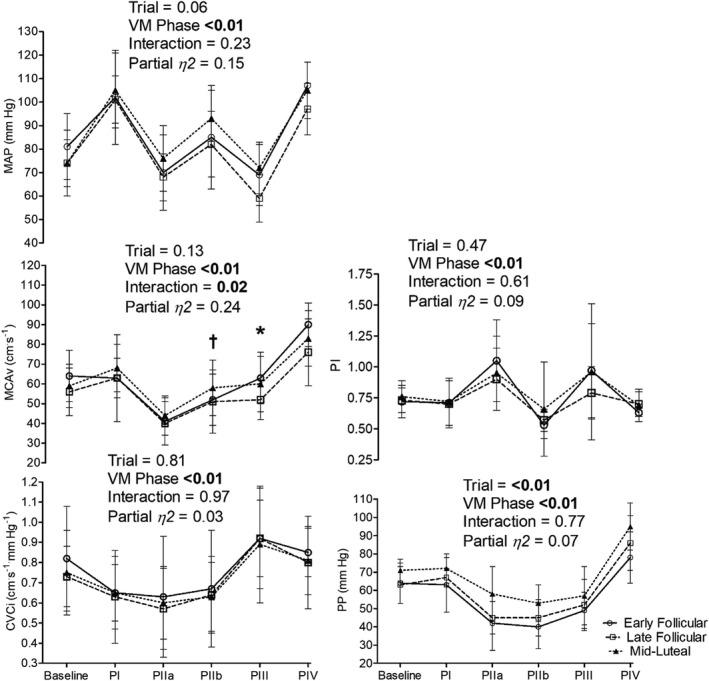
There is emerging evidence that ovarian hormones play a significant role in the lower stroke incidence observed in pre-menopausal women compared with men. However, the role of ovarian hormones in cerebrovascular regulation remains to be elucidated. We examined the blood pressure-cerebral blood flow relationship (cerebral autoregulation) across the menstrual cycle in eumenorrheic women (n = 12; mean ± SD: age, 31 ± 7 years). Participants completed sit-to-stand and Valsalva maneuvers (VM, mouth pressure of 40 mmHg for 15 s) during the early follicular (EF), late follicular (LF), and mid-luteal (ML) menstrual cycle phases, confirmed by serum measurement of progesterone and 17β-estradiol. Middle cerebral artery blood velocity (MCAv), arterial blood pressure and partial pressure of end-tidal carbon dioxide were measured. Cerebral autoregulation was assessed by transfer function analysis during spontaneous blood pressure oscillations, rate of regulation (RoR) during sit-to-stand maneuvers, and Tieck's autoregulatory index during VM phases II and IV (AI-II and AI-IV, respectively). Resting mean MCAv (MCAvmean ), blood pressure, and cerebral autoregulation were unchanged across the menstrual cycle (all p > 0.12). RoR tended to be different (EF, 0.25 ± 0.06; LF; 0.19 ± 0.04; ML, 0.18 ± 0.12 sec-1 ; p = 0.07) and demonstrated a negative relationship with 17β-estradiol (R2 = 0.26, p = 0.02). No changes in AI-II (EF, 1.95 ± 1.20; LF, 1.67 ± 0.77 and ML, 1.20 ± 0.55) or AI-IV (EF, 1.35 ± 0.21; LF, 1.27 ± 0.26 and ML, 1.20 ± 0.2) were observed (p = 0.25 and 0.37, respectively). Although, a significant interaction effect (p = 0.02) was observed for the VM MCAvmean response. These data indicate that the menstrual cycle has limited impact on cerebrovascular autoregulation, but individual differences should be considered.
Keywords: cerebral autoregulation; eumenorrheic women; menstrual cycle.
© 2022 The Authors. Physiological Reports published by Wiley Periodicals LLC on behalf of The Physiological Society and the American Physiological Society.
Conflict of interest statement
There are no conflicts of interest.
Figures
References
-
- Abidi, S. , Nili, M. , Serna, S. , Kim, S. , Hazlett, C. , & Edgell, H. (2017). Influence of sex, menstrual cycle, and oral contraceptives on cerebrovascular resistance and cardiorespiratory function during Valsalva or standing. Journal of Applied Physiology, 123, 375–386. 10.1152/japplphysiol.00035.2017 - DOI - PMC - PubMed
-
- Allan, P. D. , Faulkner, J. , O’Donnell, T. , Lanford, J. , Wong, L. K. , Saleem, S. , Woolley, B. , Lambrick, D. , Stoner, L. , & Tzeng, Y. C. (2015). Hemodynamic variability and cerebrovascular control after transient cerebral ischemia. Physiological Reports, 3, 1–11. 10.14814/phy2.12602 - DOI - PMC - PubMed
MeSH terms
Substances
LinkOut - more resources
Full Text Sources
