


Clonal Hematopoiesis and Myeloid Neoplasms in the Context of Telomere Biology Disorders
- PMID: 35524933
- PMCID: PMC9077347
- DOI: 10.1007/s11899-022-00662-8
Clonal Hematopoiesis and Myeloid Neoplasms in the Context of Telomere Biology Disorders
Abstract
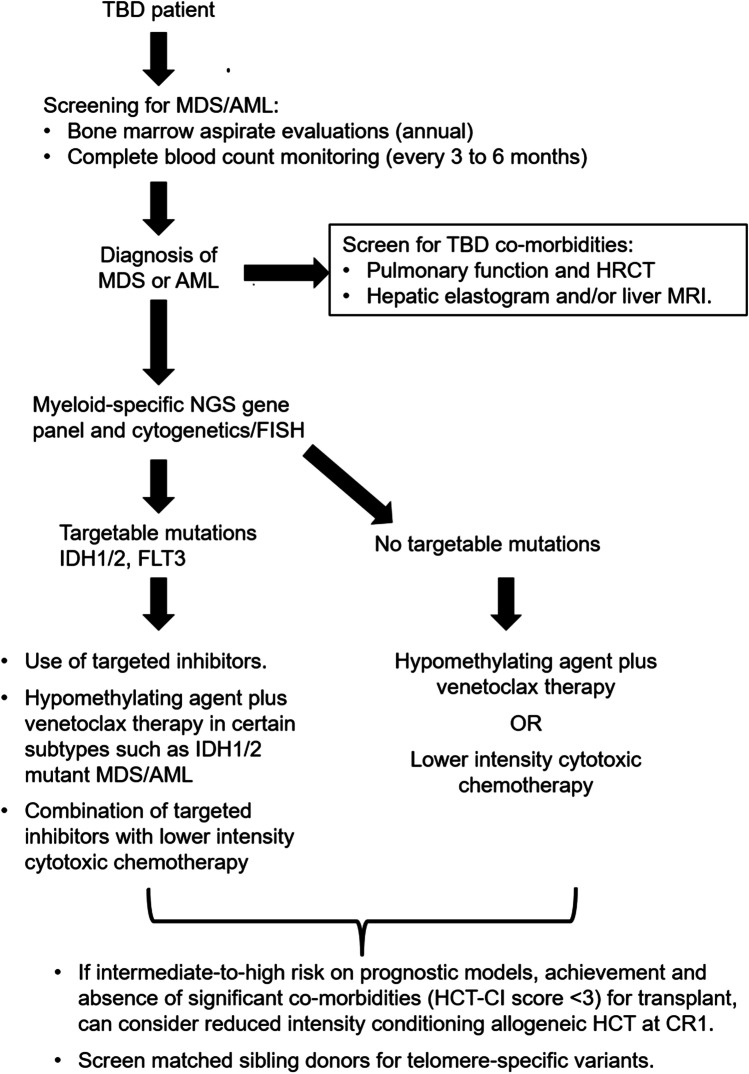
Purpose of review: Telomere biology disorders (TBDs) are cancer-predisposing multisystemic diseases that portend a higher risk of transforming into myeloid neoplasms (MNs). Due to the rarity and high variability of clinical presentations, TBD-specific characteristics of MN and the mechanisms behind this predisposition are not well defined. Herein, we review recent studies on TBD patient cohorts describing myeloid transformation events and summarize efforts to develop screening and treatment guidelines for these patients.
Recent findings: Preliminary studies have indicated that TBD patients have a higher prevalence of somatic genetic alterations in hematopoietic cells, an age-related phenomenon, also known as clonal hematopoiesis; increasing predisposition to MN. The CH mutational landscape in TBD differs from that observed in non-TBD patients and preliminary data suggest a higher frequency of somatic mutations in the DNA repair mechanism pathway. Although initial studies did not observe specific features of MN in TBD patients, certain events are common in TBD, such as hypocellular bone marrows. The mechanisms of MN development need further elucidation. Current management options for MN-TBD patients need to be individualized and tailored as per the clinical context. Because of the high sensitivity to alkylator chemotherapy and radiation conferred by short telomeres, non-cytotoxic targeted therapies and immunotherapy are ideal therapeutic options, but these therapies are still being tested in clinical trials. Defining the mechanisms of CH evolution in TBD and identifying risk factors leading to MN evolution will allow for the development of screening and treatment guidelines for these patients.
Keywords: Clonal hematopoiesis; Myeloid neoplasm; Telomere biology disorders.
© 2022. The Author(s), under exclusive licence to Springer Science+Business Media, LLC, part of Springer Nature.
Conflict of interest statement
AF, AM, and MMP declare no potential conflict of interest. MMP has received research funding from Kura Oncology and Stem Line Pharmaceuticals.
Figures

References
Publication types
MeSH terms
LinkOut - more resources
Full Text Sources
Medical
Research Materials
