


Comparison of physical workload and physical work capacity among municipality cleaners in Shiraz to determine number of workers needed to counterbalance physical workload
- PMID: 35526069
- PMCID: PMC9080208
- DOI: 10.1186/s13102-022-00476-4
Comparison of physical workload and physical work capacity among municipality cleaners in Shiraz to determine number of workers needed to counterbalance physical workload
Abstract
Background: Assessing physical workload is the most important step in deciding whether a workload is high and adopting appropriate control strategies to reduce physical workload. This study aimed to compare physical workload and Physical Work Capacity (PWC) among municipality cleaners in Shiraz to determine the number of workers needed to counterbalance physical workload.
Methods: The present cross-sectional study was performed on 97 municipality cleaners in Shiraz. In the first step, the participants' maximum aerobic capacity (VO2-max) was estimated in the laboratory using an ergometer bicycle and the Young Men's Christian Association (YMCA) protocol, based on which the PWC was estimated. Secondly, energy expenditure and heart rate during work were measured using a POLAR400 device in an eight-hour shift. At the end of the work shift, the workers' perceived physical exertion was assessed using a Rating of Perceived Exertion 6-20 (RPE 6-20) Borg scale. In the final stage, the physical workload was assessed based on the results of the two steps.
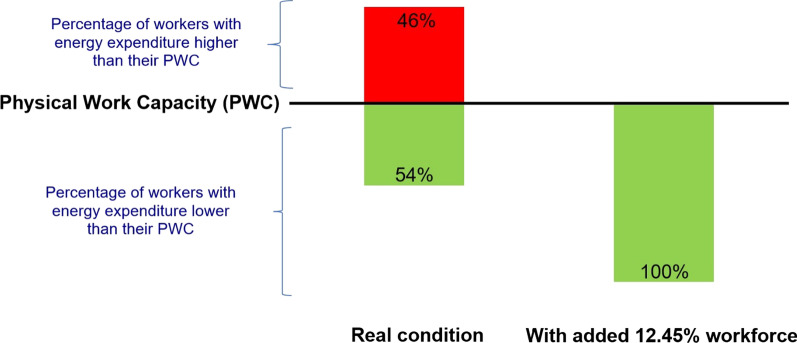
Results: The mean VO2-max of the cleaners and PWC were estimated to be 2.6 ± 0.66 l min-1 and 4.3 ± 1.088 kcal min-1, respectively. The average energy consumed during work was 4.122 ± 1.016 kcal min-1. The overall results of this study showed that physical workload was greater than PWC in 46% of the municipality cleaners. In addition, it was found that 12.45% workforce was required to be added to the street cleaners of Shiraz municipality to reduce the physiological workload on the employed workforce.
Conclusions: With respect to the high level of physical activity in a significant proportion of the cleaners, measures such as increasing the workforce are suggested.
Keywords: Cleaners; Maximum aerobic capacity; Physical work capacity; Physical workload.
© 2022. The Author(s).
Conflict of interest statement
The authors declare no competing interests.
Figures
References
-
- Neghab M, Khodaparast-Kazerouni F, Hassanzadeh J. Evaluation of pulmonary function of a group of workers in the municipality of Fars province. Occup Med. 2012;4(1):47–57.
-
- Ewis AA, Rahma MA, Mohamed ES, Hifnawy T, Arafa A. Occupational health-related morbidities among street sweepers and waste collectors at Beni-Suef, Egypt. Egypt J Occup Med. 2013;37(1):79–94. doi: 10.21608/ejom.2013.773. - DOI
-
- An H, Englehardt J, Fleming L, Bean J. Occupational health and safety amongst municipal solid waste workers in Florida. Waste Manag Res. 1999;17(5):369–377. doi: 10.1177/0734242X9901700505. - DOI
-
- Brun E. The occupational safety and health of cleaning workers. Luxembourg: European Agency for Safety and Health at Work (EU-OSHA); 2009.
-
- Kanjanar P, Wattasit S. Prevalence rate and risk factors associated with health hazards to select the magnitude of health problems among street sweepers in Chiang Rai province. J Health Res. 2015;9(7):15–18.
Grants and funding
LinkOut - more resources
Full Text Sources
Miscellaneous
