


Invasive Yeast Infection after Haploidentical Donor Hematopoietic Cell Transplantation Associated with Cytokine Release Syndrome
- PMID: 35526780
- PMCID: PMC9357112
- DOI: 10.1016/j.jtct.2022.04.023
Invasive Yeast Infection after Haploidentical Donor Hematopoietic Cell Transplantation Associated with Cytokine Release Syndrome
Abstract
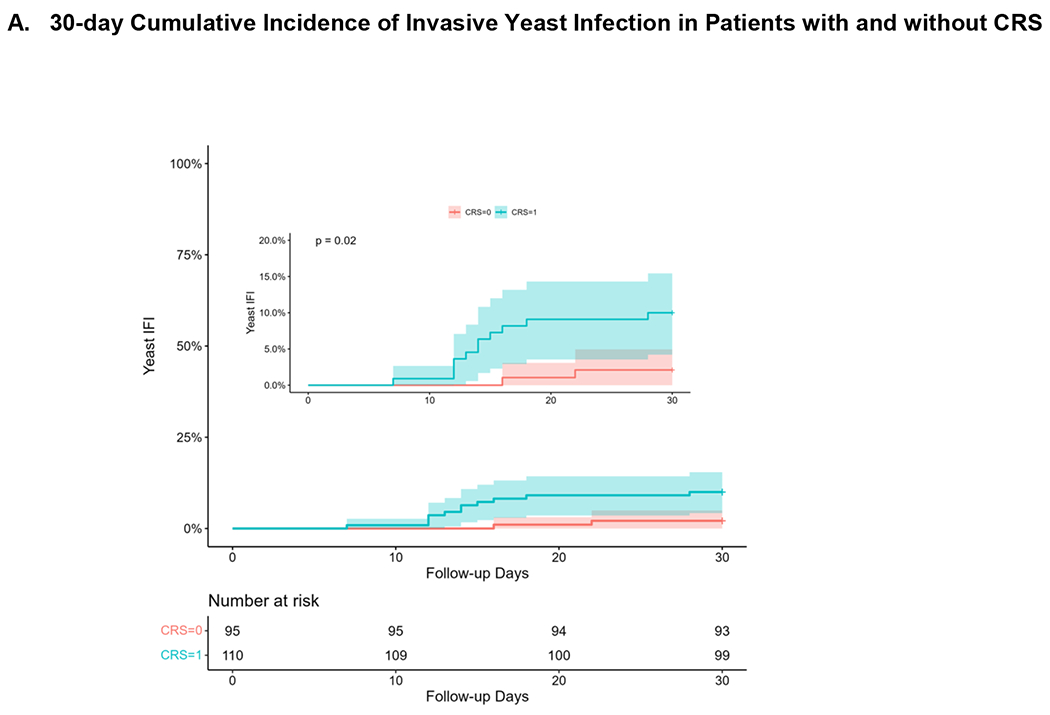
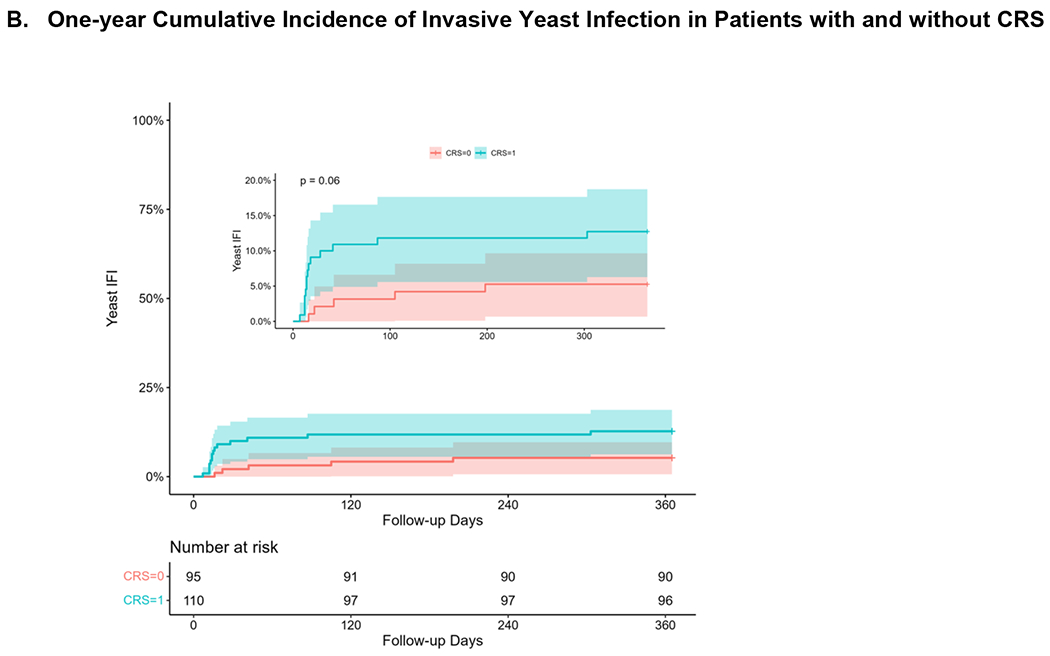
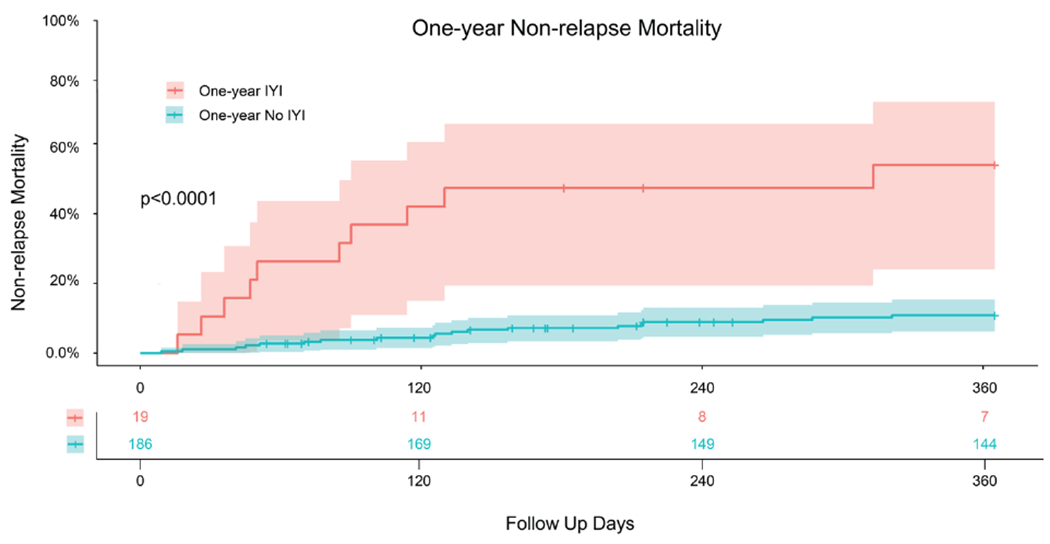
The use of haploidentical donor hematopoietic cell transplantation (haploHCT) has expanded, but recent reports raise concern for increased rates of infectious complications. The incidence and risk factors for invasive fungal disease (IFD) after haploHCT have not been well elucidated. This study aimed to evaluate the incidence and risk factors for IFD after haploHCT. The identification of key risk factors will permit targeted prevention measures and may explain elevated risk for other infectious complications after haploHCT. This single-center retrospective study included all adults undergoing haploHCT between May 2011 and May 2021 (n = 205). The 30-day and 1-year cumulative incidences of proven or probable IFD and 1-year nonrelapse mortality (NRM) were assessed. Secondary analyses evaluated risk factors for invasive yeast infection (IYI) using univariate and multivariable Cox regression models. Twenty-nine patients (14%) developed IFD following haploHCT. Nineteen (9.3%) developed IYI in the first year, 13 of which occurred early, with a 30-day cumulative incidence of 6.3% (95% confidence interval [CI], 2.9% to 9.6%) and increased NRM in patients with IYI (53.9% versus 10.9%). The majority of yeast isolates (17 of 20; 85%) were fluconazole- susceptible. The incidence of IYI in the first 30 days after haploHCT was 10% in the 110 patients (54%) who developed cytokine release syndrome (CRS) and 21% in the 29 patients (14%) who received tocilizumab. On multivariable analysis, acute myelogenous leukemia (hazard ratio [HR], 6.24; 95% CI, 1.66 to 23.37; P = .007) and CRS (HR, 4.65; 95% CI, 1.00 to 21.58; P = .049) were associated with an increased risk of early IYI after haploHCT. CRS after haploHCT is common and is associated with increased risk of early IYI. The identification of CRS as a risk factor for IYI raises questions about its potential association with other infections after haploHCT. Recognition of key risk factors for infection may permit the development of individualized strategies for prevention and intervention and minimize potential side effects.
Keywords: Candida; Cytokine release syndrome; Haploidentical transplantation; Invasive fungal disease; Post-transplantation cyclophosphamide.
Copyright © 2022 The American Society for Transplantation and Cellular Therapy. Published by Elsevier Inc. All rights reserved.
Conflict of interest statement
Competing Interests:
JSL: None
RMS: None
MMA: None
DWK: None
GZ: None
JHA: None
JK: None
SN: None
CSC: None
RR: None
NCI: None
VTH: None
MG: None
RJS: None
LRB: None
Figures
References
-
- Luznik L, O’Donnell PV., Symons HJ, et al. HLA-Haploidentical Bone Marrow Transplantation for Hematologic Malignancies Using Nonmyeloablative Conditioning and High-Dose, Posttransplantation Cyclophosphamide. Biol Blood Marrow Transplant. 2008;14(6):641–650. doi:10.1016/j.bbmt.2008.03.005 - DOI - PMC - PubMed
Publication types
MeSH terms
Grants and funding
LinkOut - more resources
Full Text Sources
