


User-centered design and spatially-distributed sequential electrical stimulation in cycling for individuals with paraplegia
- PMID: 35527249
- PMCID: PMC9080548
- DOI: 10.1186/s12984-022-01014-6
User-centered design and spatially-distributed sequential electrical stimulation in cycling for individuals with paraplegia
Abstract
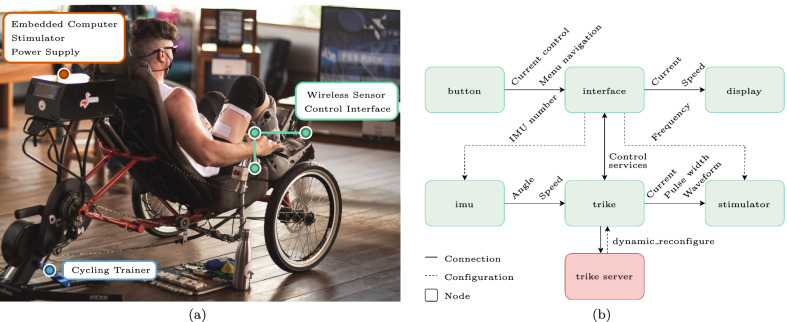
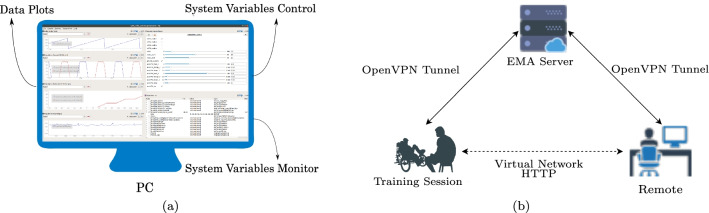
Background: In this work, we share the enhancements made in our system to take part in the CYBATHLON 2020 Global Edition Functional Electrical Stimulation (FES) Bike Race. Among the main improvements, firstly an overhaul, an overhaul of the system and user interface developed with User-centered design principles with remote access to enable telerehabilitation. Secondly, the implementation and experimental comparison between the traditional single electrode stimulation (SES) and spatially distributed sequential stimulation (SDSS) applied for FES Cycling.
Methods: We report on the main aspects of the developed system. To evaluate the user perception of the system, we applied a System Usability Scale (SUS) questionnaire. In comparing SDSS and SES, we collected data from one subject in four sessions, each simulating one race in the CYBATHLON format.
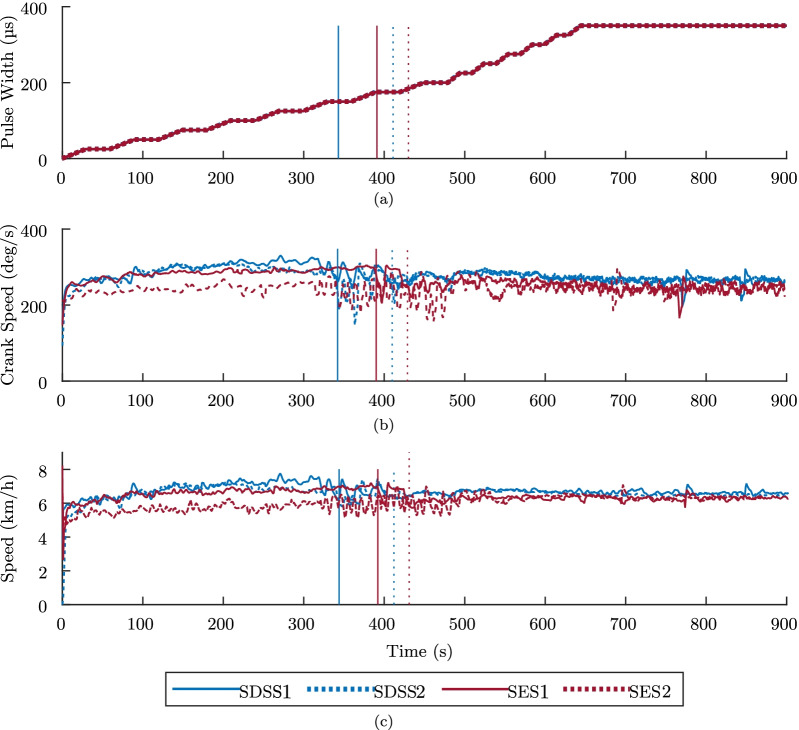
Results: User perception measured with SUS indicates a positive outcome in the developed system. The SDSS trials were superior in absolute and average values to SES regarding total distance covered and velocity. We successfully competed in the CYBATHLON 2020 Global Edition, finishing in 6th position in the FES Bike Race category.
Conclusions: The CYBATHLON format induced us to put the end-user in the center of our system design principle, which was well perceived. However, further improvements are required if the intention is to progress to a commercial product. FES Cycling performance in SDSS trials was superior when compared to SES trials, indicating that this technique may enable faster and possibly longer FES cycling sessions for individuals with paraplegia. More extensive studies are required to assess these aspects.
Keywords: CYBATHLON; FES cycling; Functional electrical stimulation; Spatially-distributed sequential electrial stimulation; User-centered design.
© 2022. The Author(s).
Conflict of interest statement
The authors declare that they have no competing interests.
Figures



References
-
- ETH: Cybathlon (2021). https://cybathlon.ethz.ch/en. Accessed 30 Sep 2021.
-
- Bo APL, Da Fonseca LO, Guimaraes JA, Fachin-Martins E, Paredes MEG, Brindeiro GA, De Sousa ACC, Dorado MCN, Ramos FM. Cycling with spinal cord injury: a novel system for cycling using electrical stimulation for individuals with paraplegia, and preparation for Cybathlon 2016. IEEE Robot Autom Mag. 2017;24(4):58–65. doi: 10.1109/MRA.2017.2751660. - DOI
-
- Still B, Crane K. Fundamentals of user-centered design: a practical approach. Taylor & Francis Inc. 2017.
Publication types
MeSH terms
LinkOut - more resources
Full Text Sources
Medical
Miscellaneous
