


Andrological effects of SARS-Cov-2 infection: a systematic review and meta-analysis
- PMID: 35527294
- PMCID: PMC9080963
- DOI: 10.1007/s40618-022-01801-x
Andrological effects of SARS-Cov-2 infection: a systematic review and meta-analysis
Abstract
Purpose: The short- and long-term andrological effects of coronavirus disease 2019 (COVID-19) have not been clarified. Our aim is to evaluate the available evidence regarding possible andrological consequences of COVID-19 either on seminal or hormonal parameters. The safety of the COVID-19 vaccines in terms of sperm quality was also investigated.
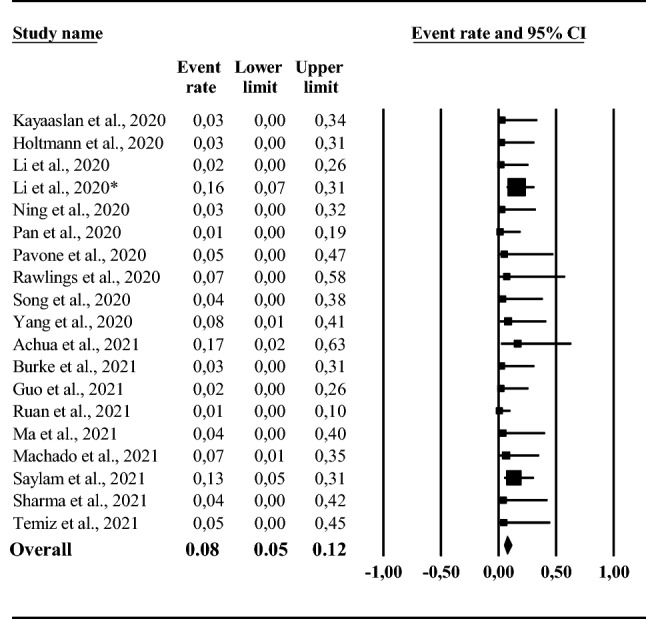
Methods: All prospective and retrospective observational studies reporting information on severe acute respiratory syndrome coronavirus 2 (SARS-Cov-2) mRNA semen and male genitalia tract detection (n = 19), as well as those reporting data on semen analysis (n = 5) and hormonal parameters (n = 11) in infected/recovered patients without any arbitrary restriction were included.
Results: Out of 204 retrieved articles, 35 were considered, including 2092 patients and 1138 controls with a mean age of 44.1 ± 12.6 years, and mean follow-up 24.3 ± 18.9 days. SARS-CoV-2 mRNA can be localized in male genitalia tracts during the acute phase of the disease. COVID-19 can result in short-term impaired sperm and T production. Available data cannot clarify long-term andrological effects. Low T observed in the acute phase of the disease is associated with an increased risk of being admitted to the Intensive Care Unit or death. The two available studies showed that the use of mRNA COVID-19 vaccines does not affect sperm quality.
Conclusions: The results of our analysis clearly suggest that each patient recovering from COVID-19 should be monitored to rule out sperm and T abnormalities. The specific contribution of reduced T levels during the acute phase of the infection needs to be better clarified.
Keywords: COVID-19; Hypogonadism; SARS-CoV-2; Sperm; Testosterone; Vaccination.
© 2022. The Author(s).
Conflict of interest statement
The authors declare that they have no conflict of interest.
Figures


References
-
- Salonia A, Corona G, Giwercman A, Maggi M, Minhas S, Nappi RE, et al. SARS-CoV-2, testosterone and frailty in males (PROTEGGIMI): a multidimensional research project. Andrology. 2021;9(1):19–22. - PubMed
Publication types
MeSH terms
Substances
LinkOut - more resources
Full Text Sources
Medical
Miscellaneous
