HIGH-VOLUME AND HIGH-INTENSITY FUNCTIONAL TRAINING IN PATIENTS WITH MULTIPLE SCLEROSIS: A PILOT STUDY ON FEASIBILITY AND FUNCTIONAL CAPACITY
- PMID: 35528146
- PMCID: PMC9020471
- DOI: 10.2340/jrmcc.v5.2047
HIGH-VOLUME AND HIGH-INTENSITY FUNCTIONAL TRAINING IN PATIENTS WITH MULTIPLE SCLEROSIS: A PILOT STUDY ON FEASIBILITY AND FUNCTIONAL CAPACITY
Abstract
Objective: To evaluate the feasibility of a high-volume and high-intensity functional training programme in patients with multiple sclerosis (MS), and to explore whether functional capacity improves. A further objective was to explore changes in muscle strength and aerobic capacity.
Methods: This pilot study comprised a 12-week intervention, with an 8-week follow-up period. The intervention consisted of 3 weekly 3-h training sessions, comprising functional resistance-, endurance-, and skills training. Feasibility (questionnaire), functional capacity (Timed Up and Go Test, 10-Meter Walk Test, and 6-Minute Walk Test), aerobic capacity (cardiopulmonary exercise test) and muscle strength (1 repetition maximum (RM) leg press) were evaluated.
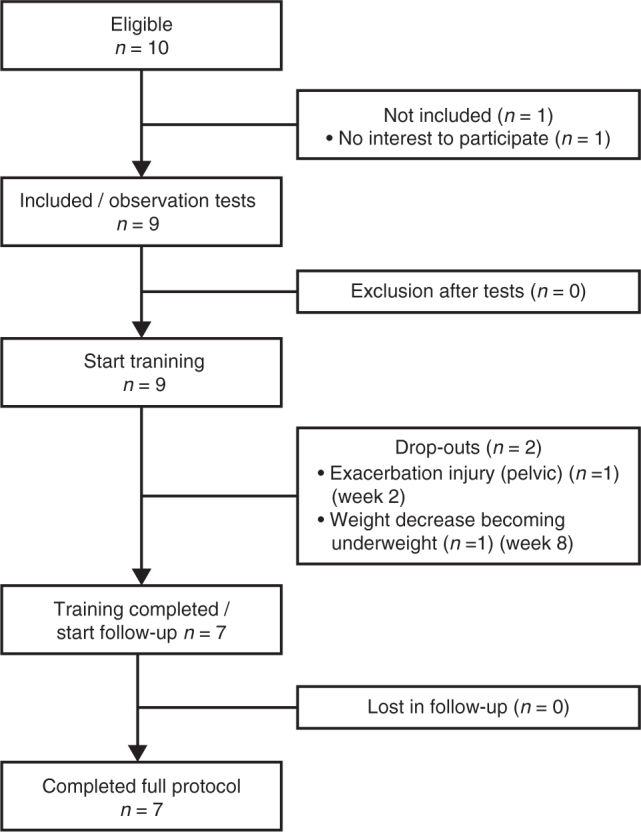
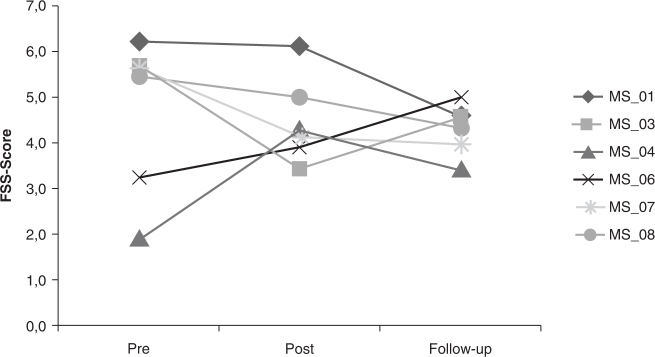
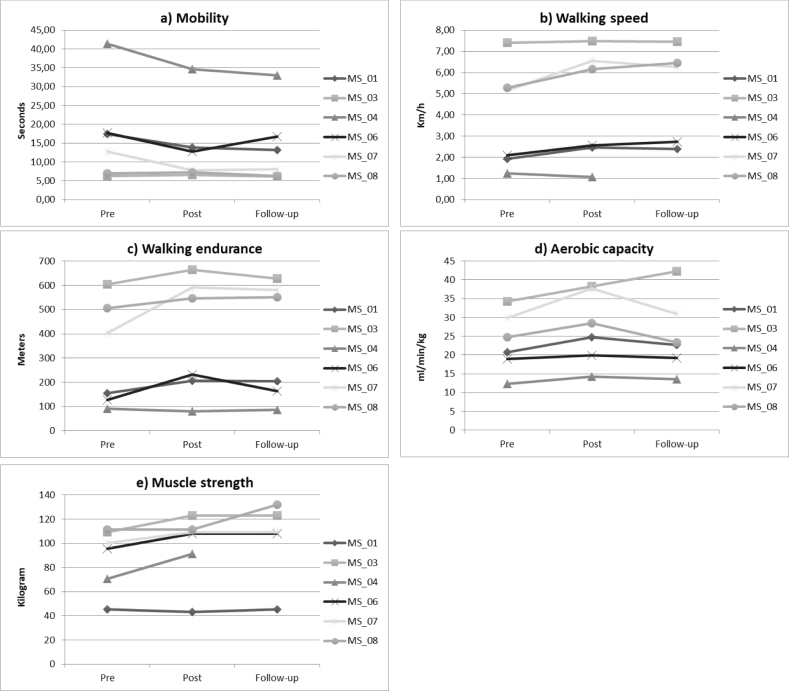
Results: Seven patients completed the study. Patients attended a mean of 93% of the training sessions. One adverse event was reported, which was not related to the training programme. Patients scored positive or very positive on 86% of the feasibility aspects and scored an overall grade of 8.9 on a scale of 1-10 regarding satisfaction with the training programme. Functional capacity, aerobic capacity, and muscle strength seemed to be improved after the training programme, but the improvements were not always sustained.
Conclusion: This new high-volume and high-intensity functional training programme appeared to be feasible in patients with MS, and may improve their functional capacity, aerobic capacity and muscle strength. A large-scale controlled trial over a longer period of time is required to evaluate the added value of the training programme.
Keywords: exercise therapy; multiple sclerosis; rehabilitation.
© Published by Medical Journals Sweden, on behalf of the Foundation for Rehabilitation Information.
Conflict of interest statement
The authors have no conflicts of interest to declare.
Figures
References
-
- Langeskov-Christensen M, Heine M, Kwakkel G, Dalgas U. Aerobic capacity in persons with multiple sclerosis: a systematic review and meta-analysis. Sports Med 2015; 45: 905–923. - PubMed
-
- Motl RW. Physical activity and irreversible disability in multiple sclerosis. Exerc Sport Sci Rev 2010; 38: 186–191. - PubMed
LinkOut - more resources
Full Text Sources