


Real-world Early Outcomes and Retreatment Rates Following Water Vapour Ablative Therapy for Symptomatic Benign Prostatic Hyperplasia
- PMID: 35528787
- PMCID: PMC9068731
- DOI: 10.1016/j.euros.2022.03.006
Real-world Early Outcomes and Retreatment Rates Following Water Vapour Ablative Therapy for Symptomatic Benign Prostatic Hyperplasia
Abstract
Background: Rezūm water vapour ablation is an effective minimally invasive surgical therapy for the treatment of bladder outflow obstruction.
Objective: To present early outcomes and reoperation rates after Rezūm, including an analysis of retreatment rates to gain an insight into optimal patient selection and the durability of the procedure.
Design setting and participants: Data were prospectively collected for consecutive patients undergoing Rezūm for symptomatic benign prostatic hyperplasia between March 2017 and January 2020 at two hospital sites.
Intervention: Rezūm treatment of the prostate.
Outcome measurements and statistical analysis: Patients were reviewed at 6 wk and 3, 6, and 12 mo after their Rezūm procedure. We evaluated changes in urinary symptoms and the retreatment rate.
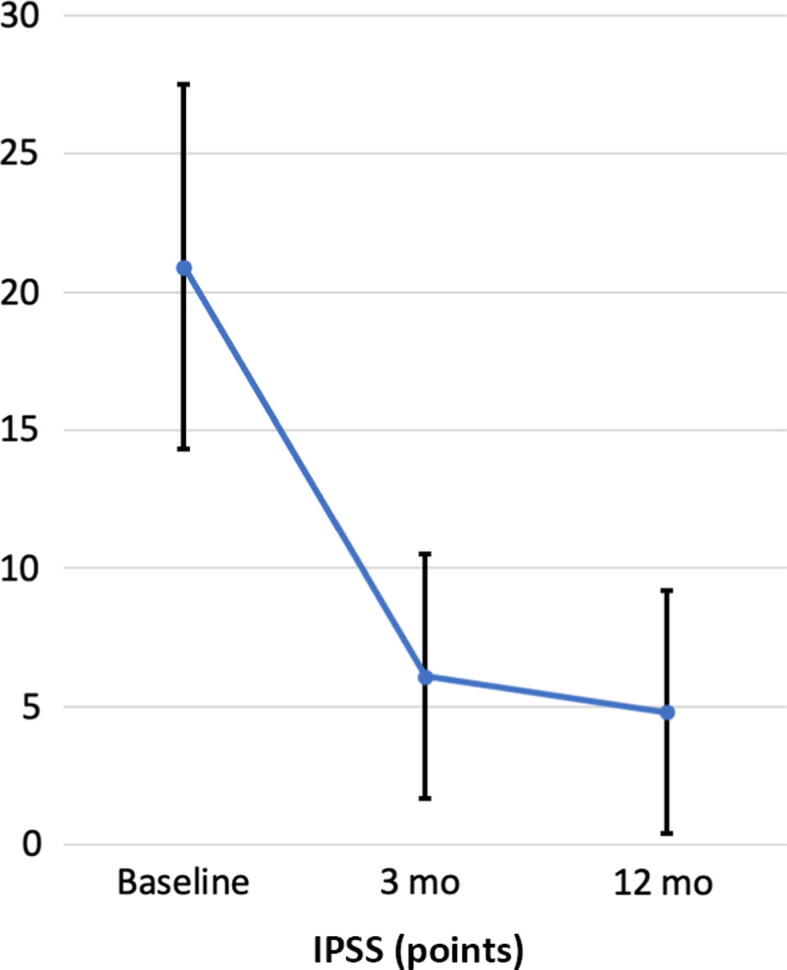
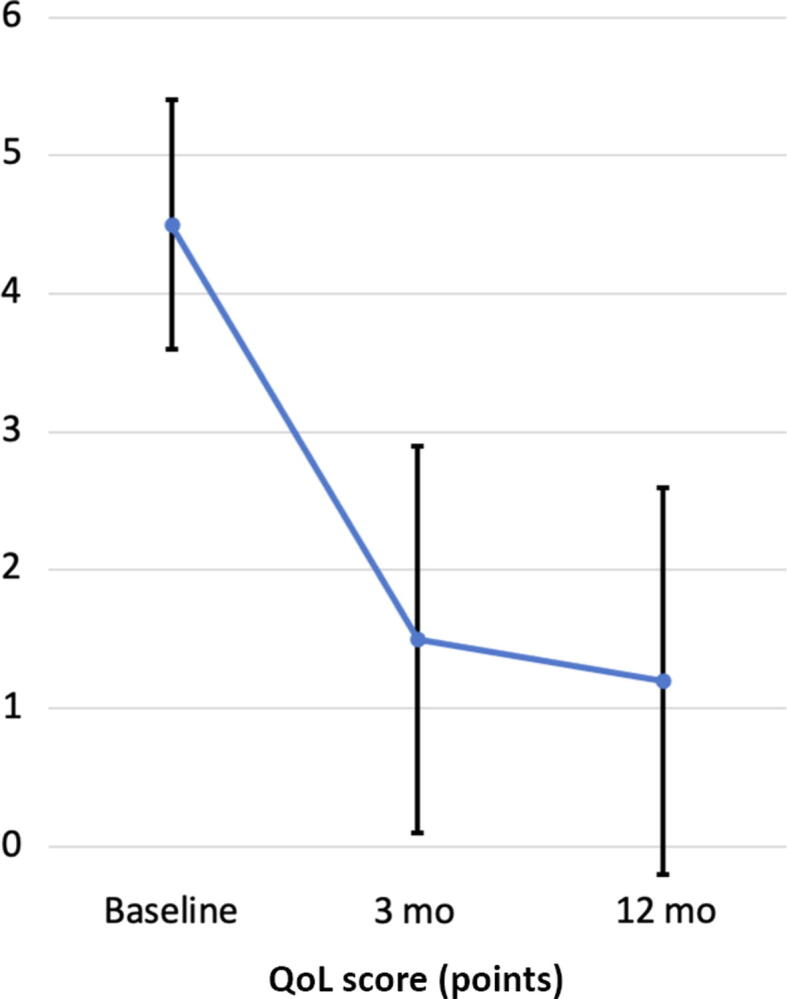
Results and limitations: A total of 461 patients undergoing Rezūm were analysed. The mean (±standard deviation) follow-up duration was 16.7 ± 10.4 mo. The mean patient age was 67.5 ± 7.8 yr and the mean prostate volume was 56.5 ± 24.0 ml. There was a significant improvement in mean maximum flow rate and postvoid residual volume and in International Prostate Symptom Score and quality-of-life scores (p < 0.0001). During the follow-up period, 21 patients (4.6%) required retreatment, of which 11 cases (2.4%) were within the first year. The retreatments included eight bladder neck incisions or resections, six transurethral resections of the prostate, four Greenlight laser photoselective vaporisations of the prostate, and three Rezūm procedures. The median length of time to a further operation was 11.5 mo (range 3-34). The most common findings at reoperation were an inadequately treated median lobe, an obstructing bladder neck, and in some cases asymmetry of the prostate cavity or recesses within the prostate gland.
Conclusions: This study demonstrates that the beneficial effects of Rezūm observed in the pivotal phase 2 randomised study are transferable to a real-world population with a comparable early retreatment rate. A range of procedures were used for retreatment. The factors dictating which option to select were based on patient concerns regarding side effects, gland volume, symptom profile, and cystoscopy findings.
Patient summary: We investigated outcomes for patients undergoing Rezūm, a water vapour treatment to reduce the size of the prostate in men with obstruction of the bladder outlet because of benign prostate enlargement. This technique yields significant improvements in symptoms and preserves sexual function. The proportion of men needing retreatment was 2.4% in the first year after their Rezūm procedure.
Keywords: Benign prostatic hyperplasia; Lower urinary tract symptoms; Minimally invasive therapy; Reoperation; Rezūm; Water vapour therapy.
© 2022 The Authors.
Figures


References
-
- McVary K.T., Gittelman M.C., Goldberg K.A., et al. Final 5-year outcomes of the multicenter randomized sham-controlled trial of Rezūm water vapor thermal therapy for treatment of moderate-to-severe lower urinary tract symptoms secondary to benign prostatic hyperplasia. J Urol. 2021;206:715–724. doi: 10.1097/JU.0000000000001778. - DOI - PubMed
-
- Darson M.F., Alexander E.E., Schiffman Z.J., et al. Procedural techniques and multicenter postmarket experience using minimally invasive convective radiofrequency thermal therapy with Rezūm system for treatment of lower urinary tract symptoms due to benign prostatic hyperplasia. Res Rep Urol. 2017;9:159–168. - PMC - PubMed
-
- McVary K.T., Gange S.N., Gittelman M.C., et al. Minimally invasive prostate convective water vapour energy ablation: a multicenter, randomized, controlled study for the treatment of lower urinary tract symptoms secondary to benign prostatic hyperplasia. J Urol. 2016;195:1529–1538. - PubMed
LinkOut - more resources
Full Text Sources
