


Perspectives on the Use of Small Noncoding RNAs as a Therapy for Severe Virus-Induced Disease Manifestations and Late Complications
- PMID: 35529531
- PMCID: PMC9066397
- DOI: 10.1007/s12668-022-00977-z
Perspectives on the Use of Small Noncoding RNAs as a Therapy for Severe Virus-Induced Disease Manifestations and Late Complications
Abstract
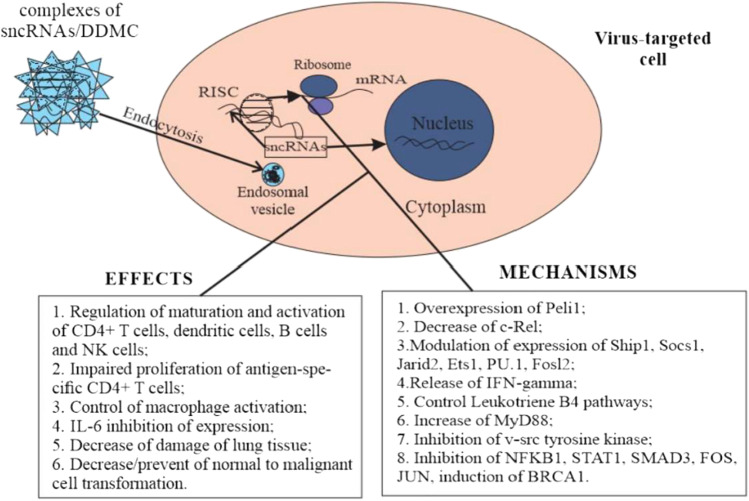
Many viruses appear each year. Some of these viruses result in severe disease and even death. The frequency of epidemics and pandemics is growing at an alarming rate. The lack of virus-specific etiopathogenic drugs necessitates the search for new tools for the complex treatment of severe viral diseases and their late complications. Small noncoding RNAs and their antagonists may be effective therapeutic tools for preventing virus-induced damage to targeted epithelial cells and surrounding tissues in the manifestation stage. Moreover, sncRNAs could interfere with the virus-interacting host genes that trigger the malignant transformation of target cells as a late complication of severe viral diseases.
Keywords: ARDS; COVID-19; Cancer; SARS-CoV-2; Small noncoding RNAs.
© The Author(s), under exclusive licence to Springer Science+Business Media, LLC, part of Springer Nature 2022.
Conflict of interest statement
Conflict of InterestThe author declares no competing interests.
Figures
References
-
- Bonagura VR, Rosenthal DW. Stiehm’s immune deficiencies. Elsevier; 2020. Infections that cause secondary immune deficiency; pp. 1035–1051.
-
- Immunity to microbes . Injurious effects of immune responses. In: Abbas AK, Lichtman AH, Pillai S, editors. Cellular and molecular immunology. Elsevier; 2007. pp. 354–355.
Publication types
LinkOut - more resources
Full Text Sources
Miscellaneous