


Role of Nutritional Support under Clinical Nursing Path on the Efficacy, Quality of Life, and Nutritional Status of Elderly Patients with Alzheimer's Disease
- PMID: 35529916
- PMCID: PMC9071863
- DOI: 10.1155/2022/9712330
Role of Nutritional Support under Clinical Nursing Path on the Efficacy, Quality of Life, and Nutritional Status of Elderly Patients with Alzheimer's Disease
Retraction in
-
Retracted: Role of Nutritional Support under Clinical Nursing Path on the Efficacy, Quality of Life, and Nutritional Status of Elderly Patients with Alzheimer's Disease.Evid Based Complement Alternat Med. 2023 Jun 21;2023:9807056. doi: 10.1155/2023/9807056. eCollection 2023. Evid Based Complement Alternat Med. 2023. PMID: 37387956 Free PMC article.
Abstract
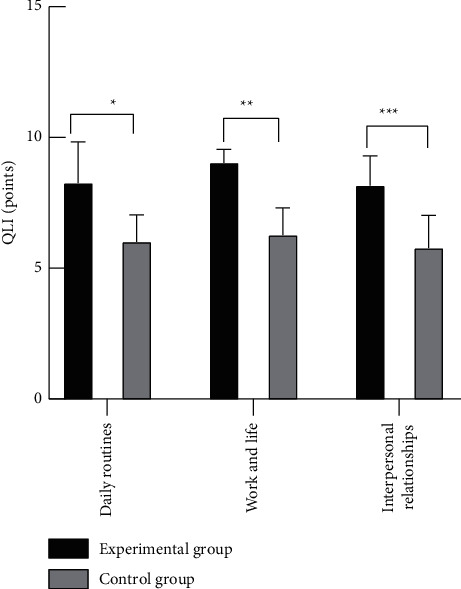
Objective: To study the effect of nutritional support under the clinical nursing path on the nursing effect, quality of life, and nutritional status of elderly patients with Alzheimer's disease.
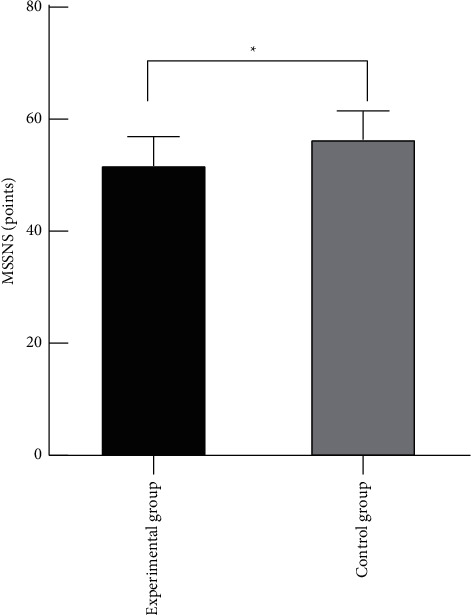
Methods: 110 elderly patients with Alzheimer's disease admitted to our hospital from February 2018 to October 2019 were randomly selected and assigned at a ratio of 1 : 1 via random draw to receive either routine nursing (control group) or nutritional support under the clinical nursing path (experimental group). Outcome measures included nursing efficiency, quality of life index (QLI) score, Pittsburgh sleep quality index (PSQI) score, Mental Status Scale in Non-psychiatric Settings (MSSNS) score, social disability screening schedule (SDSS) cognitive function score, and Mini Nutritional Assessment (MNA).
Results: Nutritional support under the clinical nursing path was associated with significantly higher nursing efficiency and quality of life scores versus routine nursing (P < 0.05). Nutritional support under the clinical nursing path resulted in significantly lower PSQI, MSSNS, and SDSS scores, and fewer malnourished cases versus routine nursing (P < 0.05).
Conclusion: Nutritional support under the clinical nursing pathway can significantly improve the quality of life, cognitive function, psychological status, and nutritional status of elderly patients with Alzheimer's disease, and has high application value.
Copyright © 2022 Haiyan Wu et al.
Conflict of interest statement
All authors declare that they have no financial conflicts of interest.
Figures
References
-
- Daugherty Ana M., Chopra T., Korzeniewski Steven J., Levy P. COVID-19 as a risk factor for Alzheimer’s disease and related dementia: a perspective from detroit, MI. Psychiatry Research . 2020;294 - PubMed
-
- Sivaniya S., Anne A., Natasha Rajah M., Gillian E. Sex and gender differences in cognitive and brain reserve: implications for Alzheimer’s disease in women. Frontiers in Neuroendocrinology . 2021;60 - PubMed
-
- Rowan P., Florencia I. M., Cencora Maya M., Adriana D., Bennett D. A., Claudio C. A. A new role for matrix metalloproteinase-3 in the NGF metabolic pathway: proteolysis of mature NGF and sex-specific differences in the continuum of Alzheimer’s pathology. Neurobiology of Disease . 2021;148 - PMC - PubMed
-
- Tabea J., Clark C., Anja K., Piotr L., Dieter L. ., Popp J. Cholesterol metabolites and plant sterols in cerebrospinal fluid are associated with Alzheimer’s cerebral pathology and clinical disease progression. The Journal of Steroid Biochemistry and Molecular Biology . 2021;205 - PubMed
Publication types
LinkOut - more resources
Full Text Sources
