


Optical substrates for drug-metabolizing enzymes: Recent advances and future perspectives
- PMID: 35530147
- PMCID: PMC9069481
- DOI: 10.1016/j.apsb.2022.01.009
Optical substrates for drug-metabolizing enzymes: Recent advances and future perspectives
Abstract
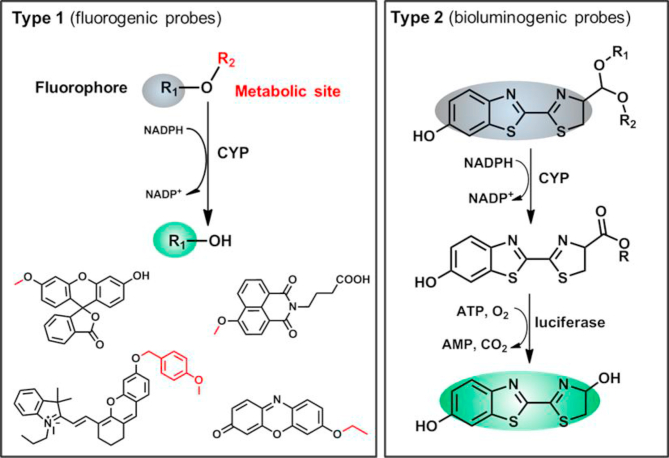
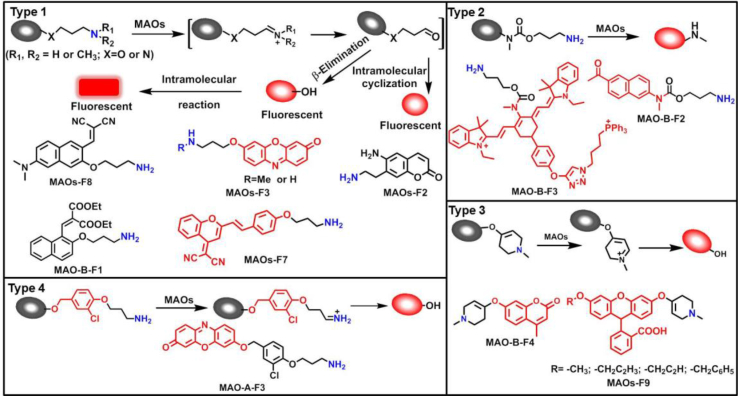
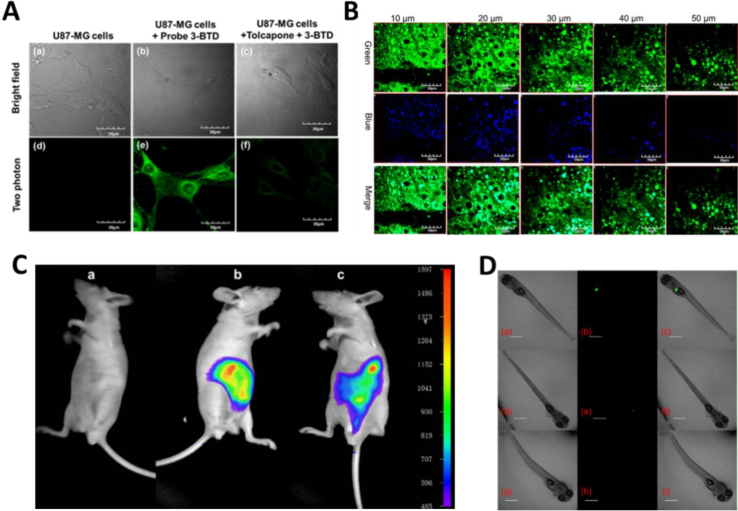
Drug-metabolizing enzymes (DMEs), a diverse group of enzymes responsible for the metabolic elimination of drugs and other xenobiotics, have been recognized as the critical determinants to drug safety and efficacy. Deciphering and understanding the key roles of individual DMEs in drug metabolism and toxicity, as well as characterizing the interactions of central DMEs with xenobiotics require reliable, practical and highly specific tools for sensing the activities of these enzymes in biological systems. In the last few decades, the scientists have developed a variety of optical substrates for sensing human DMEs, parts of them have been successfully used for studying target enzyme(s) in tissue preparations and living systems. Herein, molecular design principals and recent advances in the development and applications of optical substrates for human DMEs have been reviewed systematically. Furthermore, the challenges and future perspectives in this field are also highlighted. The presented information offers a group of practical approaches and imaging tools for sensing DMEs activities in complex biological systems, which strongly facilitates high-throughput screening the modulators of target DMEs and studies on drug/herb‒drug interactions, as well as promotes the fundamental researches for exploring the relevance of DMEs to human diseases and drug treatment outcomes.
Keywords: Drug-metabolizing enzymes (DMEs); Fluorescence-based assay; High-throughput screening; Optical substrates.
© 2022 Chinese Pharmaceutical Association and Institute of Materia Medica, Chinese Academy of Medical Sciences. Production and hosting by Elsevier B.V.
Figures





References
-
- Iyanagi T. Molecular mechanism of phase I and phase II drug-metabolizing enzymes: implications for detoxification. Int Rev Cytol. 2007;260:35–112. - PubMed
-
- Manikandan P., Nagini S. Cytochrome P450 structure, function and clinical significance: a review. Curr Drug Targets. 2018;19:38–54. - PubMed
-
- Zanger U.M., Schwab M. Cytochrome p450 enzymes in drug metabolism: regulation of gene expression, enzyme activities, and impact of genetic variation. Pharmacol Ther. 2013;138:103–141. - PubMed
-
- Munro A.W., Girvan H.M., Mason A.E., Dunford A.J., McLean K.J. What makes a P450 tick?. Trends Biochem Sci. 2013;38:140–150. - PubMed
Publication types
LinkOut - more resources
Full Text Sources
