


Multidirectional Overground Robotic Training Leads to Improvements in Balance in Older Adults
- PMID: 35531321
- PMCID: PMC9078220
- DOI: 10.3390/robotics10030101
Multidirectional Overground Robotic Training Leads to Improvements in Balance in Older Adults
Abstract
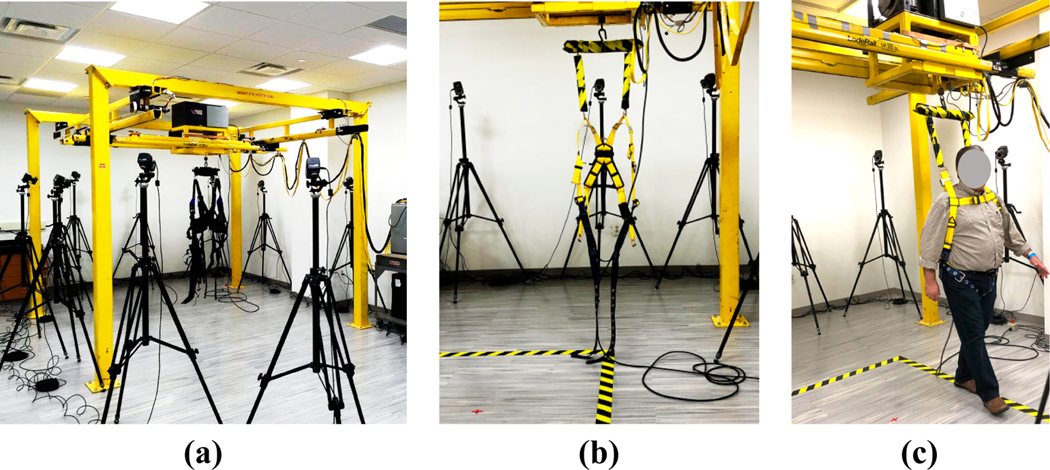
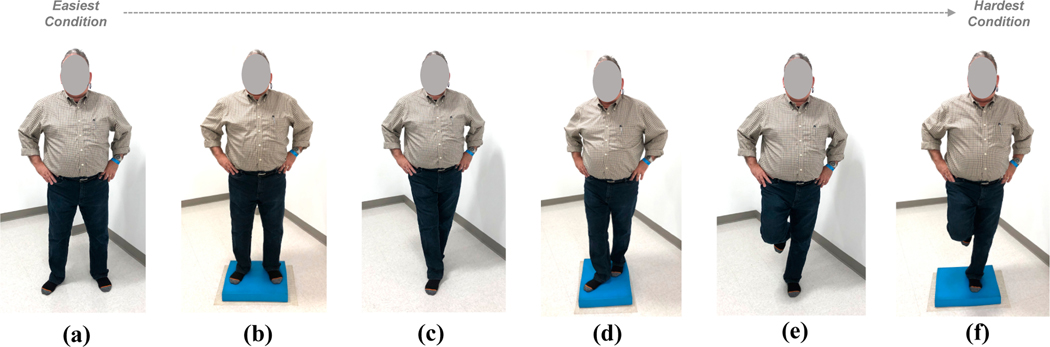
For the rapidly growing aging demographic worldwide, robotic training methods could be impactful towards improving balance critical for everyday life. Here, we investigated the hypothesis that non-bodyweight supportive (nBWS) overground robotic balance training would lead to improvements in balance performance and balance confidence in older adults. Sixteen healthy older participants (69.7 ± 6.7 years old) were trained while donning a harness from a distinctive NaviGAITor robotic system. A control group of 11 healthy participants (68.7 ± 5.0 years old) underwent the same training but without the robotic system. Training included 6 weeks of standing and walking tasks while modifying: (1) sensory information (i.e., with and without vision (eyes-open/closed), with more and fewer support surface cues (hard or foam surfaces)) and (2) base-of-support (wide, tandem and single-leg standing exercises). Prior to and post-training, balance ability and balance confidence were assessed via the balance error scoring system (BESS) and the Activities specific Balance Confidence (ABC) scale, respectively. Encouragingly, results showed that balance ability improved (i.e., BESS errors significantly decreased), particularly in the nBWS group, across nearly all test conditions. This result serves as an indication that robotic training has an impact on improving balance for healthy aging individuals.
Keywords: aging; assistive robotics; balance; elderly; falls; rehabilitation robots; sensory training.
Conflict of interest statement
Conflicts of Interest: The authors declare no conflict of interest.
Figures



References
-
- NIA Strategic Directions 2016. Aging Well in the 21st Century: Strategic Directions for Research on Aging. Available online: https://www.nia.nih.gov/about/agingmater-well-21st-century-strategic-dir... (accessed on 1 August 2020).
-
- Centers for Disease Control and Prevention (CDC) (Last Updated 24 March 2015). Stroke Frequently Asked Questions (FAQs). Available online: http://www.cdc.gov/stroke/faqs.htm (accessed on 1 August 2020).
-
- Jørgensen L; Engstad T; Jacobsen BK Higher incidence of falls in long-term stroke survivors than in population controls depressive symptoms predict falls after stroke. Stroke 2002, 33, 542–547. - PubMed
-
- Watanabe Y. Fear of falling among stroke survivors after discharge from inpatient rehabilitation. Int. J. Rehabil. Res. 2005, 28, 149–152. - PubMed
-
- Legters K. Fear of Falling. Phys. Ther. 2002, 82, 264–272. - PubMed
Grants and funding
LinkOut - more resources
Full Text Sources