


doi: 10.1093/ofid/ofac173.
eCollection 2022 May.
Follow-up Blood Culture Practices for Gram-Negative Bloodstream Infections in Immunocompromised Hosts at a Large Academic Medical Center
Affiliations
- PMID: 35531383
- PMCID: PMC9070332
- DOI: 10.1093/ofid/ofac173
Item in Clipboard
Follow-up Blood Culture Practices for Gram-Negative Bloodstream Infections in Immunocompromised Hosts at a Large Academic Medical Center
Open Forum Infect Dis.
.
Abstract
The role of follow-up blood cultures (FUBCs) in gram-negative bloodstream infections to improve clinical outcomes remains controversial, especially among immunocompromised patients. Among 139 patients, FUBCs were common (117, 84.2%); however, positive FUBCs were rare (3, 2.6%). Only presence of fever was associated with a positive FUBC.
Keywords: bloodstream infection; gram-negative; immunocompromise; oncology; transplant.
© The Author(s) 2022. Published by Oxford University Press on behalf of Infectious Diseases Society of America.
Figures
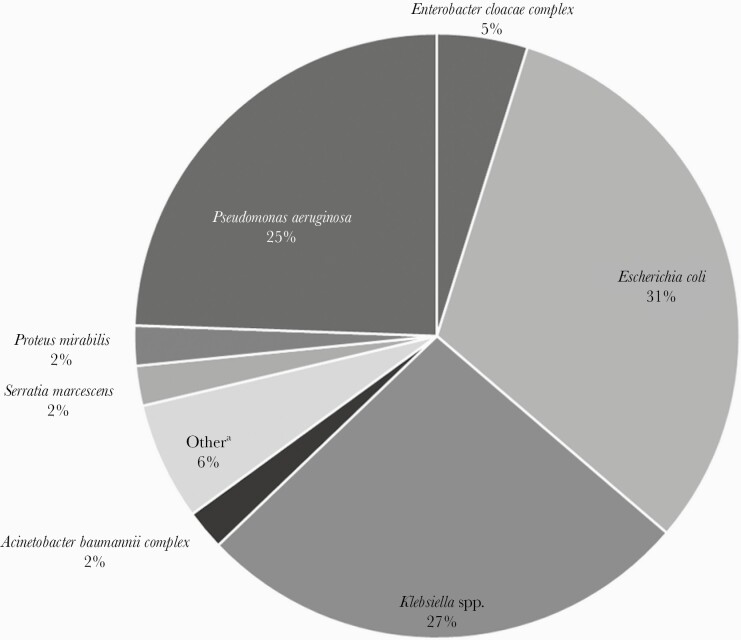
Microbiologic distribution of index blood cultures. aEnterobacter hormaechei, Citrobacter spp., Klebsiella variicola, Morganella morganii, Pantoea spp., Pluralibacter (Enterobacter) gergoviae, Raoultella (Klebsiella) planticola, Stenotrophomonas maltophilia.
References
-
- Liu C, Bayer A, Cosgrove SE, et al. Clinical practice guidelines by the Infectious Diseases Society of America for the treatment of methicillin-resistant Staphylococcus aureus infections in adults and children: executive summary. Clin Infect Dis 2011; 52:285–92. - PubMed
-
- Harris JA, Cobbs CG.. Persistent gram-negative bacteremia: observations in twenty patients. Am J Surg 1973; 125:705–17. - PubMed
-
- Giannella M, Pascale R, Pancaldi L, et al. Follow-up blood cultures are associated with improved outcome of patients with gram-negative bloodstream infections: retrospective observational cohort study. Clin Microbiol Infect 2020; 26:897–903. - PubMed
