


Markers of ventricular repolarization and overall mortality in sleep disordered breathing
- PMID: 35533628
- PMCID: PMC10563794
- DOI: 10.1016/j.sleep.2022.04.016
Markers of ventricular repolarization and overall mortality in sleep disordered breathing
Abstract
Introduction: Variability and prolongation of ventricular repolarization - measured by changes in QT interval and QT variability are independently associated with ventricular arrhythmias, sudden death, and mortality but such studies did not examine the role of sleep-disordered breathing. We aimed to determine whether sleep-disordered breathing moderated the association between measures of ventricular repolarization and overall mortality.
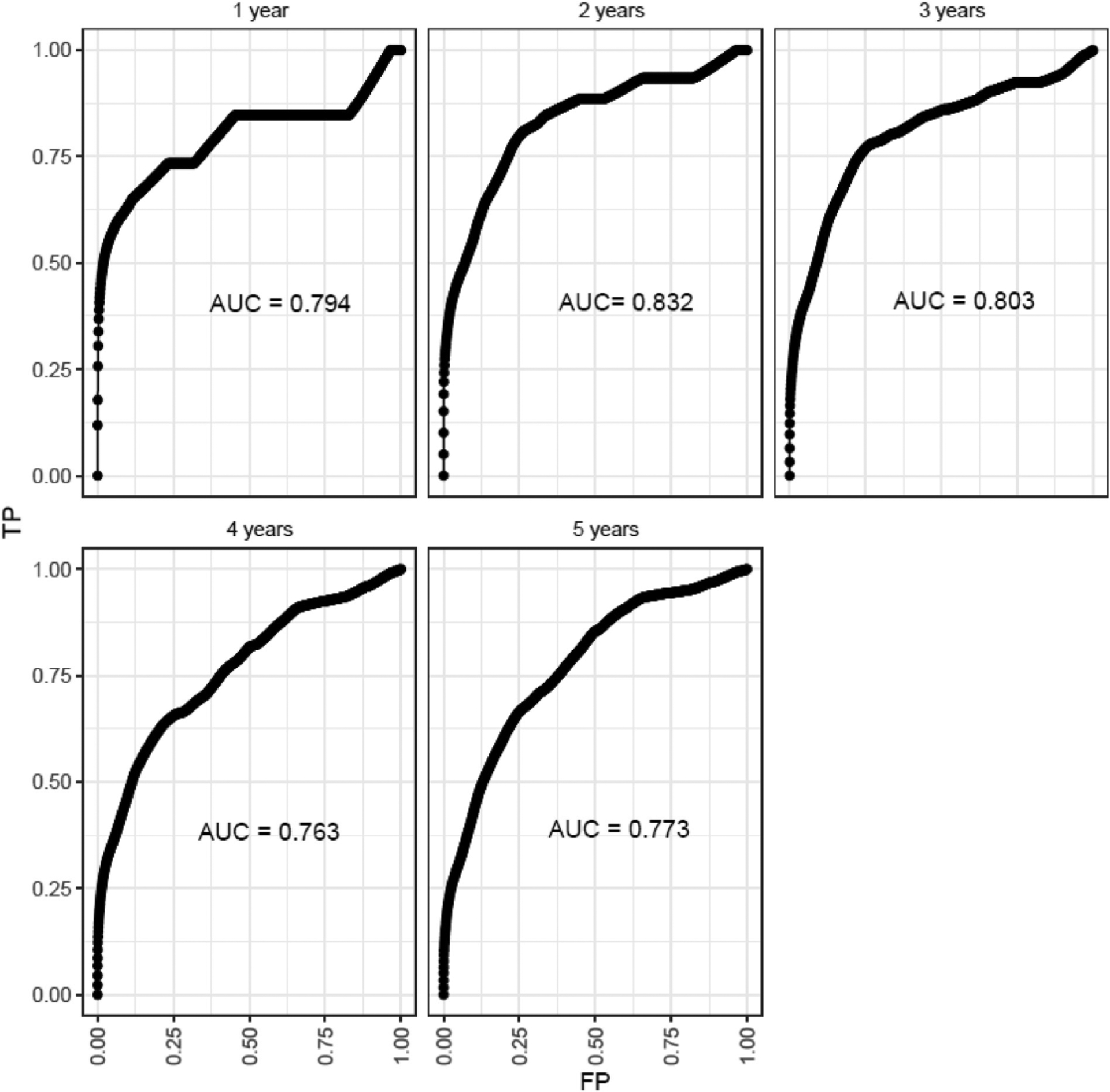
Methods: Eight hundred participants were randomly selected from each of the following four groups in the Sleep Heart Health Study: mild, moderate, severe or no sleep disordered breathing (n = 200 each). Overnight electrocardiograms were analyzed for QTc duration and QT variability (standard deviation of QT intervals, normalized QT interval variance and the short-term interval beat-to-beat QT variability). Cox proportional hazards penalized regression modeling was used to identify predictors of mortality.
Results: Eight hundred of 5600 participants were randomly selected. The participants (68 ± 10 years; 56.8% male) were followed for an average of 8.2 years during which time 222 (28.4%) died. QTc, SDQT, and QTVN were associated with the presence of SDB (p = 0.002, p = 0.014, and p = 0.024, respectively). After adjusting for covariates, the presence of sleep-disordered breathing did not moderate the association between QTc length, QT variability and mortality (p > 0.05).
Conclusion: Sleep-disordered breathing was associated with some measures of ventricular repolarization. However, sleep-disordered breathing was not an effect modifier for the relationship between QTc and QT variability and mortality.
Keywords: Mortality; QT interval; QT variability; Sleep apnea; Sleep disordered breathing; Ventricular repolarization.
Copyright © 2022 Elsevier B.V. All rights reserved.
Conflict of interest statement
Declaration of competing interest There are no conflicts of interest to report.
Figures
References
Publication types
MeSH terms
Grants and funding
- UH3 HL140144/HL/NHLBI NIH HHS/United States
- R25 HL126140/HL/NHLBI NIH HHS/United States
- C06 OD028307/OD/NIH HHS/United States
- R56 HL151637/HL/NHLBI NIH HHS/United States
- R61 HL151254/HL/NHLBI NIH HHS/United States
- R56 HL138377/HL/NHLBI NIH HHS/United States
- R33 HL151254/HL/NHLBI NIH HHS/United States
- R21 AG059202/AG/NIA NIH HHS/United States
- L30 HL154400/HL/NHLBI NIH HHS/United States
- R01 AG065346/AG/NIA NIH HHS/United States
- UG3 HL140144/HL/NHLBI NIH HHS/United States
- U01 HL053938/HL/NHLBI NIH HHS/United States
LinkOut - more resources
Full Text Sources
Medical
