


Key process features of personalized diet counselling in metabolic syndrome: secondary analysis of feasibility study in primary care
- PMID: 35534841
- PMCID: PMC9081667
- DOI: 10.1186/s40795-022-00540-9
Key process features of personalized diet counselling in metabolic syndrome: secondary analysis of feasibility study in primary care
Abstract
Background: Personalized diet counselling, as part of lifestyle change programs for cardiometabolic risk conditions (combinations of prediabetes or type 2 diabetes, hypertension, dyslipidemia and high waist circumference) has been shown to reduce progression to type 2 diabetes overall. To identify key process of care measures that could be linked to changes in diet, we undertook a secondary analysis of a Canadian pre-post study of lifestyle treatment of metabolic syndrome (MetS). Diet counselling process measures were documented and association with diet quality changes after 3 months were assessed. Results of the primary study showed 19% reversal of MetS after 1 year.
Methods: Registered dietitians (RDs) reported on contact time, specific food behaviour goals (FBG), behaviour change techniques (BCT; adapted from the Michie CALO-RE taxonomy) and teaching resources at each contact. Diet quality was measured by 2005 Canadian Healthy Eating Index (HEI-C) and assessed for possible associations with individual BCT and FBG.
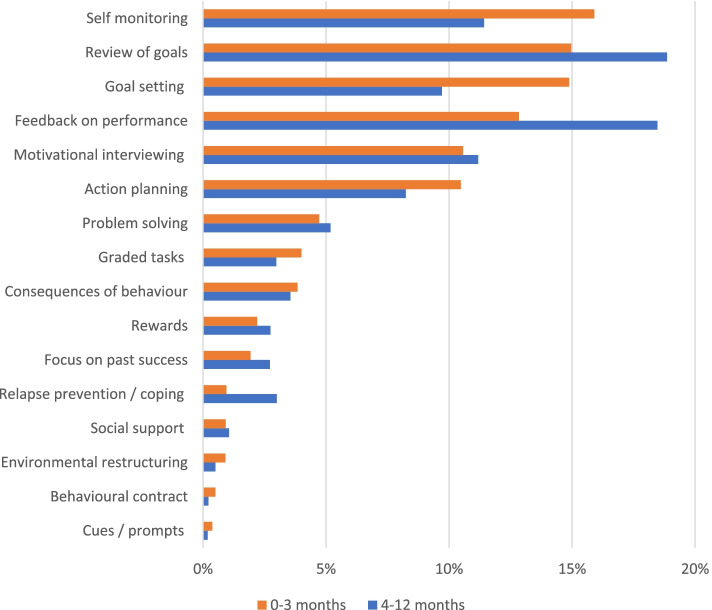
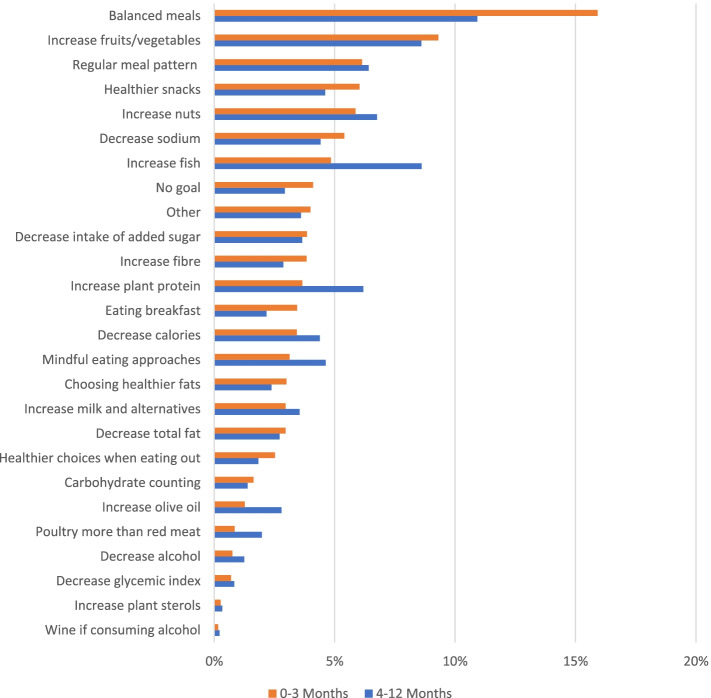
Results: Food behaviour goals associated with improved HEI-C at 3 months were: poultry more than red meat, increased plant protein, increased fish, increased olive oil, increased fruits and vegetables, eating breakfast, increased milk and alternatives, healthier fats, healthier snacks and increased nuts, with an adverse association noted for more use (> 2 times/ 3 months) of the balanced meal concept (F test; p < 0.001). Of 16 BCT, goal setting accounted for 15% of all BCT recorded, yet more goal setting (> 3 times/3 months) was associated with poorer HEI-C at 3 months (F test; p = 0.007). Only self-monitoring, feedback on performance and focus on past success were associated with improved HEI-C.
Conclusions: These results identify key aspects of process that impact diet quality. Documentation of both FBG and BCT is highly relevant in diet counselling and a summary diet quality score is a promising target for assessing short-term counselling success.
Keywords: Behaviour change techniques; Cardiometabolic conditions; Health behaviour change; Implementation; Metabolic syndrome; Nutrition care process; Personalized diet counselling; Process.
© 2022. The Author(s).
Conflict of interest statement
The authors declare that they have no competing interests.
Figures
References
-
- GBD 2017 Risk Factor Collaborators Global, regional, and national comparative risk assessment of 84 behavioural, environmental and occupational, and metabolic risks or clusters of risks for 195 countries and territories, 1990–2017: a systematic analysis for the Global Burden of Disease Study 2017. Lancet. 2018;392(10159):1923–1994. doi: 10.1016/S0140-6736(18)32225-6. - DOI - PMC - PubMed
-
- Tobe SW, Stone JA, Anderson T, Bacon S, Cheng AYY, Daskalopoulou SS, et al. Canadian cardiovascular harmonized National Guidelines Endeavour (C-CHANGE) guideline for the prevention and management of cardiovascular disease in primary care: 2018 update. CMAJ. 2018;190(40):E1192–Ee206. doi: 10.1503/cmaj.180194. - DOI - PMC - PubMed
-
- Alberti KG, Eckel RH, Grundy SM, Zimmet PZ, Cleeman JI, Donato KA, et al. Harmonizing the metabolic syndrome: a joint interim statement of the international diabetes federation task force on epidemiology and prevention; National Heart, Lung, and Blood Institute; American Heart Association; world heart federation; international atherosclerosis society; and International Association for the Study of obesity. Circulation. 2009;120(16):1640–1645. doi: 10.1161/CIRCULATIONAHA.109.192644. - DOI - PubMed
LinkOut - more resources
Full Text Sources
Miscellaneous