


Principles, Interpretation, and Evidence-Based Role of Viscoelastic Point-of-Care Coagulation Assays in Cirrhosis and Liver Failure
- PMID: 35535095
- PMCID: PMC9077199
- DOI: 10.1016/j.jceh.2021.05.001
Principles, Interpretation, and Evidence-Based Role of Viscoelastic Point-of-Care Coagulation Assays in Cirrhosis and Liver Failure
Abstract
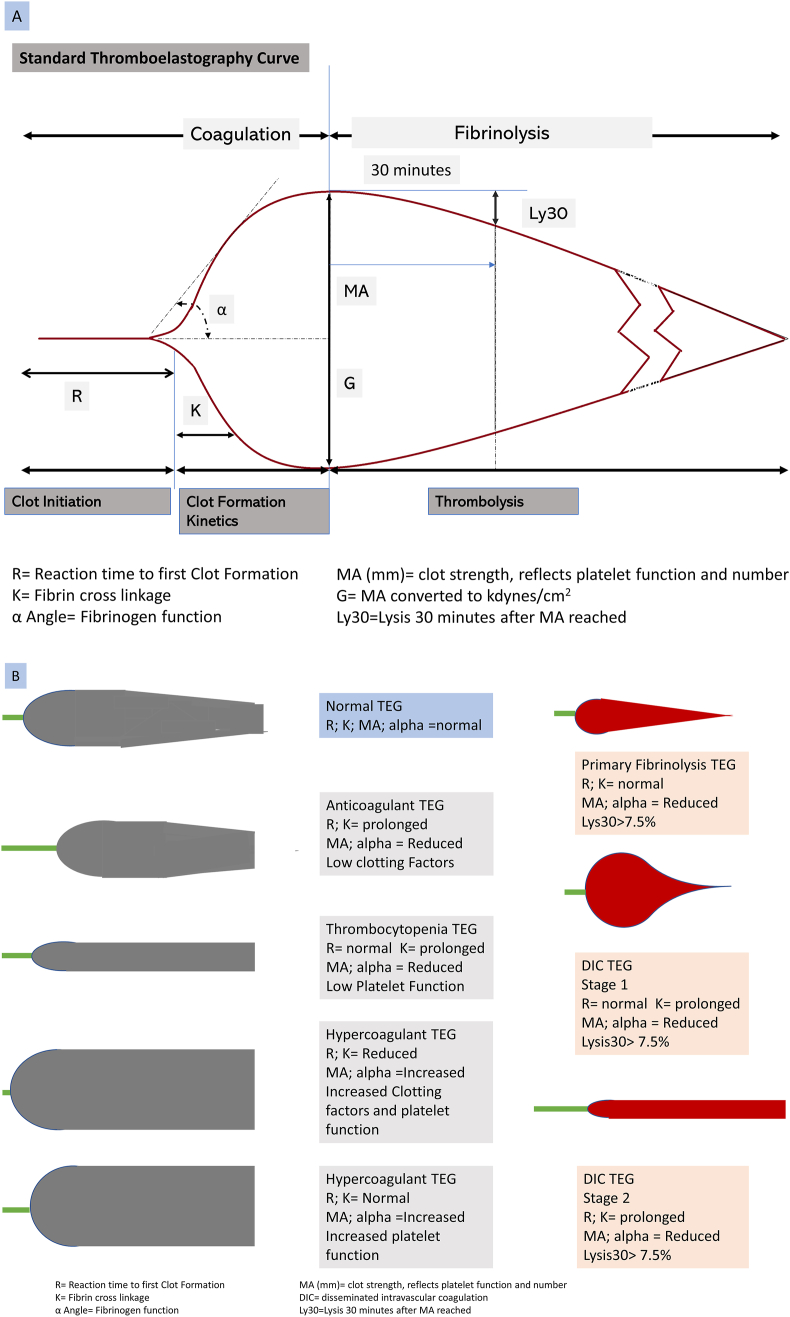
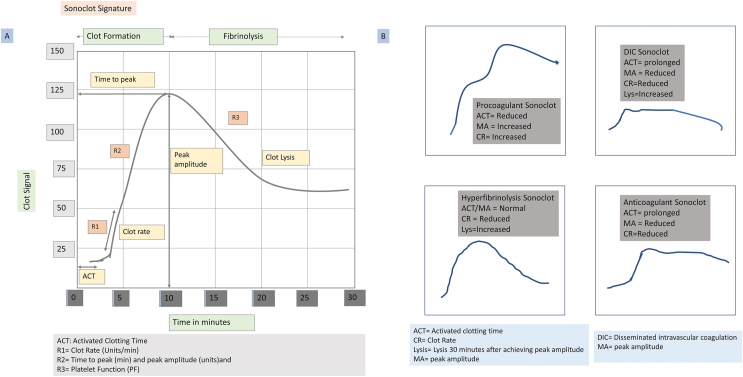
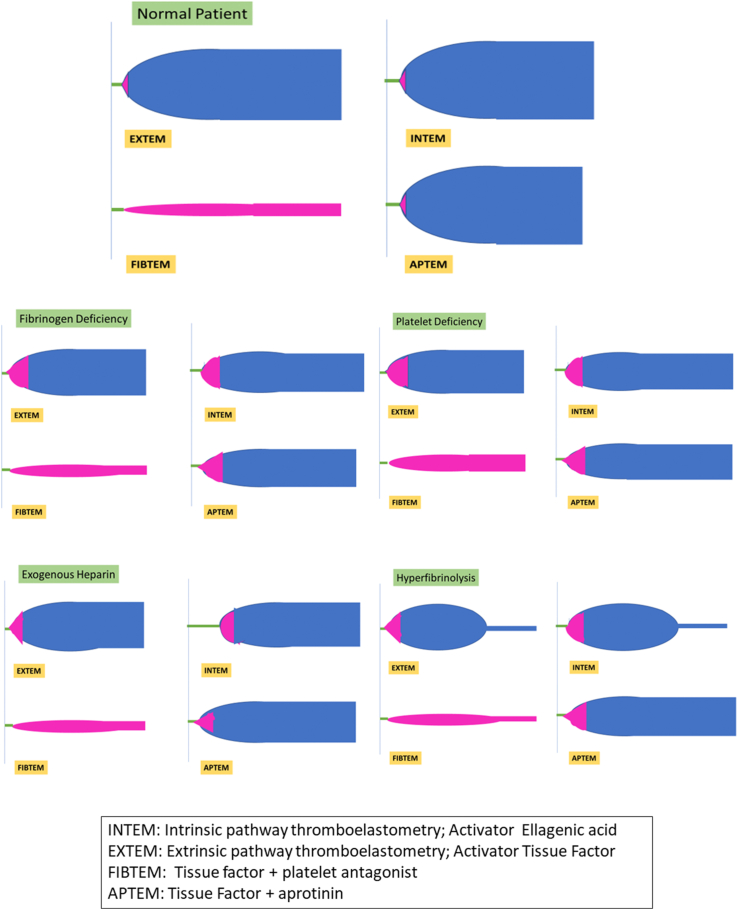
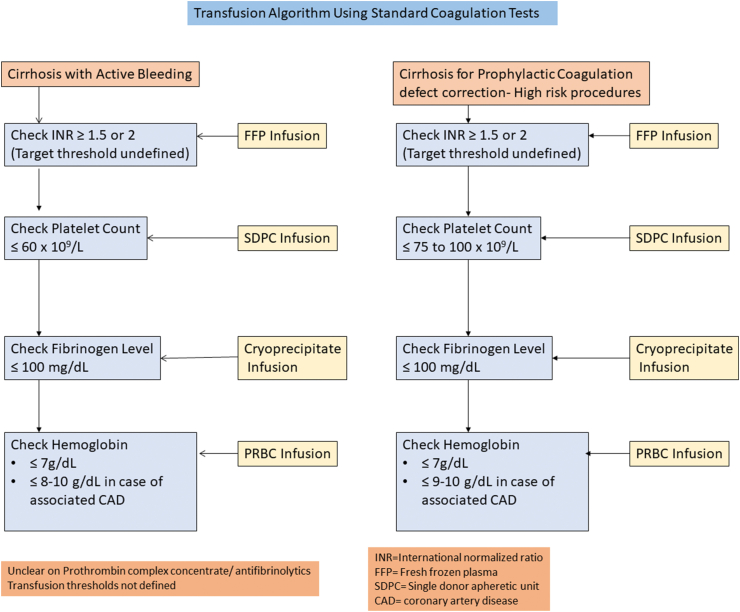
Background and aims: Standard coagulation tests such as prothrombin time, activated partial thromboplastin time, and international normalized ratio are determined by liver-synthesized coagulation factors. Despite an increased international normalized ratio, patients with cirrhosis are in a "rebalanced" state of hemostasis as the concomitant effect of reduced protein C, protein S, and thrombomodulin is not evaluated in standard coagulation tests. The cell-based model of hemostasis indicates additional mechanisms such as systemic inflammation, sepsis, and organ failures tip the delicate coagulation balance to an anticoagulant type in acute-on-chronic liver failure. In acute liver failure, thrombin generation and platelet function remain intact despite a marked prolongation in prothrombin time. We aimed to explain the principles, application, and utility of viscoelastic tests such as thromboelastography, rotational thromboelastometry, and Sonoclot.
Methods: We reviewed the available literature from MEDLINE, EMBASE and the Cochrane Central Register of Controlled Trial with the search terms 'coagulation', 'cirrhosis', 'acute-on-chronic liver failure', 'thromboelastography', 'thromboelastometry' and 'sonoclot' for cross sectional studies, cohort studies and randomized trials.
Results: The point-of-care viscoelastic tests provide actionable targets for correcting the coagulation defect in a patient with bleeding and provide evidence-based algorithms for use in liver disease. A limitation of these tests is the inability to assess vessel injury and endothelial elements.
Conclusion: Global coagulation tests provide a comprehensive estimate of coagulation in vitro; however, their use has only been validated in the setting of liver transplantation. Newer guidelines for hemostatic resuscitation are now accepting these POC tests, but additional data are required to validate their use as standard of care.
Keywords: ACLF, acute-on-chronic liver failure; ACT, activated clotting time; ALF, acute liver failure; CR, clot rate; INR, international normalized ratio; MA, maximum amplitude; R, reaction time; ROTEM; ROTEM, rotational thromboelastometry; SCT, standard coagulation tests; TEG, thromboelastography; VWF, von Willebrand factor; aPTT, activated partial thromboplastin time; cirrhosis; coagulation; sonoclot; thromboelastography.
© 2021 Indian National Association for Study of the Liver. Published by Elsevier B.V. All rights reserved.
Figures
References
-
- Lisman T., Caldwell S.H., Burroughs A.K., et al. Coagulation in Liver Disease Study Group.Hemostasis and thrombosis in patients with liver disease: the ups and downs. J Hepatol. 2010;53:362–371. - PubMed
-
- Tripodi A., Primignani M., Mannucci P.M., Caldwell S.H. Changing concepts of cirrhotic coagulopathy. Am J Gastroenterol. 2017;112:274–281. - PubMed
-
- Premkumar M., Saxena P., Rangegowda D., et al. Coagulation failure is associated with bleeding events and clinical outcome during systemic inflammatory response and sepsis in acute-on-chronic liver failure: an observational cohort study. Liver Int. 2019;39:694–704. - PubMed
-
- Segal J.B., Dzik W.H. Paucity of studies to support that abnormal coagulation test results predict bleeding in the setting of invasive procedures: an evidence-based review. Transfusion. 2005;45:1413–1425. - PubMed
LinkOut - more resources
Full Text Sources
Miscellaneous
