


Natural Aedes-Borne Virus Infection Detected in Male Adult Aedes aegypti (Diptera: Culicidae) Collected From Urban Settings in Mérida, Yucatán, México
- PMID: 35535688
- PMCID: PMC9278843
- DOI: 10.1093/jme/tjac048
Natural Aedes-Borne Virus Infection Detected in Male Adult Aedes aegypti (Diptera: Culicidae) Collected From Urban Settings in Mérida, Yucatán, México
Abstract
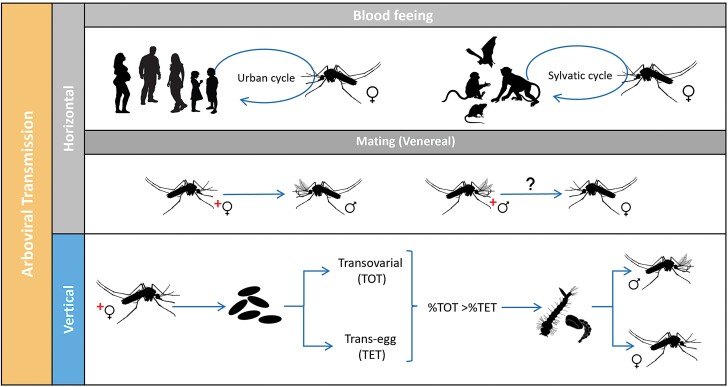
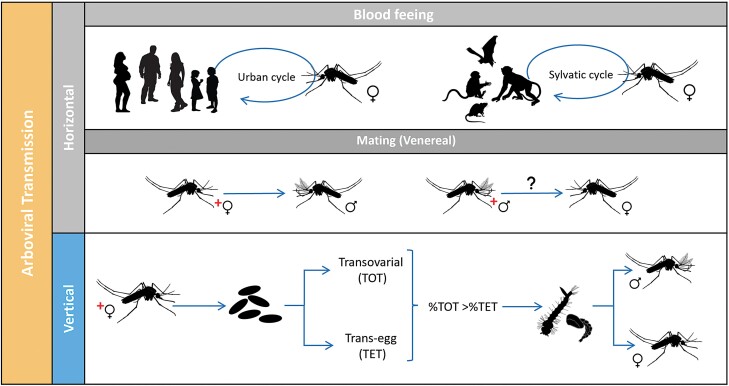
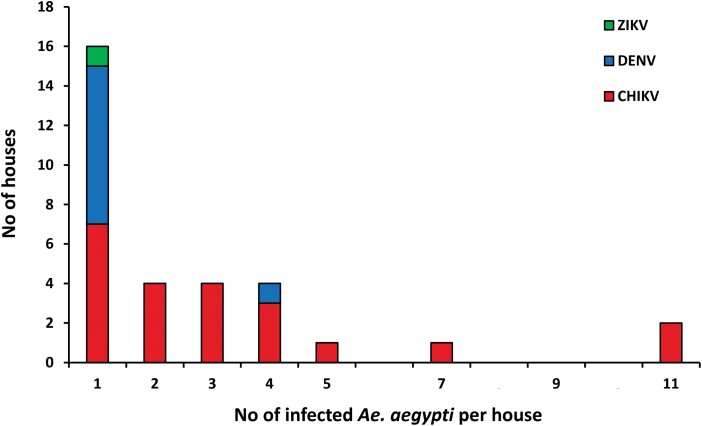
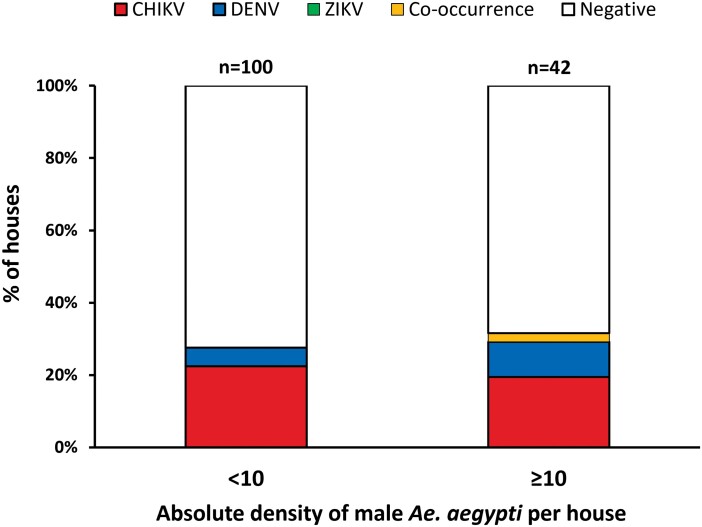
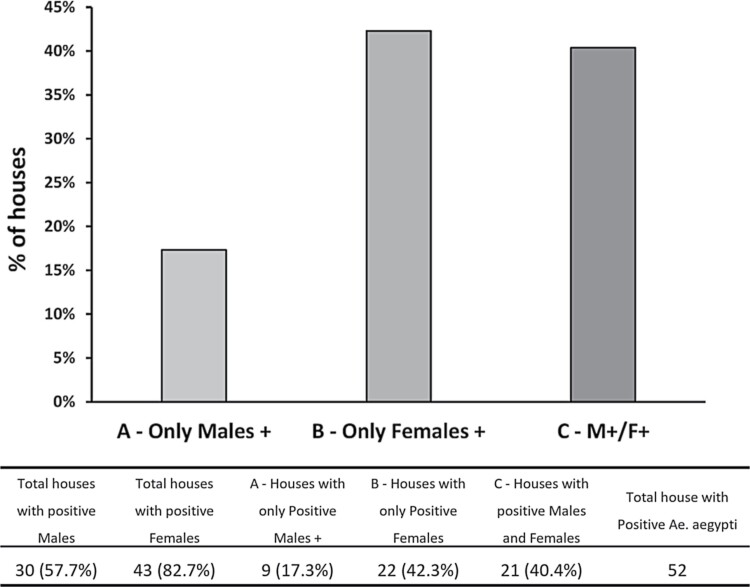
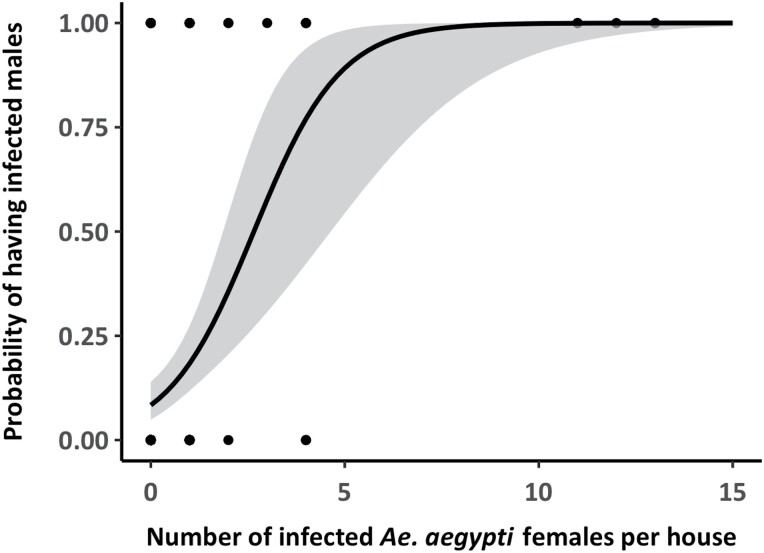
Aedes-borne viruses (ABVs) such as dengue (DENV), chikungunya (CHIKV), and Zika (ZIKV) contribute significantly to the global burden of infectious diseases, disproportionately affecting disadvantaged populations from tropical and subtropical urban areas. ABVs can be transmitted from female mosquitoes to their progeny by vertical transmission via transovarial and/or trans-egg vertical transmission and contribute to the maintenance of infected-mosquito populations year-round in endemic regions. This study describes the natural infection rate of DENV, CHIKV, and ZIKV in field-caught male Aedes (Sergentomyia) aegypti (Linnaeus) mosquitoes from Mérida, Yucatán, México, as a proxy for the occurrence of vertical virus transmission. We used indoor sequential sampling with Prokopack aspirators to collect all mosquitoes inside houses from ABV hotspots areas. Collections were performed in a DENV and CHIKV post-epidemic phase and during a period of active ZIKV transmission. We individually RT-qPCR tested all indoor collected Ae. aegypti males (1,278) followed by Sanger sequencing analysis for final confirmation. A total of 6.7% male mosquitoes were positive for ABV (CHIKV = 5.7%; DENV = 0.9%; ZIKV = 0.1%) and came from 21.0% (30/143) houses infested with males. Most ABV-positive male mosquitoes were positive for CHIKV (84.8%). The distribution of ABV-positive Ae. aegypti males was aggregated in a few households, with two houses having 11 ABV-positive males each. We found a positive association between ABV-positive males and females per house. These findings suggested the occurrence of vertical arbovirus transmission within the mosquito populations in an ABV-endemic area and, a mechanism contributing to viral maintenance and virus re-emergence among humans in post-epidemic periods.
Keywords: Aedes; density; infection; male; transmission.
© The Author(s) 2022. Published by Oxford University Press on behalf of Entomological Society of America. All rights reserved. For permissions, please e-mail: journals.permissions@oup.com.
Figures
References
-
- Adams, B., and Boots M.. 2010. How important is vertical transmission in mosquitoes for the persistence of dengue? Insights from a mathematical model. Epidemics. 2: 1–10. - PubMed
-
- Apodaca-Medina, A. I., Torres-Avendaño J. I., Rendón-Maldonado J. G., Torres-Montoya E. H., Flores-López B. A., Del Angel R. M., Velarde-Félix J. S., Salomón-Soto V. M., and Castillo-Ureta H.. 2018. First evidence of vertical infection of Dengue virus 2 in Aedes aegypti mosquitoes from Sinaloa, Mexico. Vector Borne Zoonotic Dis. 18: 231–233. - PubMed
-
- Aragão, C. F., Pinheiro V. C. S., Nunes Neto J. P., Silva E. V. P. D., Pereira G. J. G., Nascimento B. L. S. D., Castro K. D. S., Maia A. M., Catete C. P., and Martins L. C., . et al. 2019. Natural infection of Aedes aegypti by Chikungunya and Dengue type 2 virus in a transition area of North-Northeast Brazil. Viruses. 11(12): 1126. - PMC - PubMed
Publication types
MeSH terms
Grants and funding
LinkOut - more resources
Full Text Sources
Medical
