


Parental Knowledge, Self-confidence, and Usability Evaluation of a Web-Based Infographic for Pediatric Concussion: Multimethod Study
- PMID: 35536631
- PMCID: PMC9131137
- DOI: 10.2196/36317
Parental Knowledge, Self-confidence, and Usability Evaluation of a Web-Based Infographic for Pediatric Concussion: Multimethod Study
Abstract
Background: Concussions, which are known as mild traumatic brain injuries, are complex injuries caused by direct or indirect blows to the head and are increasingly being recognized as a significant public health concern for children and their families. Previous research has identified few studies examining the efficacy of educational interventions on parental concussion knowledge. The aim of this research was to actively work together with children who have experienced a concussion and their parents to develop, refine, and evaluate the usability of a web-based infographic for pediatric concussion.
Objective: The objective of this study was to report on the usability of the infographic, parental knowledge, and self-confidence in pediatric concussion knowledge before and after exposure to the infographic.
Methods: A multiphase, multimethod research design using patient engagement techniques was used to develop a web-based infographic. For this phase of the research (usability, knowledge, and confidence evaluation), parents who could communicate in English were recruited via social media platforms and invited to complete web-based questionnaires. Electronic preintervention and postintervention questionnaires were administered to parents to assess changes to concussion knowledge and confidence after viewing the infographic. A usability questionnaire with 11 items was also completed.
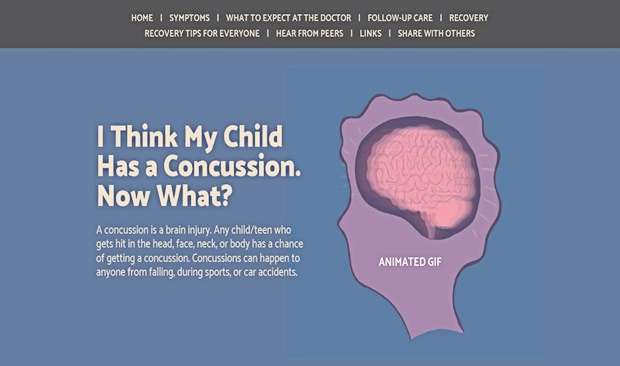
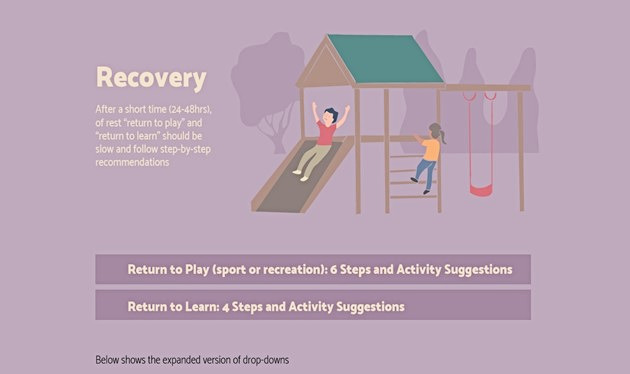
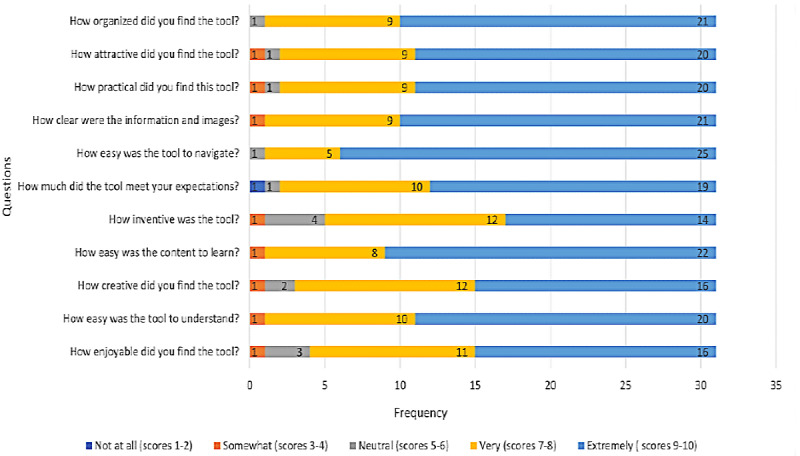
Results: A web-based, infographic was developed. The infographic is intended for parents and children and incorporates information that parents and children identified as both wants and needs about concussion alongside the best available research evidence on pediatric concussion. A total of 31 surveys were completed by parents. The mean scores for each item on the usability surveys ranged from 8.03 (SD 1.70) to 9.26 (SD 1.09) on a 10-point Likert scale, indicating that the usability components of the infographic were largely positive. There was no statistically significant difference between preintervention and postintervention knowledge scores (Z=-0.593; P=.55; both preintervention and postintervention knowledge scores had a median of 9 out of 10). In contrast, there was a statistically significant difference between preintervention (mean 3.9/5, SD 0.56) and postintervention (mean 4.4/5, SD 0.44) confidence in knowledge scores (t30=-5.083; P<.001).
Conclusions: Our results demonstrate that parents positively rated a web-based, infographic for pediatric concussion. In addition, although there was no statistically significant difference overall in parents' knowledge scores before and after viewing the infographic, their confidence in their knowledge did significantly increase. These results suggest that using a web-based infographic as a knowledge translation intervention may be useful in increasing parents' confidence in managing their child's concussion.
Keywords: concussion; educational tool; knowledge assessment; knowledge translation; mTBI; parent confidence; parent knowledge; patient engagement; usability evaluation.
©Alyson Campbell, Lisa Hartling, Vickie Plourde, Shannon D Scott. Originally published in JMIR Pediatrics and Parenting (https://pediatrics.jmir.org), 10.05.2022.
Conflict of interest statement
Conflicts of Interest: None declared.
Figures
References
-
- McCrory P, Meeuwisse W, Dvořák J, Aubry M, Bailes J, Broglio S, Cantu RC, Cassidy D, Echemendia RJ, Castellani RJ, Davis GA, Ellenbogen R, Emery C, Engebretsen L, Feddermann-Demont N, Giza CC, Guskiewicz KM, Herring S, Iverson GL, Johnston KM, Kissick J, Kutcher J, Leddy JJ, Maddocks D, Makdissi M, Manley GT, McCrea M, Meehan WP, Nagahiro S, Patricios J, Putukian M, Schneider KJ, Sills A, Tator CH, Turner M, Vos PE. Consensus statement on concussion in sport-the 5th international conference on concussion in sport held in Berlin, October 2016. Br J Sports Med. 2017 Jun;51(11):838–47. doi: 10.1136/bjsports-2017-097699.bjsports-2017-097699 - DOI - PubMed
-
- Yeates KO, Kaizar E, Rusin J, Bangert B, Dietrich A, Nuss K, Wright M, Taylor HG. Reliable change in postconcussive symptoms and its functional consequences among children with mild traumatic brain injury. Arch Pediatr Adolesc Med. 2012 Jul 01;166(7):615–22. doi: 10.1001/archpediatrics.2011.1082. http://europepmc.org/abstract/MED/22393171 archpediatrics.2011.1082 - DOI - PMC - PubMed
-
- Zemek R, Barrowman N, Freedman SB, Gravel J, Gagnon I, McGahern C, Aglipay M, Sangha G, Boutis K, Beer D, Craig W, Burns E, Farion KJ, Mikrogianakis A, Barlow K, Dubrovsky AS, Meeuwisse W, Gioia G, Meehan WP, Beauchamp MH, Kamil Y, Grool AM, Hoshizaki B, Anderson P, Brooks BL, Yeates KO, Vassilyadi M, Klassen T, Keightley M, Richer L, DeMatteo C, Osmond MH, Pediatric Emergency Research Canada (PERC) Concussion Team Clinical risk score for persistent postconcussion symptoms among children with acute concussion in the ED. JAMA. 2016 Mar 08;315(10):1014–25. doi: 10.1001/jama.2016.1203.2499274 - DOI - PubMed
-
- Davis GA, Anderson V, Babl FE, Gioia GA, Giza CC, Meehan W, Moser RS, Purcell L, Schatz P, Schneider KJ, Takagi M, Yeates KO, Zemek R. What is the difference in concussion management in children as compared with adults? A systematic review. Br J Sports Med. 2017 Jun;51(12):949–57. doi: 10.1136/bjsports-2016-097415.bjsports-2016-097415 - DOI - PubMed
LinkOut - more resources
Full Text Sources
