


Virulence-associated genes analysis of carbapenemase-producing Escherichia coli isolates
- PMID: 35536848
- PMCID: PMC9089865
- DOI: 10.1371/journal.pone.0266787
Virulence-associated genes analysis of carbapenemase-producing Escherichia coli isolates
Abstract
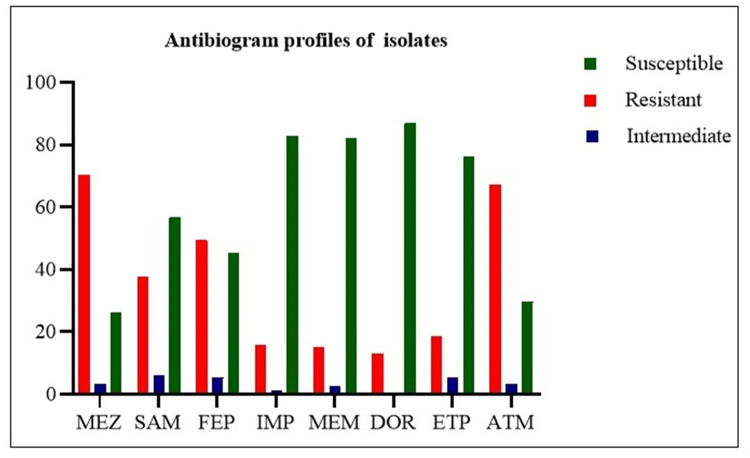
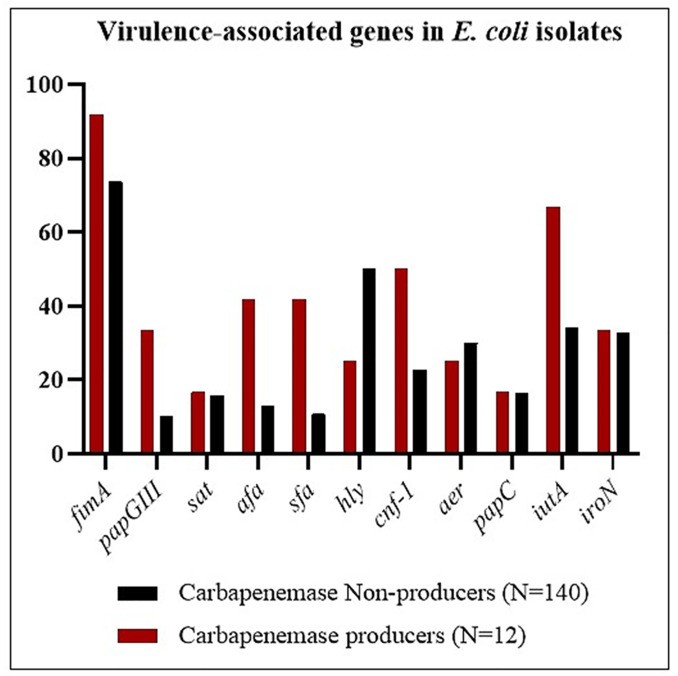
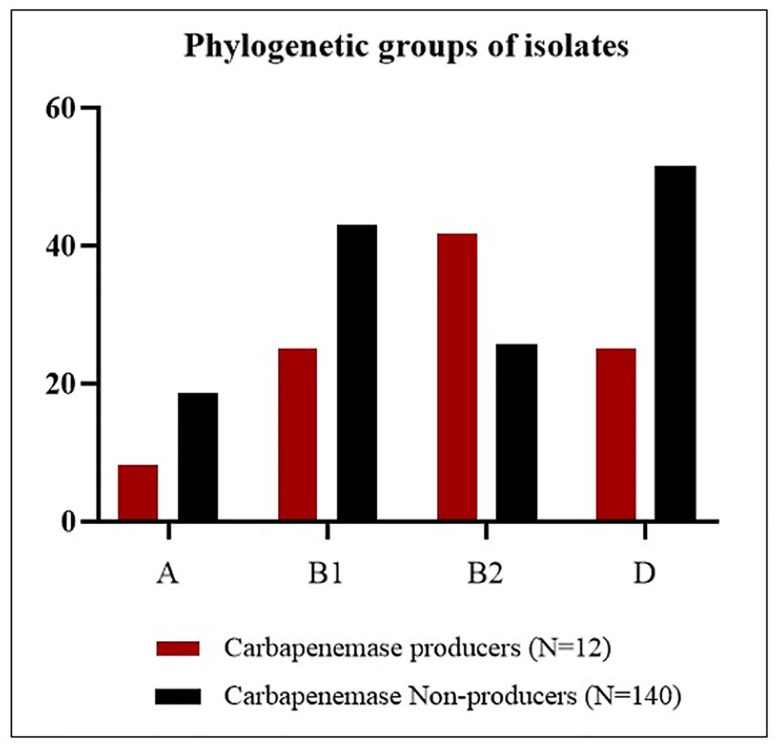
Carbapenem-resistant Escherichia coli has emerged as a major public health issue across the world. This study was aimed to determine the virulence content and phylogenetic groups of carbapenemase-producing E. coli isolates in southwest Iran. One hundred and fifty-two non-duplicate E. coli isolates were collected from various clinical samples. Antibiotic susceptibility and minimum inhibitory concentrations (MIC) were determined according to the Clinical and Laboratory Standards Institute (CLSI) guidelines by Kirby-Bauer disc diffusion and agar dilution methods. Phenotypic screening of carbapenemase enzymes was performed by modified Hodge test (MHT). Detection of carbapenemase genes, phylogenetic groups, and virulence-associated genes were also performed by the PCR assay. The highest and lowest resistance rates were observed against mezlocillin (70.4%) and doripenem (13.1%), respectively. Out of 28 isolates that were resistant to carbapenem antibiotics, 12 (7.9%) strains were phenotypically carbapenemase producers. The blaOXA-48 was the predominant carbapenemase gene, detected in 58.3% of isolates, followed by blaIMP (41.7%) and blaNDM (8.3%). None of the isolates harbored blaVIM and blaKPC genes. Among the twelve carbapenemase-producing strains, urinary isolates were mostly classified into B2 (41.7%) and D (25%) phylogenetic groups, while other clinical isolates belonged to B1 (25%) and A (8.3%) groups. The frequency of virulence-associated genes was also investigated in all isolates and ranged from 6.6% for hly to 75% for fimA. The emergence of carbapenemase-producing strains is a growing concern to public health. Therefore, the proper implementation of monitoring programs is crucial for limiting their dissemination.
Conflict of interest statement
The authors have declared that no competing interests exist.
Figures
References
-
- Enany ME, Algammal AM, Shagar GI, Hanora AM, Elfeil WK, Elshaffy NM. Molecular typing and evaluation of Sidr honey inhibitory effect on virulence genes of MRSA strains isolated from catfish in Egypt. Pak J Pharm Sci. 2018;31(5). . - PubMed
-
- Abolghait SK, Fathi AG, Youssef FM, Algammal AM. Methicillin-resistant Staphylococcus aureus (MRSA) isolated from chicken meat and giblets often produces staphylococcal enterotoxin B (SEB) in non-refrigerated raw chicken livers. Int J Food Microbiol. 2020;328:108669. doi: 10.1016/j.ijfoodmicro.2020.108669 - DOI - PubMed
MeSH terms
Substances
LinkOut - more resources
Full Text Sources
