


Consequences of predictable temporal structure in multi-task situations
- PMID: 35537346
- PMCID: PMC9760566
- DOI: 10.1016/j.cognition.2022.105156
Consequences of predictable temporal structure in multi-task situations
Abstract
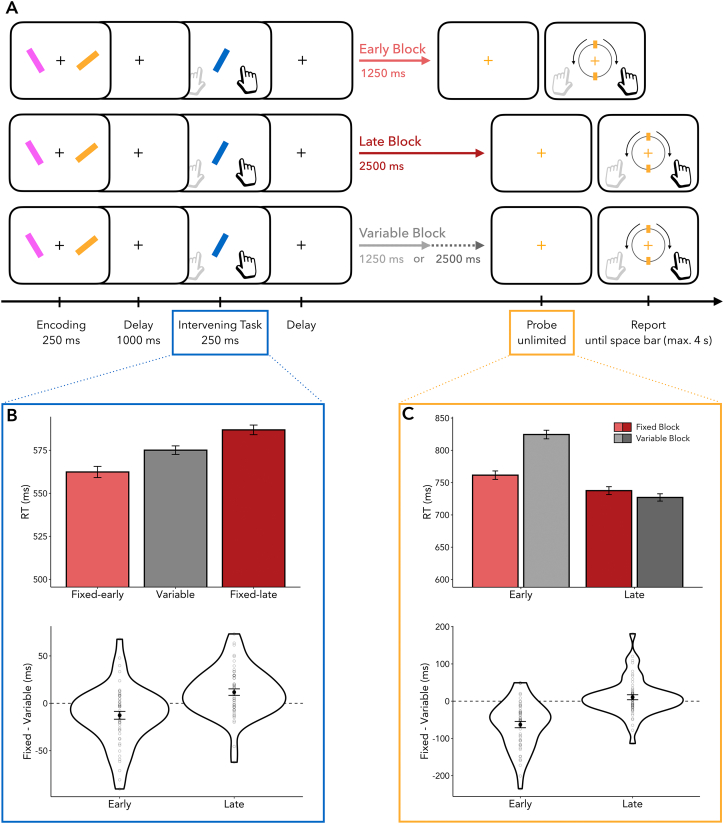
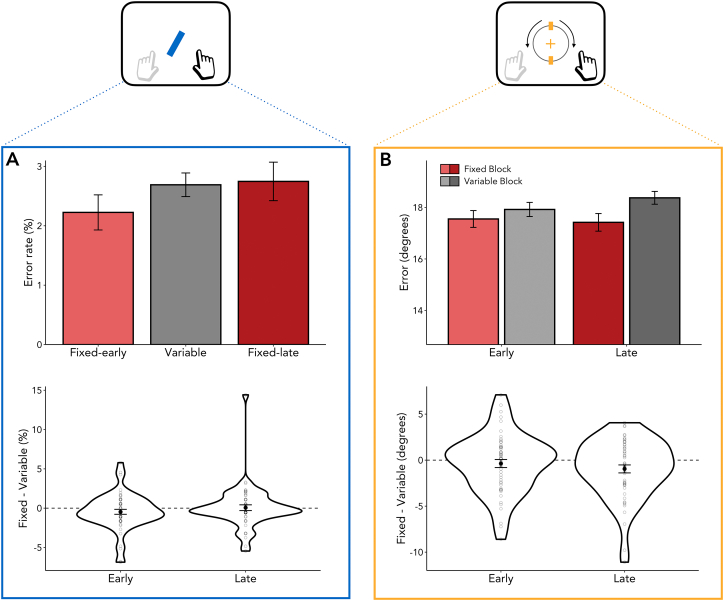
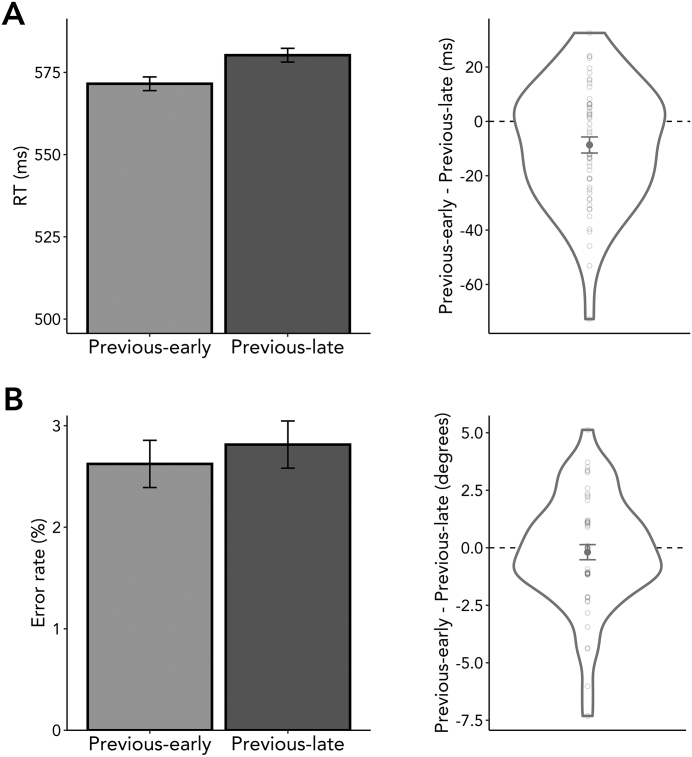
In everyday life, we often anticipate the timing of an upcoming task or event while actively engaging in another. Here, we investigated the effects of predictable temporal structure within such a multi-task scenario. In a visual working-memory task, we manipulated whether the onset of a working-memory probe could be predicted in time, while also embedding a simple intervening task within the delay period. We first show that working-memory performance benefitted from temporal expectations, even though an intervening task had to be completed in the interim. Moreover, temporal predictions regarding the upcoming working-memory probe additionally affected performance on the intervening task, resulting in faster responses when the memory probe was expected early, and slower responses when the memory probe was expected late, as compared to when it was temporally unpredictable. Because the intervening task always occurred at the same time during the memory delay, differences in performance on this intervening task result from a between-task consequence of temporal expectation. Thus, we show that within multi-task settings, knowing when working-memory contents will be required for an upcoming task not only facilitates performance of the associated working-memory task, but can also influence the performance of other, intervening tasks.
Keywords: Attention; Intervening task; Temporal expectation; Working memory.
Copyright © 2022 The Authors. Published by Elsevier B.V. All rights reserved.
Figures
References
Publication types
MeSH terms
Grants and funding
LinkOut - more resources
Full Text Sources
