


Low-Dose Whole Lung Irradiation for Treatment of COVID-19 Pneumonia: A Systematic Review and Meta-Analysis
- PMID: 35537577
- PMCID: PMC9077801
- DOI: 10.1016/j.ijrobp.2022.04.043
Low-Dose Whole Lung Irradiation for Treatment of COVID-19 Pneumonia: A Systematic Review and Meta-Analysis
Abstract
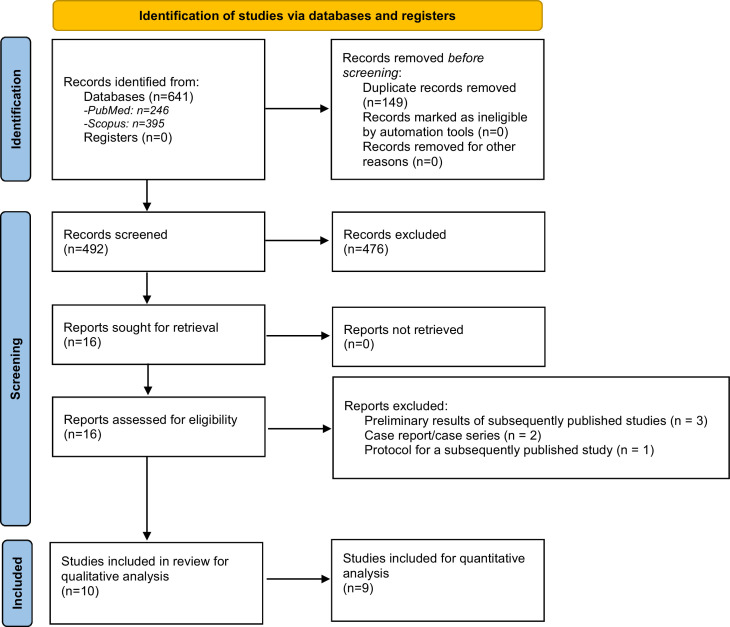
Purpose: Studies dating back to a century ago have reported using low-dose radiation therapy for the treatment of viral and bacterial pneumonia. In the modern era, since the COVID-19 pandemic began, several groups worldwide have researched the applicability of whole lung irradiation (WLI) for the treatment of COVID-19. We aimed to bring together the results of these experimental studies.
Methods and materials: We performed a systematic review and meta-analysis searching PubMed and Scopus databases for clinical trials incorporating WLI for the treatment of patients with COVID-19. Required data were extracted from each study. Using the random-effects model, the overall pooled day 28 survival rate, survival hazard ratio, and intubation-free days within 15 days after WLI were calculated, and forest plots were produced.
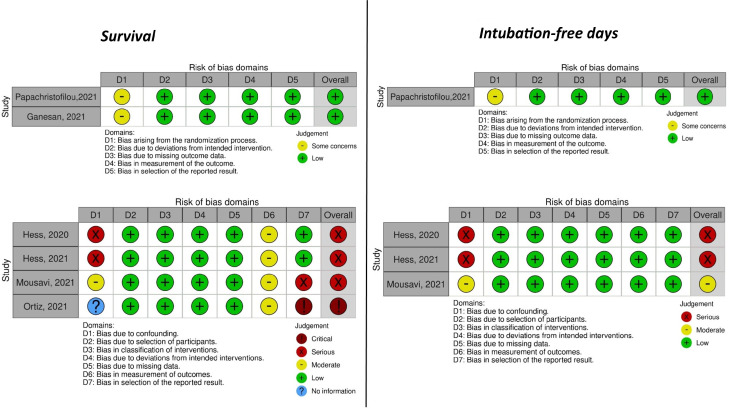
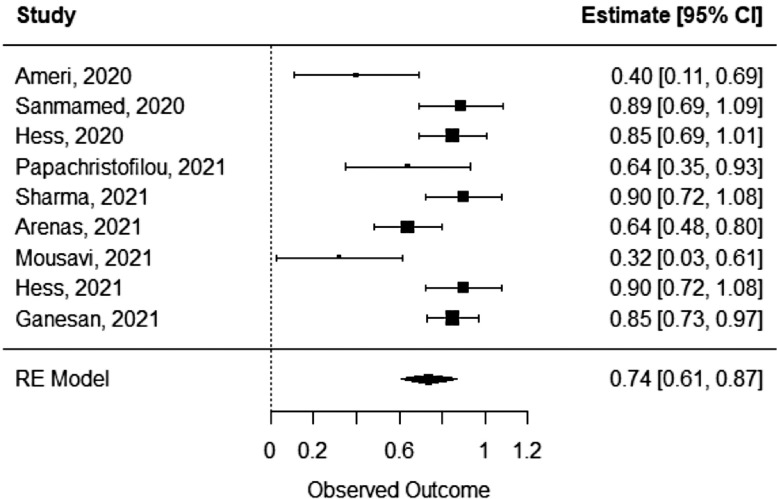
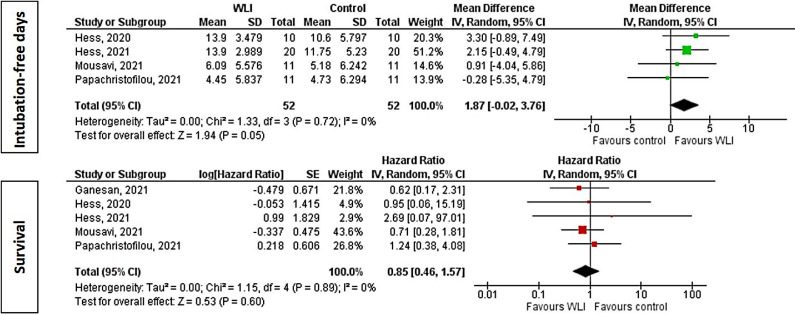
Results: Ten studies were identified, and eventually, 5 were included for meta-analysis. The overall survival hazard ratio was calculated to be 0.85 (0.46-1.57). The pooled mean difference of intubation-free days within 15 days after WLI was 1.87, favoring the WLI group (95% confidence interval, -0.02 to 3.76). The overall day 28 survival rate of patients receiving WLI for the 9 studies with adequate follow-up data was 74% (95% confidence interval, 61-87). Except for 2 studies, the other 8 studies were assessed to have moderate to high risk of bias, and there were many differences among the designs of the studies, included patients, primary endpoints, outcome measurement methods, and reporting of the results.
Conclusions: Despite a mild improvement in intubation-free days, WLI had no significant effect on patients' overall survival. Currently, we cannot recommend routine use of WLI for the treatment of patients with moderate-to-severe COVID-19.
Copyright © 2022 Elsevier Inc. All rights reserved.
Figures
Comment in
-
In Regard to Kolahdouzan et al.Int J Radiat Oncol Biol Phys. 2023 Jan 1;115(1):251-252. doi: 10.1016/j.ijrobp.2022.09.051. Int J Radiat Oncol Biol Phys. 2023. PMID: 36526387 Free PMC article. No abstract available.
References
-
- Arenas M, Sabater S, Hernandez V, et al. Antiinflammatory effects of low-dose radiation therapy. Indications, dose, and radiobiological mechanisms involved. Strahlenther Onkol. 2012;188:975–981. - PubMed
-
- Rödel F, Kamprad F, Sauer R, Hildebrandt G. Funktionelle und molekulare aspekte der antiinflammatorischen wirkung niedrig dosierter radiotherapie [Functional and molecular aspects of anti-inflammatory effects of low-dose radiotherapy] Strahlenther Onkol. 2002;178:1–9. [in German] - PubMed
-
- Calabrese EJ, Kozumbo WJ, Kapoor R, Dhawan G, Lara PC, Giordano J. Nrf2 activation putatively mediates clinical benefits of low-dose radiation therapy in COVID-19 pneumonia and acute respiratory distress syndrome (ARDS): Novel mechanistic considerations. Radiother Oncol. 2021;160:125–131. - PMC - PubMed
Publication types
MeSH terms
LinkOut - more resources
Full Text Sources
Medical
