


Recurrence of IgA nephropathy after kidney transplantation: experience from the Swiss transplant cohort study
- PMID: 35538438
- PMCID: PMC9088042
- DOI: 10.1186/s12882-022-02802-x
Recurrence of IgA nephropathy after kidney transplantation: experience from the Swiss transplant cohort study
Abstract
Background: Recurrence of IgA nephropathy (IgAN) after kidney transplantation occurs in about 30% of patients. The relevance of recurrence for the long-term graft survival is expected to increase, since graft survival continues to improve.
Methods: In a nested study within the Swiss Transplant Cohort Study the incidence of IgAN recurrence, predictive factors, graft function and graft and patient survival were evaluated. Serum concentration of total IgA, total IgG, Gd-IgA1 and IgA-IgG immune complex were measured using ELISA-based immunologic assays.
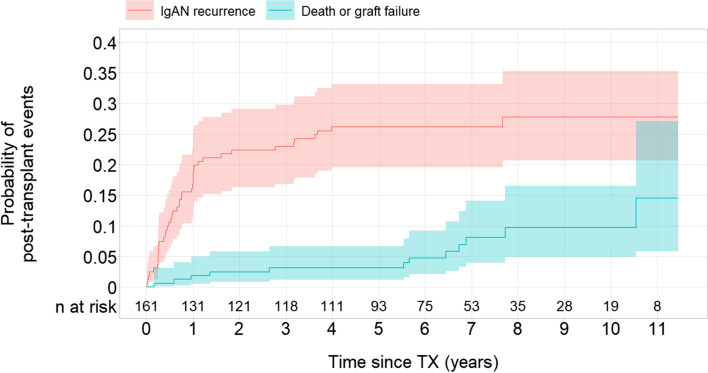
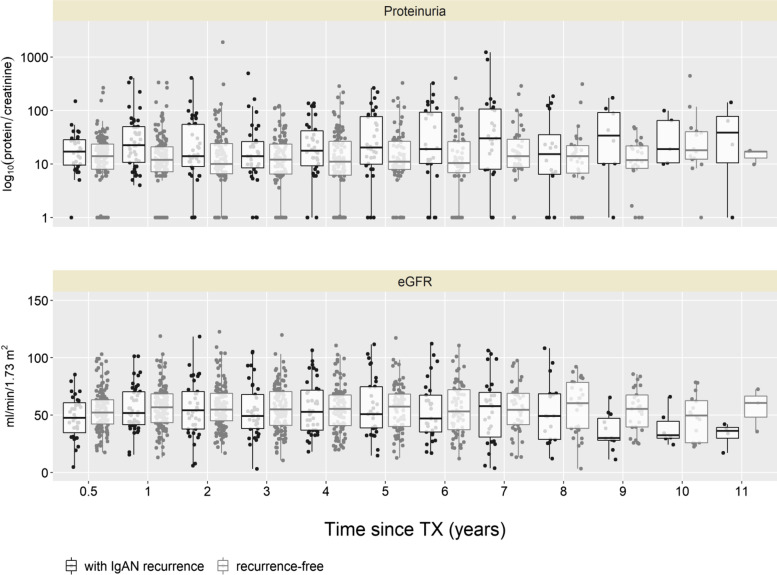
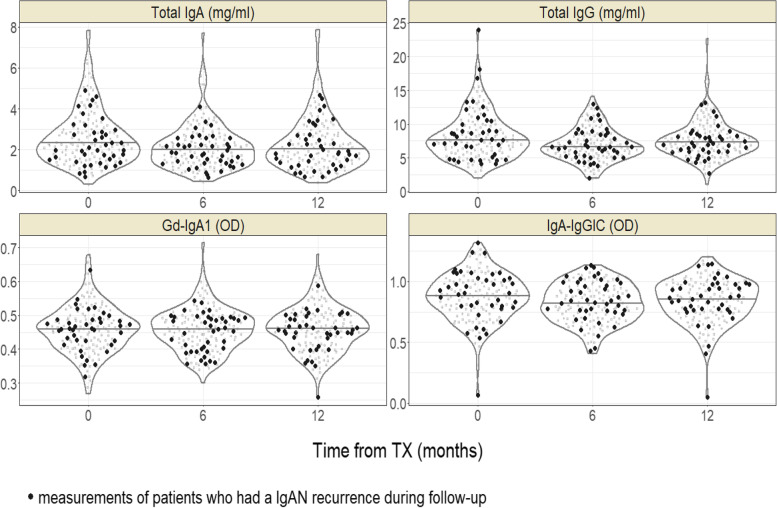
Results: Between May 2008 and December 2016, 28 women and 133 men received their kidney allograft for end-stage kidney disease due to IgAN in Switzerland. Over a median follow-up time of 7 years after transplantation, 43 out of 161 patients (26.7%) developed an IgAN recurrence, of which six (13.9%) had an allograft failure afterwards and further four patients (9.3%) died. During the same follow-up period, 6 out of 118 patients (5%) each experienced allograft failure or died without prior IgAN recurrence. After 11 years the risk for IgAN recurrence was 27.7% (95%-CI: 20.6-35.3%). Renal function was similar in patients with and without recurrence up to 7 years after transplantation, but worsened thereafter in patients with recurrence (eGFR median (interquartile range) at 8 years: 49 ml/min/1.73m2 (29-68) vs. 60 ml/min/1.73m2 (38-78)). Serum concentration of total IgA, total IgG, Gd-IgA1 and IgA-IgG immune complex within the first year posttransplant showed no significant effect on the recurrence of IgAN. Younger recipients and women had a higher risk of recurrence, but the latter only in the short term.
Conclusions: Our study showed a recurrence risk of 28% at 11 years after transplantation, which is consistent with previous literature. However, the predictive value of known biomarkers, such as serum Gd-IgA1 and IgA-IgG IC, for IgAN recurrence could not be confirmed.
Keywords: IgA nephropathy; Kidney transplantation; Predictive markers; Recurrent glomerulonephritis; Transplant outcome.
© 2022. The Author(s).
Conflict of interest statement
All authors declare that they have no competing interest.
Figures
References
Publication types
MeSH terms
Substances
LinkOut - more resources
Full Text Sources
Medical
Research Materials
Miscellaneous
