


Evaluating agreement between bodies of evidence from randomized controlled trials and cohort studies in medical research: a meta-epidemiological study
- PMID: 35538478
- PMCID: PMC9092682
- DOI: 10.1186/s12916-022-02369-2
Evaluating agreement between bodies of evidence from randomized controlled trials and cohort studies in medical research: a meta-epidemiological study
Abstract
Background: Randomized controlled trials (RCTs) and cohort studies are the most common study design types used to assess the treatment effects of medical interventions. To evaluate the agreement of effect estimates between bodies of evidence (BoE) from randomized controlled trials (RCTs) and cohort studies and to identify factors associated with disagreement.
Methods: Systematic reviews were published in the 13 medical journals with the highest impact factor identified through a MEDLINE search. BoE-pairs from RCTs and cohort studies with the same medical research question were included. We rated the similarity of PI/ECO (Population, Intervention/Exposure, Comparison, Outcome) between BoE from RCTs and cohort studies. The agreement of effect estimates across BoE was analyzed by pooling ratio of ratios (RoR) for binary outcomes and difference of mean differences for continuous outcomes. We performed subgroup analyses to explore factors associated with disagreements.
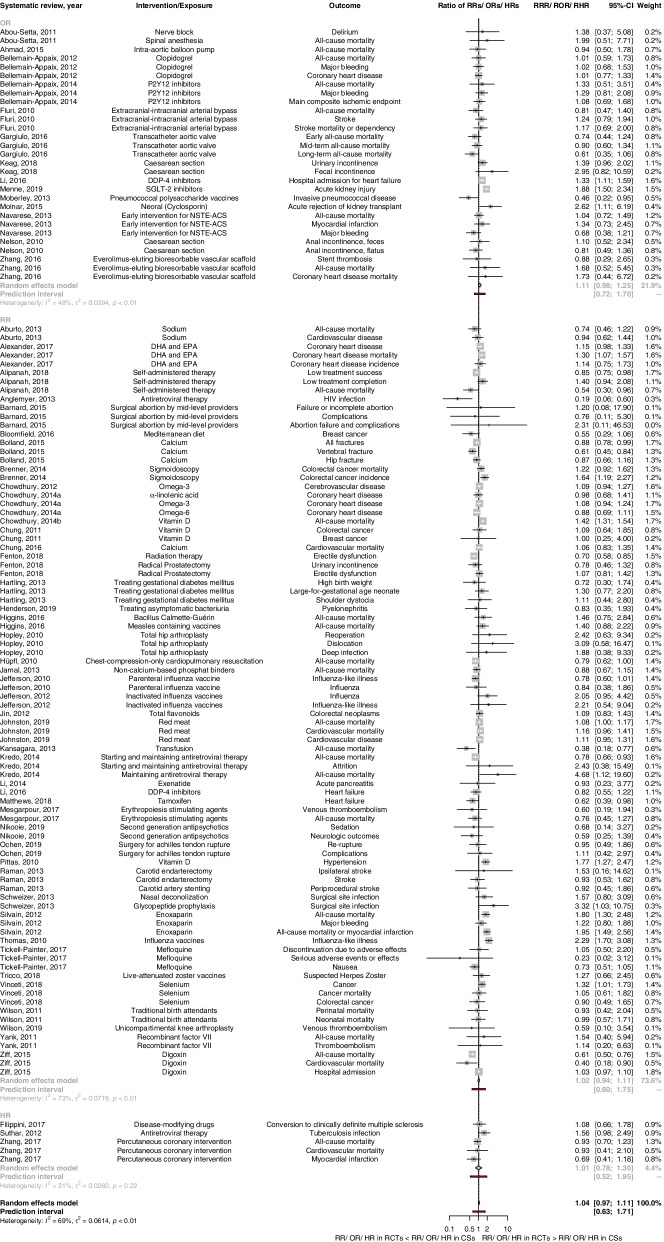
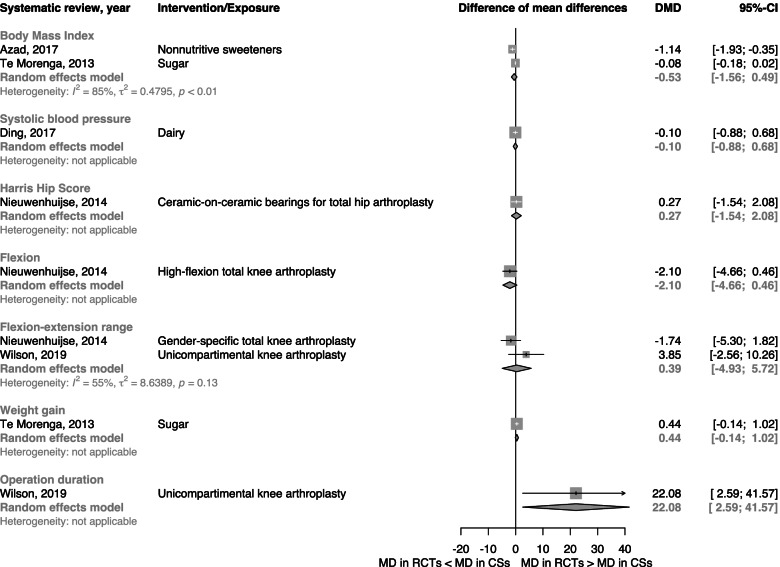
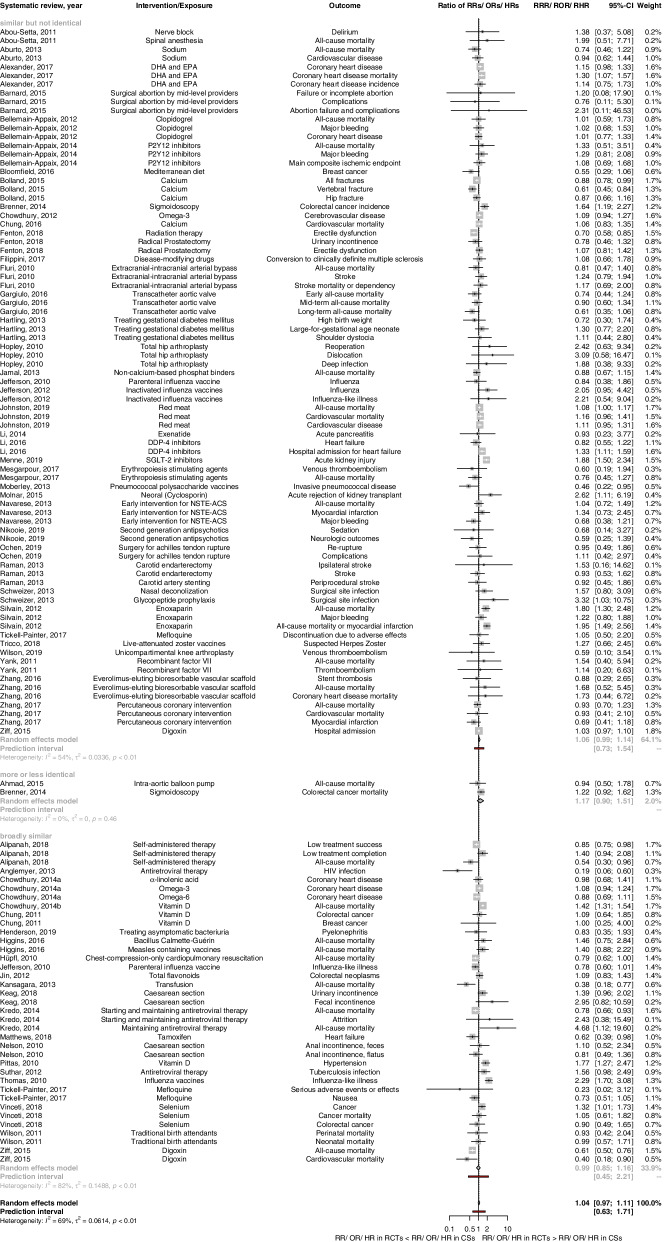
Results: One hundred twenty-nine BoE pairs from 64 systematic reviews were included. PI/ECO-similarity degree was moderate: two BoE pairs were rated as "more or less identical"; 90 were rated as "similar but not identical" and 37 as only "broadly similar". For binary outcomes, the pooled RoR was 1.04 (95% CI 0.97-1.11) with considerable statistical heterogeneity. For continuous outcomes, differences were small. In subgroup analyses, degree of PI/ECO-similarity, type of intervention, and type of outcome, the pooled RoR indicated that on average, differences between both BoE were small. Subgroup analysis by degree of PI/ECO-similarity revealed high statistical heterogeneity and wide prediction intervals across PI/ECO-dissimilar BoE pairs.
Conclusions: On average, the pooled effect estimates between RCTs and cohort studies did not differ. Statistical heterogeneity and wide prediction intervals were mainly driven by PI/ECO-dissimilarities (i.e., clinical heterogeneity) and cohort studies. The potential influence of risk of bias and certainty of the evidence on differences of effect estimates between RCTs and cohort studies needs to be explored in upcoming meta-epidemiological studies.
Keywords: Agreement of effect estimates; Cohort studies; Meta-epidemiological study; Randomized controlled trials.
© 2022. The Author(s).
Conflict of interest statement
The authors have no relevant financial or non-financial interests to disclose.
Figures
References
-
- Oxford Centre for Evidence Based Medicine: Levels of Evidence Working Group. Howick J, Chalmers I. In: The Oxford 2011 levels of evidence. Glasziou P, Greenhalgh T, Heneghan C, Liberati A, Moschetti I, Phillips B, Thornton H, Goddard O, Hodgkinson M, editors. City of Oxford (UK): Oxford Centre for Evidence-Based Medicine; 2011.
-
- Rothman KJ, Greenland S, Lash TL. Modern epidemiology. Philadelphia (US): Lippincott Williams & Wilkins; 2008.
-
- Reeves BC, Deeks JJ, Higgins JP, Shea B, Tugwell P, Wells GA, et al. Cochrane handbook for systematic reviews of interventions. 2019. Including non-randomized studies on intervention effects; pp. 595–620.
Publication types
MeSH terms
LinkOut - more resources
Full Text Sources
Research Materials
Miscellaneous
