


Using genomic prediction to detect microevolutionary change of a quantitative trait
- PMID: 35538786
- PMCID: PMC9091855
- DOI: 10.1098/rspb.2022.0330
Using genomic prediction to detect microevolutionary change of a quantitative trait
Abstract
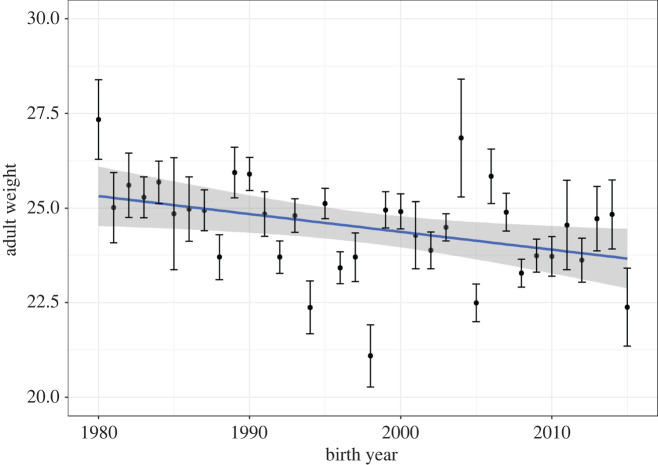
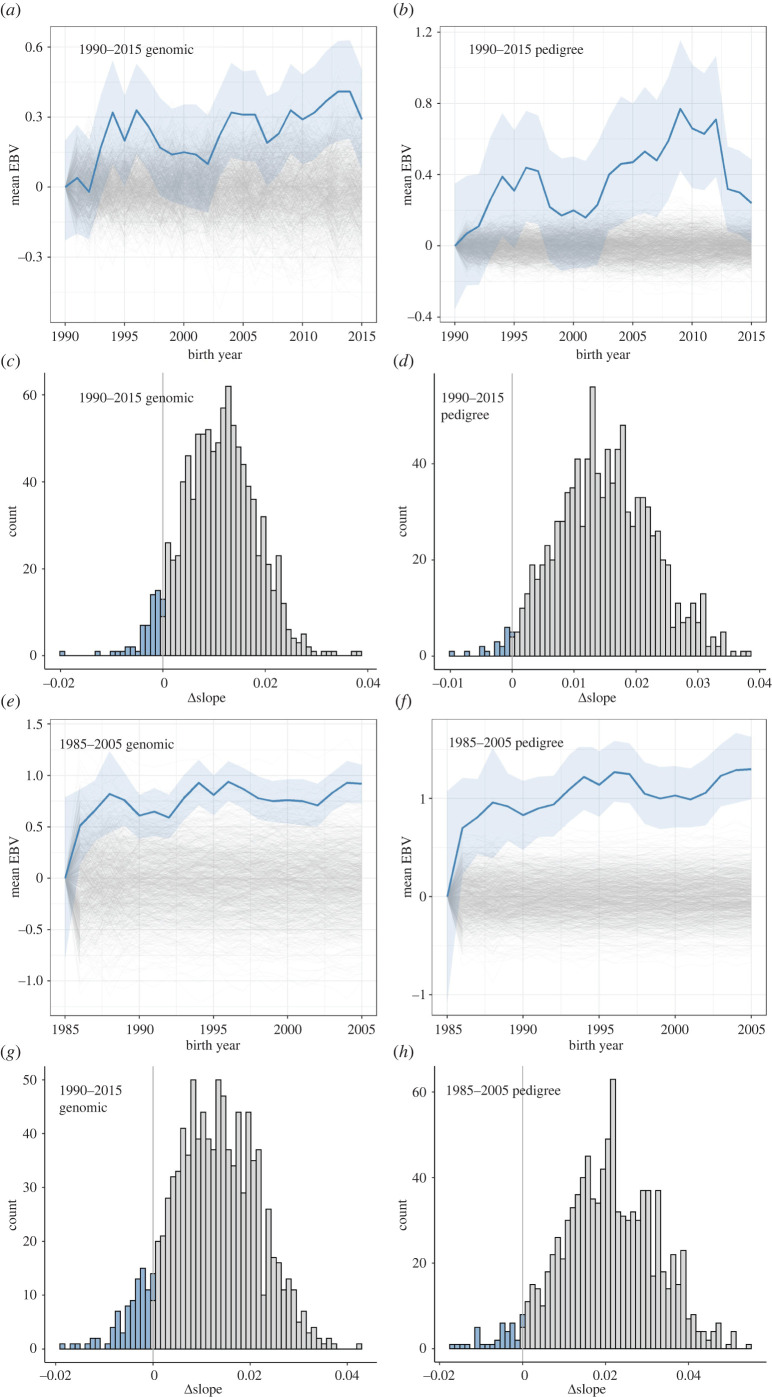
Detecting microevolutionary responses to natural selection by observing temporal changes in individual breeding values is challenging. The collection of suitable datasets can take many years and disentangling the contributions of the environment and genetics to phenotypic change is not trivial. Furthermore, pedigree-based methods of obtaining individual breeding values have known biases. Here, we apply a genomic prediction approach to estimate breeding values of adult weight in a 35-year dataset of Soay sheep (Ovis aries). Comparisons are made with a traditional pedigree-based approach. During the study period, adult body weight decreased, but the underlying genetic component of body weight increased, at a rate that is unlikely to be attributable to genetic drift. Thus cryptic microevolution of greater adult body weight has probably occurred. Genomic and pedigree-based approaches gave largely consistent results. Thus, using genomic prediction to study microevolution in wild populations can remove the requirement for pedigree data, potentially opening up new study systems for similar research.
Keywords: cryptic evolution; genomic estimated breeding value; genomic prediction; microevolution; soay sheep.
Conflict of interest statement
We declare we have no competing interests.
Figures
References
-
- Lush JL. 1943. Animal breeding plans, 2nd edn. Ames, IA: Iowa State College Press.
-
- Falconer D. 1989. Introduction to quantitative genetics, 3rd edn. New York, NY: Longman.
Publication types
MeSH terms
Associated data
LinkOut - more resources
Full Text Sources
