


The Mind After Midnight: Nocturnal Wakefulness, Behavioral Dysregulation, and Psychopathology
- PMID: 35538929
- PMCID: PMC9083440
- DOI: 10.3389/fnetp.2021.830338
The Mind After Midnight: Nocturnal Wakefulness, Behavioral Dysregulation, and Psychopathology
Abstract
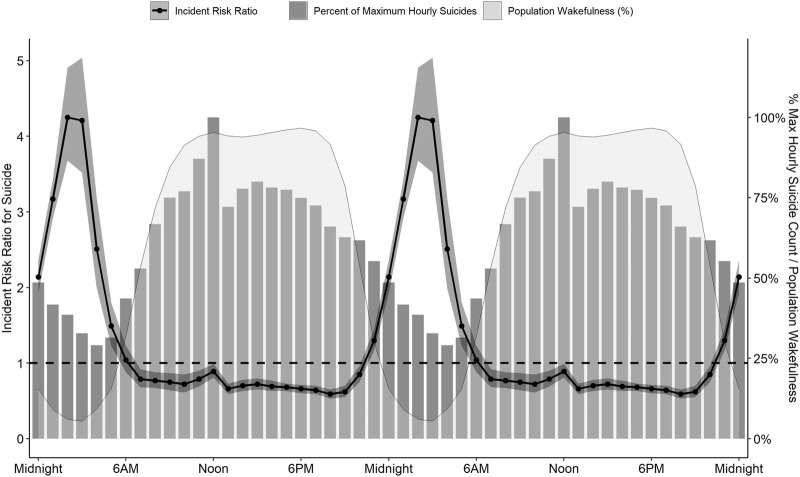
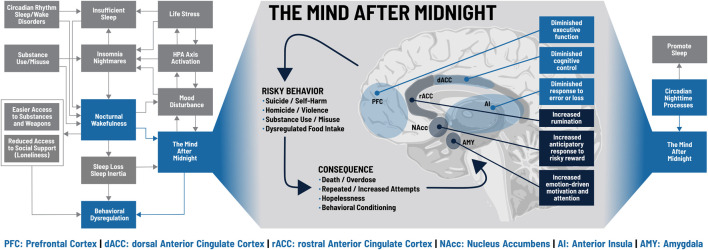
Sufficient sleep with minimal interruption during the circadian/biological night supports daytime cognition and emotional regulation. Conversely, disrupted sleep involving significant nocturnal wakefulness leads to cognitive and behavioral dysregulation. Most studies to-date have examined how fragmented or insufficient sleep affects next-day functioning, but recent work highlights changes in cognition and behavior that occur when someone is awake during the night. This review summarizes the evidence for day-night alterations in maladaptive behaviors, including suicide, violent crime, and substance use, and examines how mood, reward processing, and executive function differ during nocturnal wakefulness. Based on this evidence, we propose the Mind after Midnight hypothesis in which attentional biases, negative affect, altered reward processing, and prefrontal disinhibition interact to promote behavioral dysregulation and psychiatric disorders.
Keywords: behavioral dysregulation; circadian rhythms; mental health; nocturnal wakefulness; psychopathology; sleep; substance abuse; suicide.
Conflict of interest statement
MG received grants from Jazz Pharmaceuticals and CeraZ; served as a paid consultant to Idorsia, Fitbit, Natrol, Smartypants Vitamins, Athleta, Casper Sleep, and Lyma; and serves as an advisor to Nightfood and Simple Habit. EK is consulting for Circadian Therapeutics, The National Sleep Foundation, Sanofi-Genzyme. Partner owns Chronsulting.
The remaining authors declare that the research was conducted in the absence of any commercial or financial relationships that could be construed as a potential conflict of interest.
Figures
References
-
- Ballard E. D., Vande Voort J. L., Bernert R. A., Luckenbaugh D. A., Richards E. M., Niciu M. J., et al. (2016). Nocturnal Wakefulness Is Associated with Next-Day Suicidal Ideation in Major Depressive Disorder and Bipolar Disorder. J. Clin. Psychiatry 77 (6), 825–831. 10.4088/JCP.15m09943 - DOI - PMC - PubMed
Grants and funding
LinkOut - more resources
Full Text Sources
