


Application of smectite for textile dyeing and fastness improvement
- PMID: 35539071
- PMCID: PMC9075334
- DOI: 10.1039/c9ra05768d
Application of smectite for textile dyeing and fastness improvement
Abstract
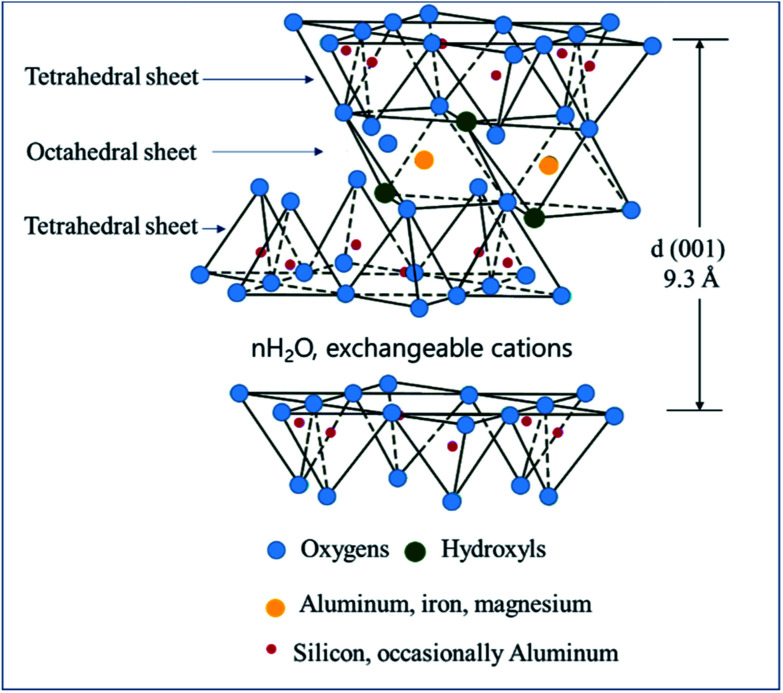
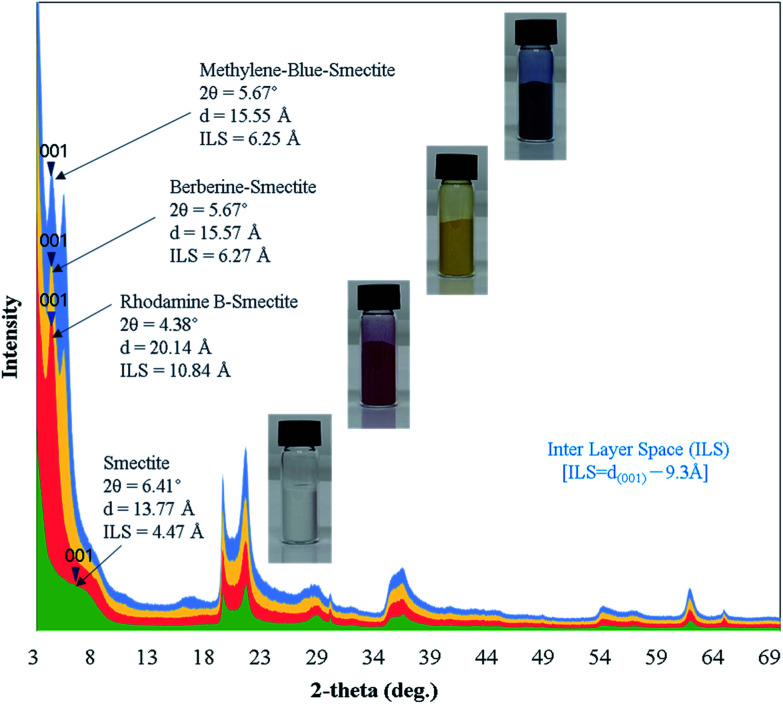
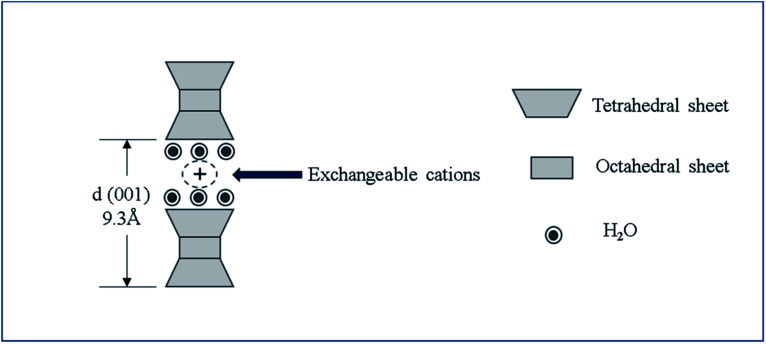
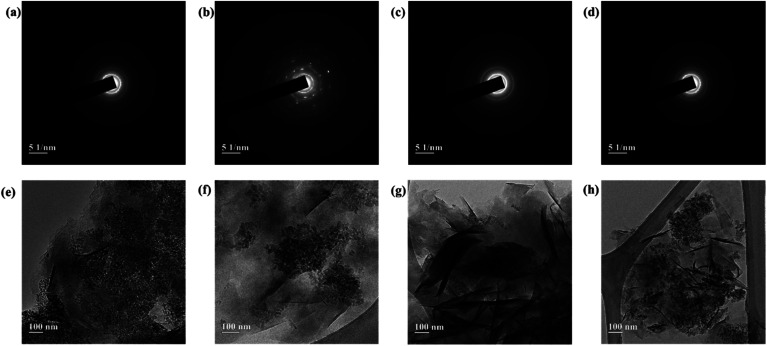
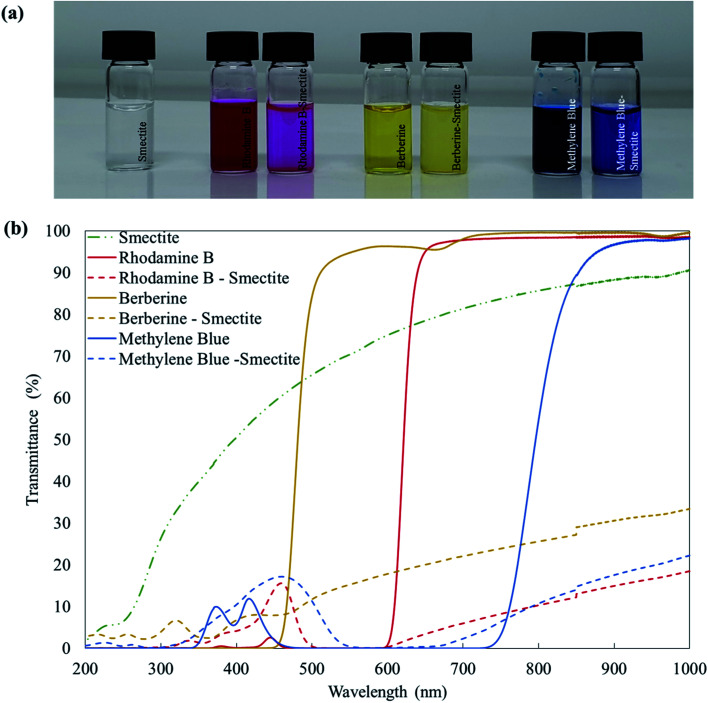
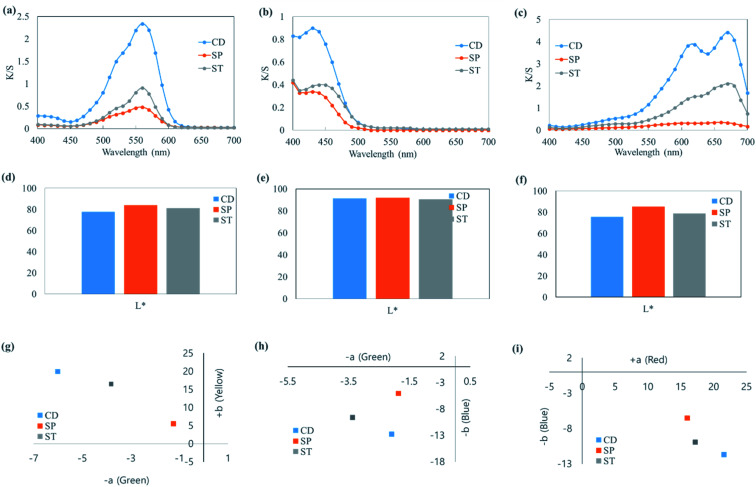
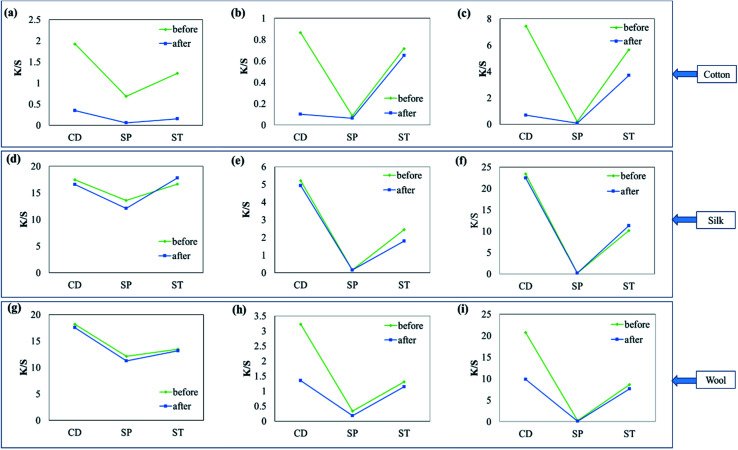
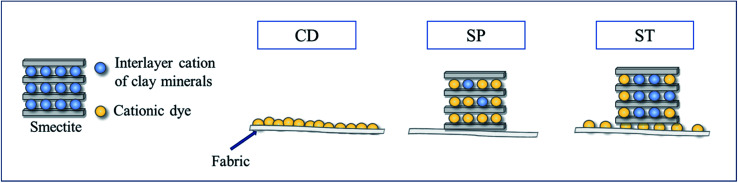
Three smectite-based pigments were prepared by the intercalation of cationic dyes utilizing the ion exchangeability of smectite, and the synthesis results were verified by X-ray diffraction and transmission electron microscopy. The study involved three fabric-dyeing methods: CD using only cationic dyes, SP using only smectite pigments, and ST using smectite post-treatment on fabrics colored with cationic dyes. For each method, dyeability, washing fastness, and colorfastness to artificial-light exposure were assessed by the absorption-to-scattering ratio (K/S), ΔK/S, and changes in color difference. Overall, CD showed high dyeability but low washing fastness and light fastness for all fabrics. In contrast, SP showed low dyeability and small changes in K/S and changes in color difference, representing washing fastness and light fastness, respectively. ST showed good dyeability, indicating that smectite post-treatment had improved both washing fastness and light fastness. Based on these findings, the improved fastness was attributed to dye release from the fabrics colored with the cationic dye during smectite post-treatment, as the dye simultaneously entered the interlayer space between the smectite layers, while coating the fabric surface with smectite.
This journal is © The Royal Society of Chemistry.
Conflict of interest statement
There are no conflicts of interest to declare.
Figures
References
-
- Kyzioł-Komosińska J. Rosik-Dulewska C. Pająk M. Krzyżewska I. Dzieniszewska A. Pol. J. Chem. Technol. 2014;16:33–40.
LinkOut - more resources
Full Text Sources
