


Global changes in gene expression related to Opisthorchis felineus liver fluke infection reveal temporal heterogeneity of a mammalian host response
- PMID: 35542180
- PMCID: PMC9079687
- DOI: 10.1016/j.fawpar.2022.e00159
Global changes in gene expression related to Opisthorchis felineus liver fluke infection reveal temporal heterogeneity of a mammalian host response
Abstract
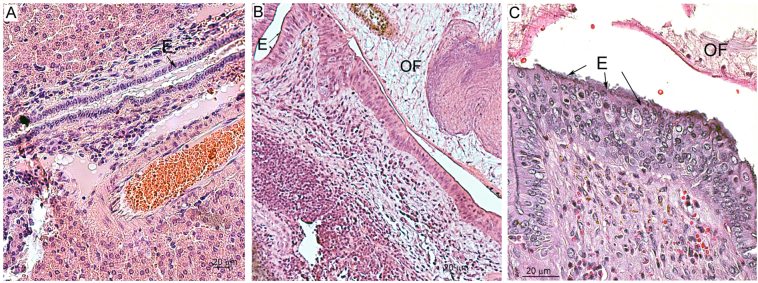
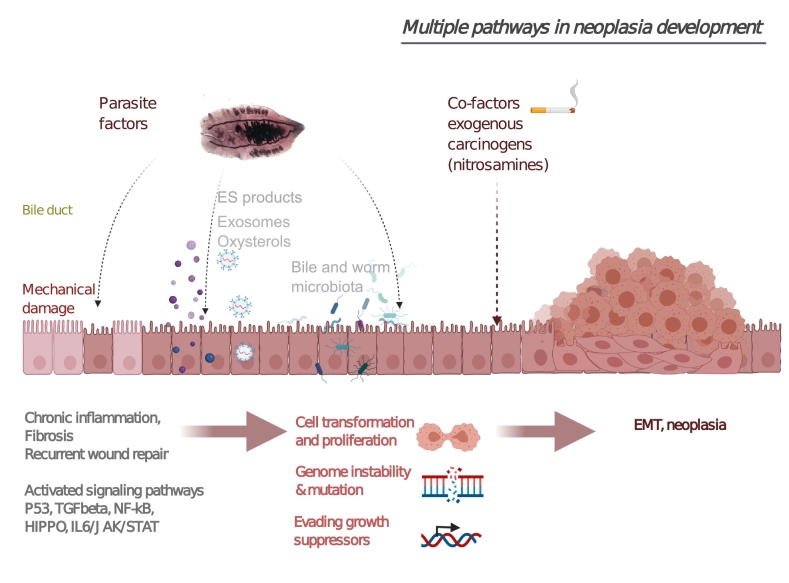
The food-borne trematode Opisthorchis felineus colonizes bile ducts of the liver of fish-eating mammals including humans. Among chronically infected individuals, this opisthorchiasis involves hepatobiliary problems, including chronic inflammation, periductal fibrosis, biliary intraepithelial neoplasia, and even cholangiocarcinoma. Despite numerous studies at the pathomorphological level, the systemic response and cellular pathogenesis of these disorders are not well studied. To conduct in-depth research and to gain insights into the mechanism by which O. felineus infection causes precancerous liver lesions, we (i) applied a next-generation-sequencing-based technology (high-throughput mRNA sequencing) to identify differentially expressed genes in the liver of golden hamsters infected with O. felineus at 1 and 3 months postinfection and (ii) verified the most pronounced changes in gene expression by western blotting and immunohistochemistry. A total of 2151 genes were found to be differentially expressed between uninfected and infected hamsters ("infection" factor), whereas 371 genes were differentially expressed when we analyzed "time × infection" interaction. Cluster analysis revealed that sets of activated genes of cellular pathways were different between acute (1 month postinfection) and chronic (3 months postinfection) opisthorchiasis. This enriched KEGG pathways were "Cell adhesion molecules", "Hippo signaling", "ECM-receptor interaction", "Cell cycle", "TGF-beta", and "P53 signaling". Moreover, epithelial-mesenchymal transition was the most enriched (q-value = 2.2E-07) MSigDB hallmark in the set of differentially expressed genes of all O. felineus-infected animals. Transcriptomic data were supported by the results of western blotting and immunohistochemistry revealing the upregulation of vimentin, N-cadherin, and α-smooth muscle actin postinfection. Our data expand knowledge about global changes in gene expression in the O. felineus-infected host liver and contribute to understanding the biliary neoplasia associated with the liver fluke infection.
Keywords: DEGs, differentially expressed genes; Differentially expressed gene; EMT, epithelial–mesenchymal transition; GO, Gene Ontology; KEGG, Kyoto Encyclopedia of Genes and Genomes, O. felineus; Liver; Mesocricetus auratus; OF, Opisthorchis felineus; Opisthorchis felineus; hamster.
© 2022 The Author(s).
Conflict of interest statement
The authors declare that they have no known competing financial interests or personal relationships that could have appeared to influence the work reported in this paper.
Figures



References
-
- Beer S.A. KMK Scientific Press Ltd.; Moscow: 2005. Biology of the Agent of Opisthorchiasis. (in Russian) (in Russian)
-
- Brazhnikova N.A., Tolkaeva M.V. Cancer of liver, biliary tracts and pancreas at chronic opisthorchiasis (in Russian) Bull. Sib. Med. 2002;2:71–77.
LinkOut - more resources
Full Text Sources
Research Materials
Miscellaneous
