


Knowledge and attitudes of Implementation Support Practitioners-Findings from a systematic integrative review
- PMID: 35544529
- PMCID: PMC9094539
- DOI: 10.1371/journal.pone.0267533
Knowledge and attitudes of Implementation Support Practitioners-Findings from a systematic integrative review
Abstract
Background: It requires thoughtful planning and work to successfully apply and sustain research-supported interventions like healthcare treatments, social support, or preventive programs in practice. Implementation support practitioners (ISPs) such as facilitators, technical assistance providers, knowledge brokers, coaches or consultants may be involved to actively support the implementation process. This article presents knowledge and attitudes ISPs bring to their work.
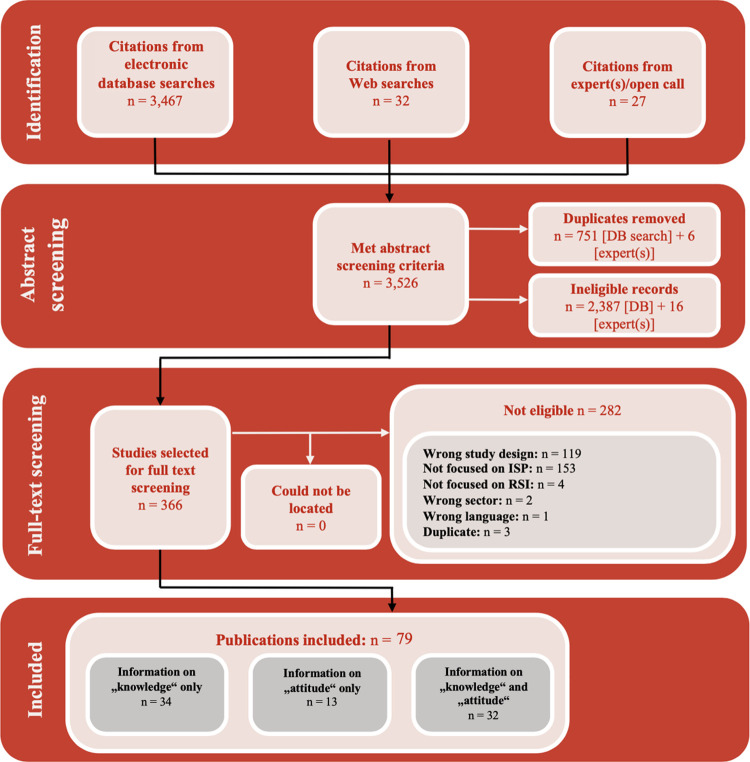
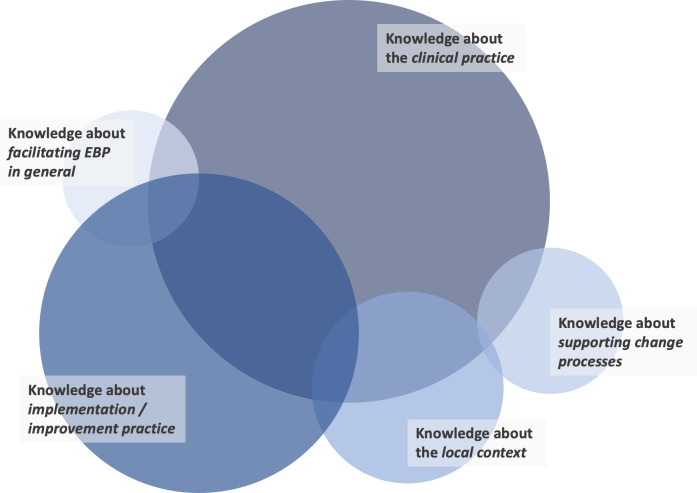
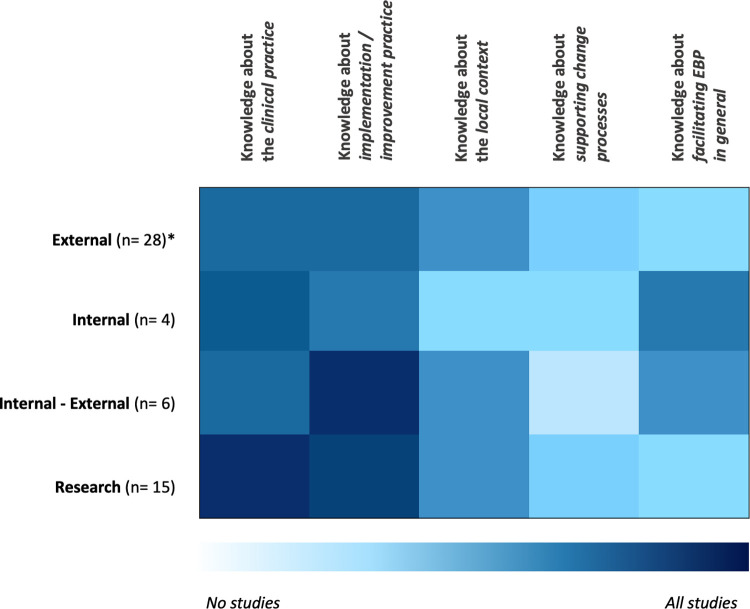
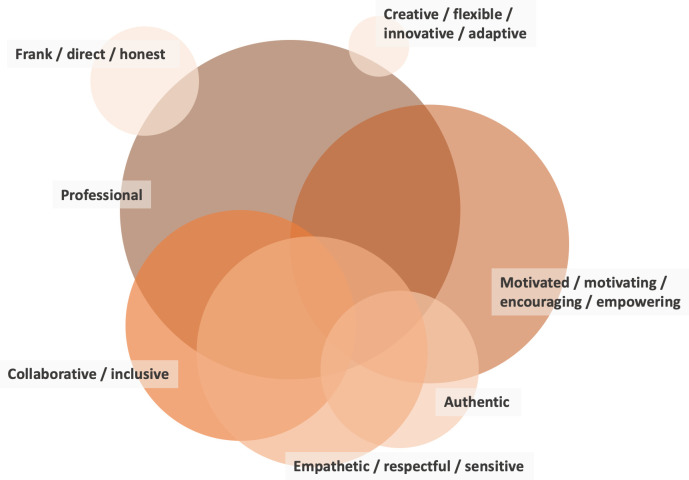
Methods: Building on a previously developed program logic, a systematic integrative review was conducted. Literature was sourced by searching nine electronic data bases, organizational websites, and by launching a call for publications among selected experts and social media. Article screening was performed independently by two researchers, and data from included studies were extracted by members of the research team and quality-assured by the lead researcher. The quality of included RCTs was assessed based on a framework by Hodder and colleagues. Thematic Analysis was used to capture information on knowledge and attitudes of ISPs across the included studies. Euler diagrams and heatmaps were used to present the results.
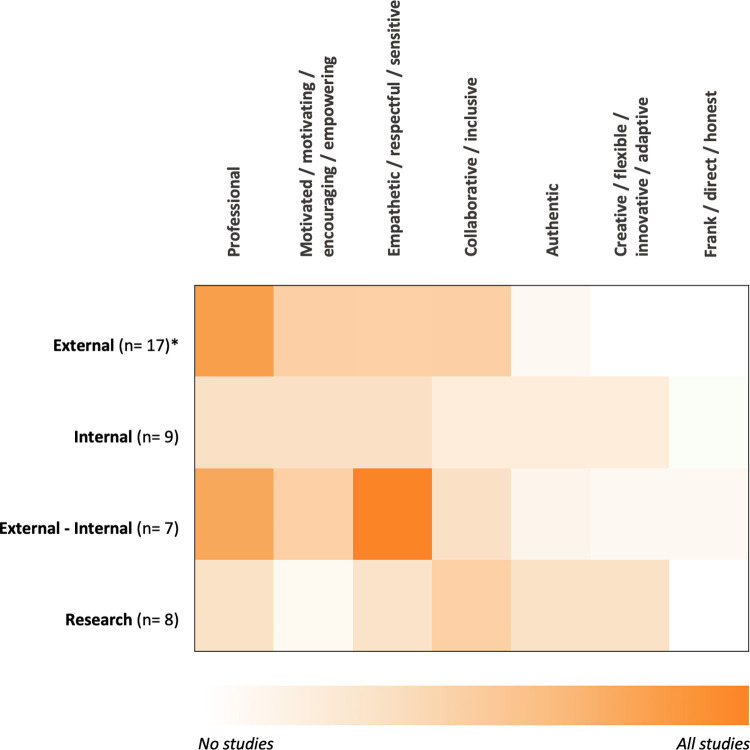
Results: Results are based on 79 included studies. ISPs reportedly displayed knowledge about the clinical practice they work with, implementation / improvement practice, the local context, supporting change processes, and facilitating evidence-based practice in general. In particular, knowledge about the intervention to be implemented and its target population, specific improvement / implementation methods and approaches, organizational structures and sensitivities, training, and characteristics of (good) research was described in the literature. Seven themes describing ISPs' attitudes were identified: 1) professional, 2) motivated / motivating / encouraging / empowering, 3) empathetic / respectful / sensitive, 4) collaborative / inclusive, 5) authentic, 6) creative / flexible / innovative / adaptive, and 7) frank / direct / honest. Pertaining to a professional attitude, being responsive and focused were the most prevalent indicators across included publications.
Conclusion: The wide range and complexity of knowledge and attitudes found in the literature calls for a comprehensive and systematic approach to collaboratively develop a professional role for ISPs across disciplines. Embedding the ISP role in different health and social welfare settings will enhance implementation capacities considerably.
Conflict of interest statement
The authors have declared that no competing interests exist.
Figures
References
Publication types
MeSH terms
LinkOut - more resources
Full Text Sources
Miscellaneous
