Abnormal Circadian Blood Pressure Variation is Associated with SYNTAX Scores in Hospitalized Patients with Acute Coronary Syndrome
- PMID: 35544854
- PMCID: PMC9352112
- DOI: 10.36660/abc.20210546
Abnormal Circadian Blood Pressure Variation is Associated with SYNTAX Scores in Hospitalized Patients with Acute Coronary Syndrome
Abstract
Background: Blunted nocturnal blood pressure (BP) reduction, referred to as non-dipper hypertension, is a strong predictor of cardiovascular morbidity and mortality.
Objectives: This study aimed to investigate the relationship between non-dipper hypertension and the severity and complexity of coronary artery disease using SYNTAX score in hospitalized patients with acute coronary syndrome.
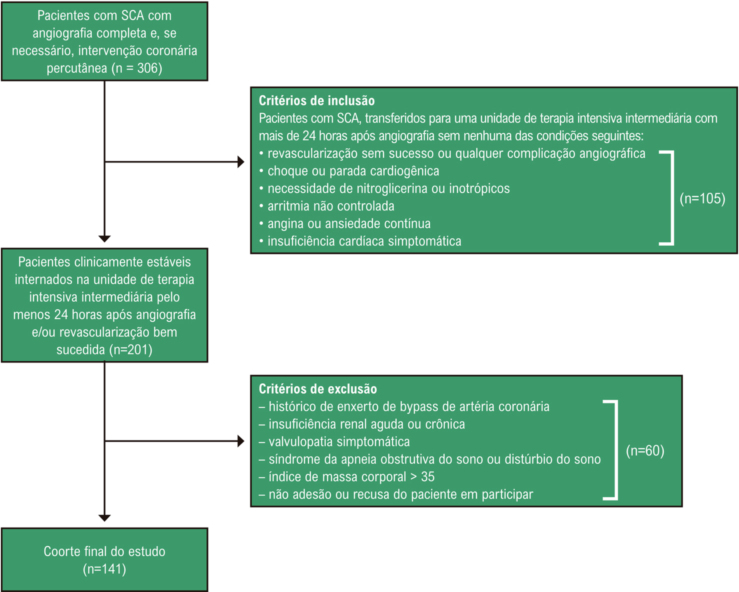
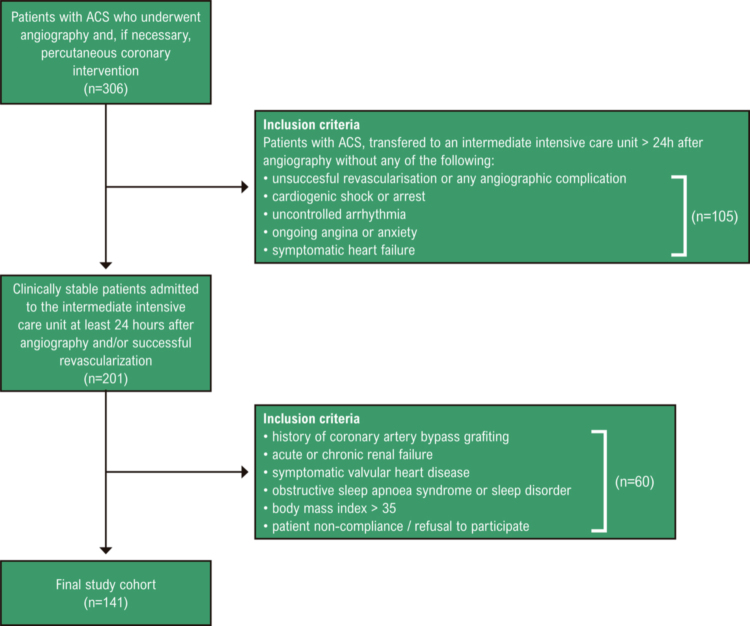
Methods: A total of 306 consecutive patients with acute coronary syndrome were screened. Patients who were clinically stable and admitted to the intermediate intensive care unit at least 24 hours after angiography and/or successful revascularization. After the exclusion criteria, 141 patients (34 female and 107 male; mean age 61 ± 11 years) were included. Non-dipper hypertension has been defined as a 0% to 10% decrease in average systolic BP at nighttime compared to daytime, measured at hourly intervals using the same automatic BP measuring device on bedside monitors (Vismo PVM-2701; Nihon Kohden Corp., Tokyo, Japan). SYNTAX score was calculated with an online calculator. The independent predictors of SYNTAX score were assessed using multivariable logistic regression analysis. P < 0.05 was considered statistically significant.
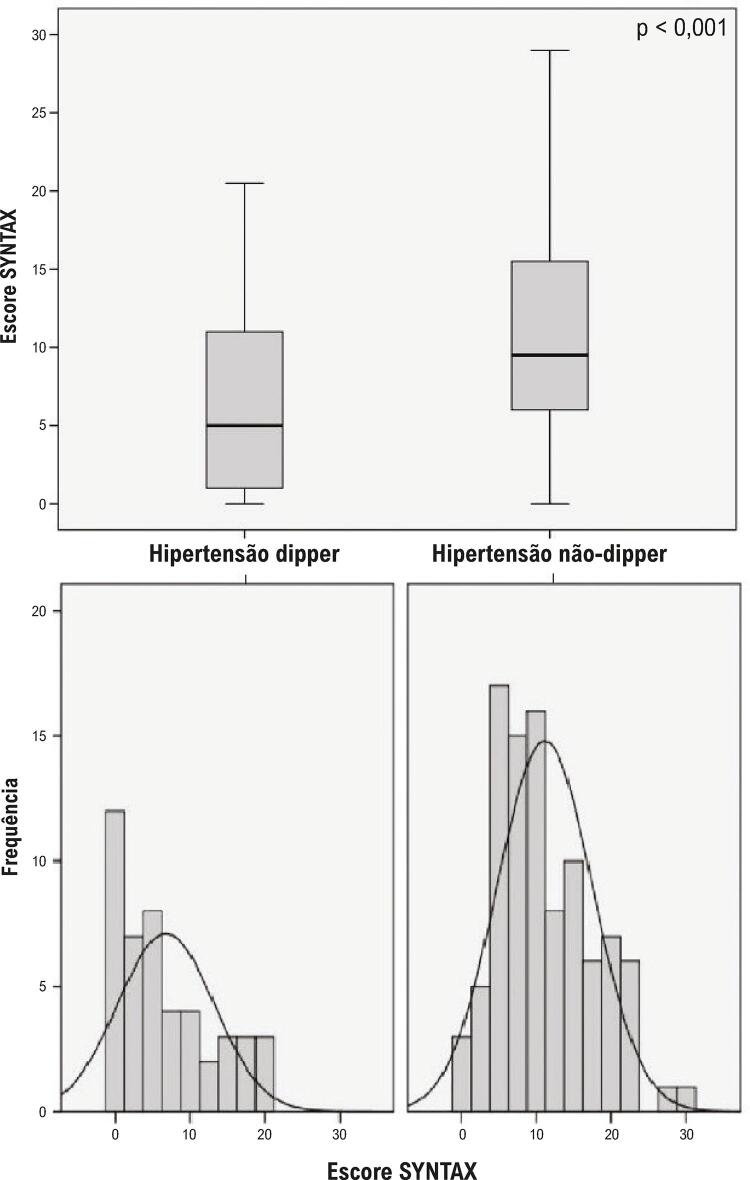
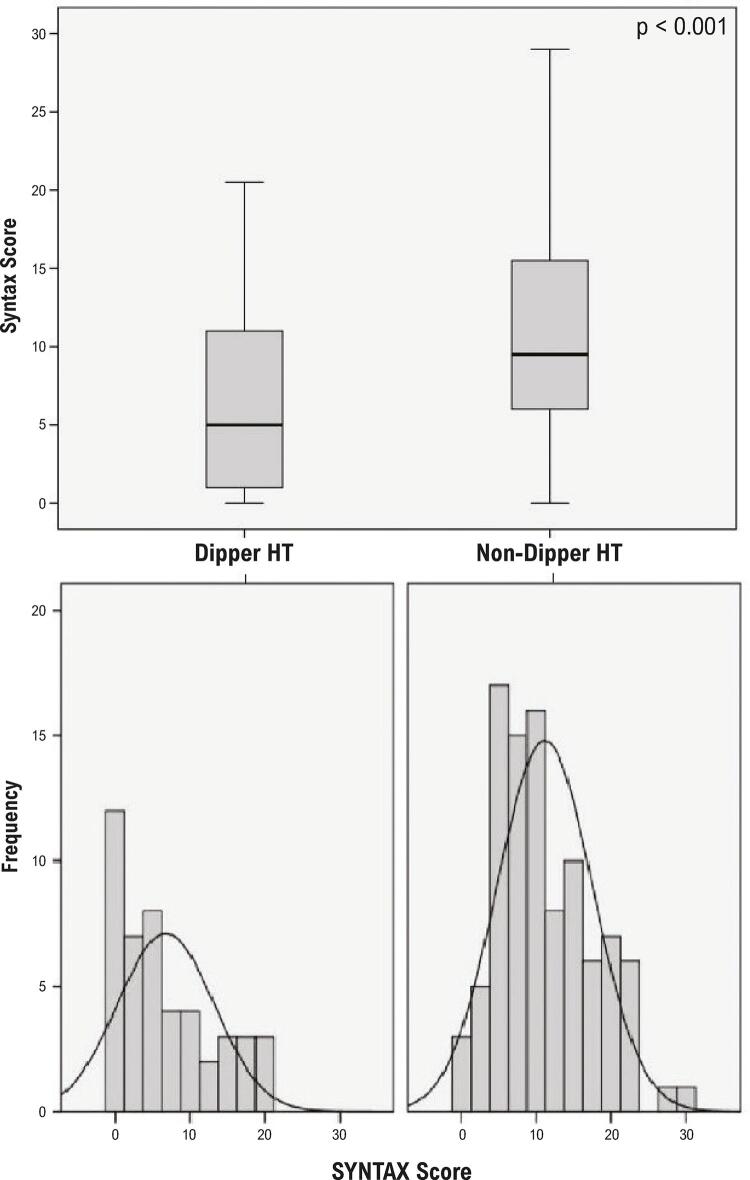
Results: The patients with non-dipper hypertension had higher SYNTAX score than the patients with dipper hypertension (11.12 ± 6.41 versus 6.74 ± 6.45, p < 0.0001). In a multivariable logistic regression model, non-dipper hypertension status (odds ratio: 5.159; 95% confidence interval: 2.246 to 11.852, p < 0.001), sex (p = 0.012) and low-density lipoprotein cholesterol (p = 0.008) emerged as independent predictors of high SYNTAX score.
Conclusions: The results of our study provide a possible additional mechanism linking abnormal circadian BP profile with coronary artery disease severity and complexity in patients with acute coronary syndrome.
Fundamento: Menor redução da pressão arterial (PA) noturna, conhecida como hipertensão não-dipper, é um forte preditor de morbimortalidade cardiovascular.
Objetivos: Este estudo visou investigar a relação entre a hipertensão não-dipper e a gravidade e complexidade da doença arterial coronariana usando o escore SYNTAX em pacientes hospitalizados com síndrome coronariana aguda.
Métodos: Foram selecionados 306 pacientes consecutivos com síndrome coronariana aguda. Pacientes clinicamente estáveis internados na unidade de terapia intensiva intermediária pelo menos 24 horas após a angiografia e/ou revascularização bem sucedida. Após os critérios de exclusão, foram incluídos 141 pacientes (34 mulheres e 107 homens; idade média 61 ± 11 anos). A hipertensão não-dipper foi definida como uma queda de 0% a 10% na PA sistólica média durante a noite em comparação com o dia, medida em intervalos de 1 hora, usando o mesmo dispositivo automático de medição de PA em monitores de beira de leito (Vismo PVM-2701; Nihon Kohden Corp., Tóquio, Japão). O escore SYNTAX foi calculado com uma calculadora online. Os preditores independentes do escore SYNTAX foram avaliados por meio de análise de regressão logística multivariada. P < 0,05 foi considerado estatisticamente significativo.
Resultados: Os pacientes com hipertensão não-dipper apresentaram escore SYNTAX maior do que os pacientes com hipertensão dipper (11,12 ± 6,41 versus 6,74 ± 6,45, p < 0,0001). Em um modelo de regressão logística multivariável, o status de hipertensão não dipper (odds ratio: 5,159; intervalo de confiança de 95%: 2,246 a 11,852, p < 0,001), sexo (p = 0,012) e colesterol de lipoproteína de baixa densidade (p = 0,008) emergiram como preditores independentes de alto escore SYNTAX.
Conclusões: Os resultados do nosso estudo fornecem um possível mecanismo adicional ligando o perfil anormal da PA circadiana à gravidade e à complexidade da doença arterial coronariana em pacientes com síndrome coronariana aguda.
Conflict of interest statement
Potencial conflito de interesses
Os autores declaram não haver conflito de interesses pertinentes.
Figures
Comment in
-
Can Attenuated Nocturnal Dipping be a Predictor of the Severity and Complexity of Coronary Artery Disease in Hospitalized Patients with Acute Coronary Syndrome?Arq Bras Cardiol. 2022 Jul;119(1):85-86. doi: 10.36660/abc.20220401. Arq Bras Cardiol. 2022. PMID: 35830104 Free PMC article. English, Portuguese. No abstract available.
References
-
- Fagard RH. Dipping Pattern of Nocturnal Blood Pressure in Patients with Hypertension. Expert Rev Cardiovasc Ther. 2009;7(6):599-605. doi: 10.1586/erc.09.35. - PubMed
-
- Hansen TW, Li Y, Boggia J, Thijs L, Richart T, Staessen JA. Predictive Role of the Nighttime Blood Pressure. Hypertension. 2011;57(1):3-10. doi: 10.1161/HYPERTENSIONAHA.109.133900. - PubMed
-
- Cuspidi C, Giudici V, Negri F, Sala C. Nocturnal Nondipping and Left Ventricular Hypertrophy in Hypertension: An Updated Review. Expert Rev Cardiovasc Ther. 2010;8(6):781-92. doi: 10.1586/erc.10.29. - PubMed
-
- Ohkubo T, Hozawa A, Yamaguchi J, Kikuya M, Ohmori K, Michimata M, et al. Prognostic Significance of the Nocturnal Decline in Blood Pressure in Individuals with and Without High 24-h Blood Pressure: The Ohasama study. J Hypertens. 2002;20(11):2183-9. doi: 10.1097/00004872-200211000-00017. - PubMed
-
- Staessen JA, Thijs L, Fagard R, O’Brien ET, Clement D, Leeuw PW, et al. Predicting Cardiovascular Risk Using Conventional vs Ambulatory Blood Pressure in Older Patients with Systolic Hypertension. Systolic Hypertension in Europe Trial Investigators. JAMA. 1999;282(6):539-46. doi: 10.1001/jama.282.6.539. - PubMed
MeSH terms
LinkOut - more resources
Full Text Sources
Medical