Uremic pruritus: pathophysiology, clinical presentation, and treatments
- PMID: 35545226
- PMCID: PMC9902728
- DOI: 10.23876/j.krcp.21.189
Uremic pruritus: pathophysiology, clinical presentation, and treatments
Abstract
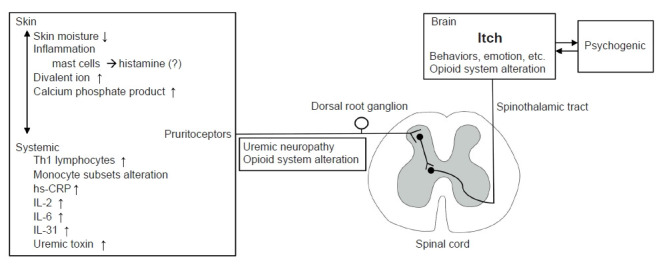
Uremic pruritus is one of the most common and bothersome symptoms in patients with end-stage renal disease. Most patients with uremic pruritus experience a prolonged and relapsing course and significant impairments of quality of life. The pathophysiology of uremic pruritus is not completely understood. A complex interplay among cutaneous biology and the nervous and immune systems has been implicated, with the involvement of various inflammatory mediators, neurotransmitters, and opioids. Uremic pruritus treatment outcomes are often unsatisfactory. Clinical trials have mostly been small in scale and have reported inconsistent results. Recent evidence shows that gabapentinoids, nalfurafine, and difelikefalin are effective for relieving uremic pruritus in hemodialysis patients. This review provides an overview of the epidemiology and proposed mechanisms of uremic pruritus, then highlights the manifestations of and clinical approach to uremic pruritus. Current evidence regarding treatment options, including topical treatments, treatment of underlying disease, phototherapy, and systemic treatments, is also outlined. With a better understanding of uremic pruritus, more therapeutic options can be expected in the near future.
Keywords: Chronic kidney failure; Chronic renal insufficiency; Gabapentin; Pregabalin; Pruritus.
Conflict of interest statement
All authors have no conflicts of interest to declare.
Figures
References
-
- Zucker I, Yosipovitch G, David M, Gafter U, Boner G. Prevalence and characterization of uremic pruritus in patients undergoing hemodialysis: uremic pruritus is still a major problem for patients with end-stage renal disease. J Am Acad Dermatol. 2003;49:842–846. - PubMed
-
- Chen HY, Chiu YL, Hsu SP, et al. Elevated C-reactive protein level in hemodialysis patients with moderate/severe uremic pruritus: a potential mediator of high overall mortality. QJM. 2010;103:837–846. - PubMed
-
- Narita I, Alchi B, Omori K, et al. Etiology and prognostic significance of severe uremic pruritus in chronic hemodialysis patients. Kidney Int. 2006;69:1626–1632. - PubMed
Grants and funding
- NHRI-EX110-11026PI/National Health Research Institutes
- NHRI-EX111-11026PI/National Health Research Institutes
- FEMH-EX110-11026PI/Far Eastern Memorial Hospital, New Taipei City, Taiwan
- MOST 109- 2635-B-532-001/Ministry of Science and Technology, Taiwan
- 11001-62-041/Department of Health, Taipei City Government, Taipei City, Taiwan
LinkOut - more resources
Full Text Sources