


Potential clinical utility of liquid biopsies in ovarian cancer
- PMID: 35545786
- PMCID: PMC9092780
- DOI: 10.1186/s12943-022-01588-8
Potential clinical utility of liquid biopsies in ovarian cancer
Abstract
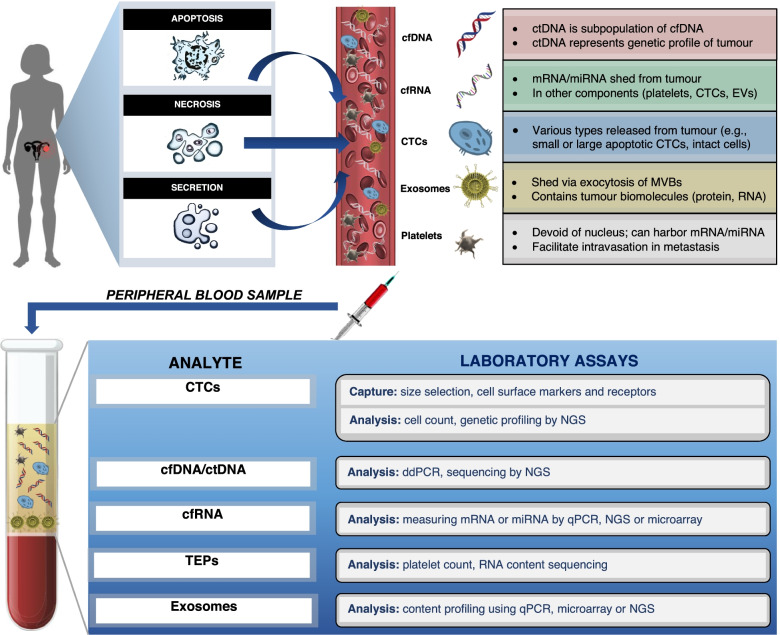
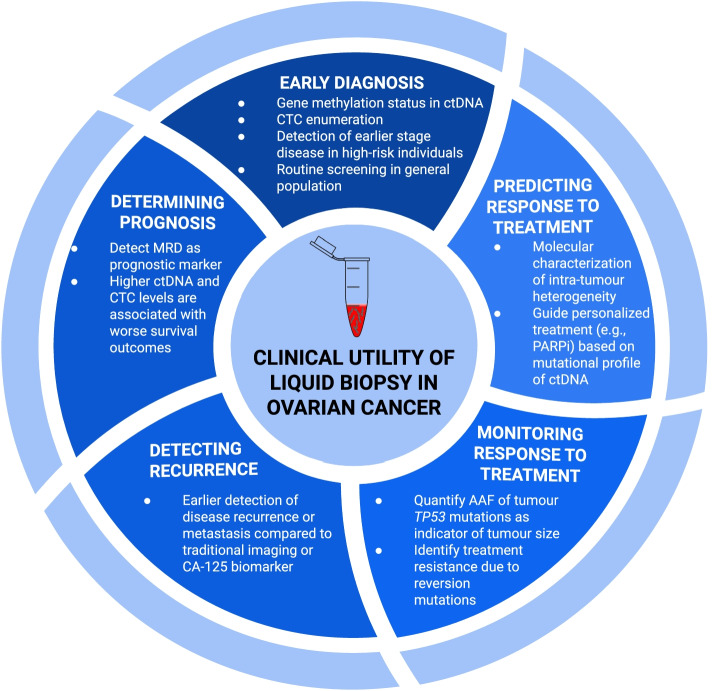
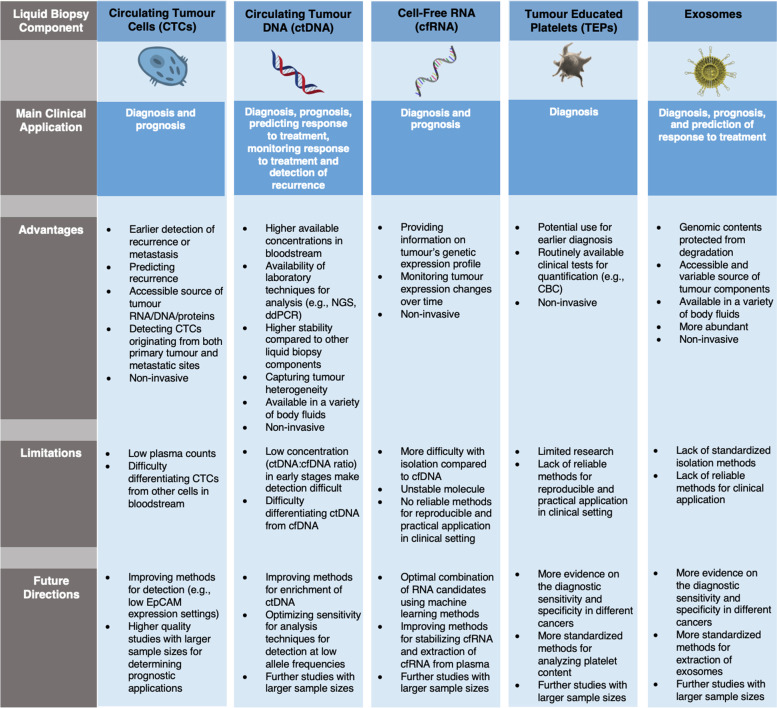
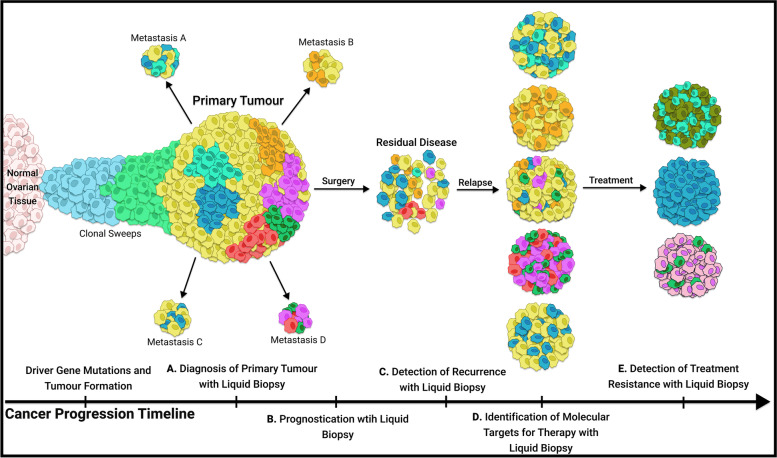
Ovarian cancer (OC) is the most lethal gynecologic malignancy worldwide. One of the main challenges in the management of OC is the late clinical presentation of disease that results in poor survival. Conventional tissue biopsy methods and serological biomarkers such as CA-125 have limited clinical applications. Liquid biopsy is a novel sampling method that analyzes distinctive tumour components released into the peripheral circulation, including circulating tumour DNA (ctDNA), circulating tumour cells (CTCs), cell-free RNA (cfRNA), tumour-educated platelets (TEPs) and exosomes. Increasing evidence suggests that liquid biopsy could enhance the clinical management of OC by improving early diagnosis, predicting prognosis, detecting recurrence, and monitoring response to treatment. Capturing the unique tumour genetic landscape can also guide treatment decisions and the selection of appropriate targeted therapies. Key advantages of liquid biopsy include its non-invasive nature and feasibility, which allow for serial sampling and longitudinal monitoring of dynamic tumour changes over time. In this review, we outline the evidence for the clinical utility of each liquid biopsy component and review the advantages and current limitations of applying liquid biopsy in managing ovarian cancer. We also highlight future directions considering the current challenges and explore areas where more studies are warranted to elucidate its emerging clinical potential.
© 2022. The Author(s).
Conflict of interest statement
The authors declared that they have no competing interests.
Figures
References
Publication types
MeSH terms
Substances
Grants and funding
LinkOut - more resources
Full Text Sources
Medical
Research Materials
Miscellaneous
