


Effects of sperm preparation techniques on sperm survivability and DNA fragmentation
- PMID: 35545843
- PMCID: PMC9112774
- DOI: 10.1177/03000605221097492
Effects of sperm preparation techniques on sperm survivability and DNA fragmentation
Abstract
Objective: This study was performed to determine the effect of swim-up (SU) and density gradient centrifugation (DGC) on sperm survival and DNA fragmentation.
Methods: Individual semen samples were analyzed before each was divided into two aliquots (half for SU and half for DGC) for calculation of sperm survival and the DNA fragmentation index (DFI). Sperm DNA fragmentation was determined using the sperm chromatin dispersion test.
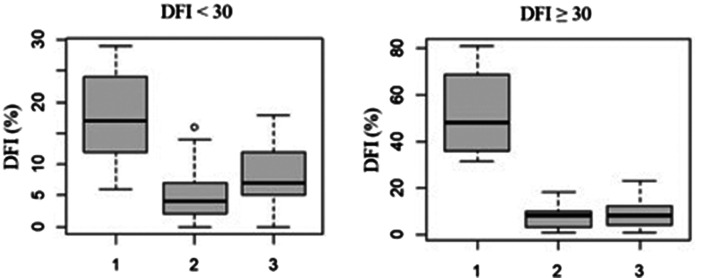
Results: The DFI of the 63 semen samples processed using both procedures was lower than that of the fresh semen samples. The DFI was significantly lower for samples processed using the SU than DGC method. In the sperm survival test, the SU technique was associated with increased sperm motility and vitality following preparation. After 24 hours, however, the concentration and percentage of surviving sperm were significantly lower in the SU than DGC group.
Conclusions: Both semen preparation techniques help to minimize sperm DNA fragmentation; however, when the DFI is <30%, the SU technique is more appropriate than DGC. While DGC may be superior for intrauterine insemination, the SU method may be preferable for in vitro fertilization or maturation.
Keywords: DNA fragmentation index; Swim-up; density gradient centrifugation; sperm DNA fragmentation; sperm preparation; sperm survival.
Figures
References
-
- Jackson RE, Bormann CL, Hassun PA, et al.. Effects of semen storage and separation techniques on sperm DNA fragmentation. Fertil Steril 2010; 94: 2626–2630. - PubMed
-
- Agarwal A, Allamaneni SS. The effect of sperm DNA damage on assisted reproduction outcomes. A review. Minerva Ginecol 2004; 56: 235–245. Available from: http://europepmc.org/abstract/MED/15258535 - PubMed
MeSH terms
LinkOut - more resources
Full Text Sources
