


Neural similarity between mentalizing and live social interaction during the transition to adolescence
- PMID: 35545954
- PMCID: PMC9374881
- DOI: 10.1002/hbm.25903
Neural similarity between mentalizing and live social interaction during the transition to adolescence
Abstract
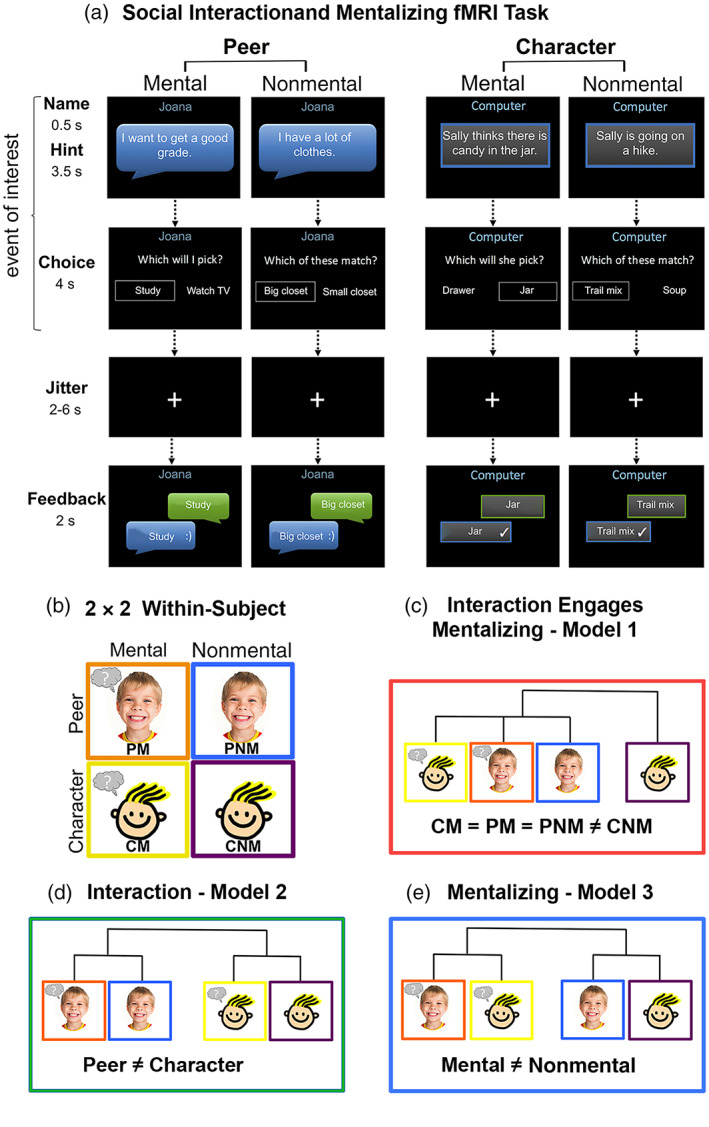
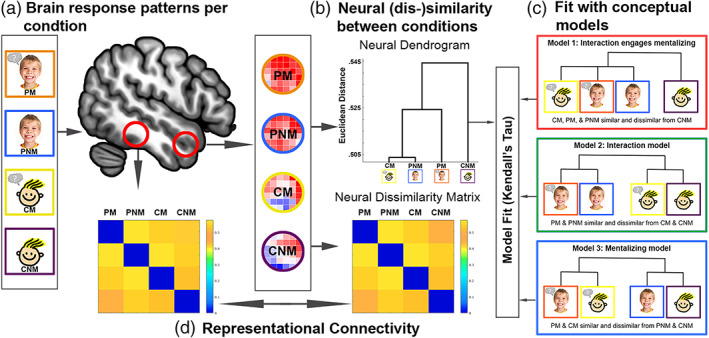
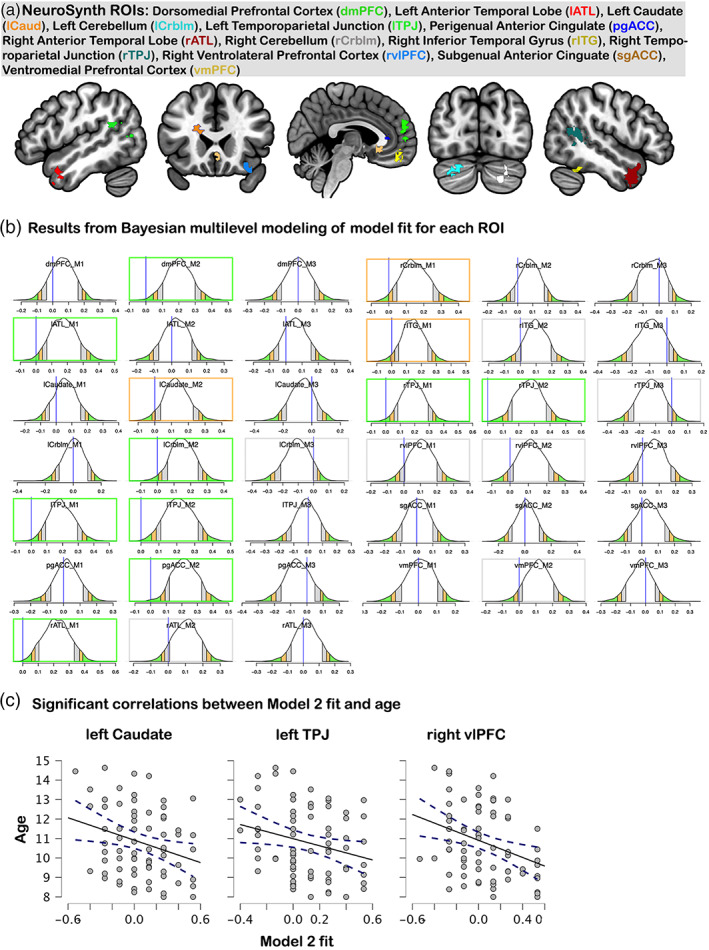
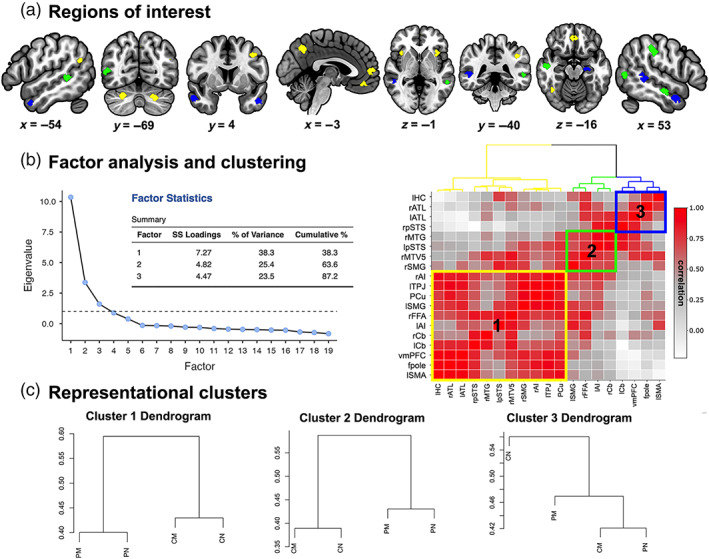
Social interactions are essential for human development, yet little neuroimaging research has examined their underlying neurocognitive mechanisms using socially interactive paradigms during childhood and adolescence. Recent neuroimaging research has revealed activity in the mentalizing network when children engage with a live social partner, even when mentalizing is not required. While this finding suggests that social-interactive contexts may spontaneously engage mentalizing, it is not a direct test of how similarly the brain responds to these two contexts. The current study used representational similarity analysis on data from 8- to 14-year-olds who made mental and nonmental judgments about an abstract character and a live interaction partner during fMRI. A within-subject, 2 (Mental/Nonmental) × 2 (Peer/Character) design enabled us to examine response pattern similarity between conditions, and estimate fit to three conceptual models of how the two contexts relate: (1) social interaction and mentalizing about an abstract character are represented similarly; (2) interactive peers and abstract characters are represented differently regardless of the evaluation type; and (3) mental and nonmental states are represented dissimilarly regardless of target. We found that the temporal poles represent mentalizing and peer interactions similarly (Model 1), suggesting a neurocognitive link between the two in these regions. Much of the rest of the social brain exhibits different representations of interactive peers and abstract characters (Model 2). Our findings highlight the importance of studying social-cognitive processes using interactive approaches, and the utility of pattern-based analyses for understanding how social-cognitive processes relate to each other.
Keywords: development; fMRI; mentalizing; social cognition; social interaction.
© 2022 The Authors. Human Brain Mapping published by Wiley Periodicals LLC.
Conflict of interest statement
The authors declare that they have no competing interests, financial or otherwise.
Figures
References
-
- Abel, T. J. , Rhone, A. E. , Nourski, K. V. , Kawasaki, H. , Oya, H. , Griffiths, T. D. , Howard, M. A. , & Tranel, D. (2015). Direct physiologic evidence of a Heteromodal convergence region for proper naming in human left anterior temporal lobe. Journal of Neuroscience, 35(4), 1513–1520. 10.1523/JNEUROSCI.3387-14.2015 - DOI - PMC - PubMed
-
- Alcalá‐López, D. , Smallwood, J. , Jefferies, E. , Van Overwalle, F. , Vogeley, K. , Mars, R. B. , Turetsky, B. I. , Laird, A. R. , Fox, P. T. , Eickhoff, S. B. , & Bzdok, D. (2018). Computing the social brain connectome across systems and states. Cerebral Cortex, 28(7), 2207–2232. 10.1093/cercor/bhx121 - DOI - PubMed
-
- Andrews‐Hanna, J. R. , Saxe, R. , & Yarkoni, T. (2014). Contributions of episodic retrieval and mentalizing to autobiographical thought: Evidence from functional neuroimaging, resting‐state connectivity, and fMRI meta‐analyses. NeuroImage, 91, 324–335. 10.1016/j.neuroimage.2014.01.032 - DOI - PMC - PubMed
MeSH terms
Grants and funding
LinkOut - more resources
Full Text Sources
