


Recombination drives the emergence of orf virus diversity: evidence from the first complete genome sequence of an Indian orf virus isolate and comparative genomic analysis
- PMID: 35546377
- PMCID: PMC9094603
- DOI: 10.1007/s00705-022-05443-5
Recombination drives the emergence of orf virus diversity: evidence from the first complete genome sequence of an Indian orf virus isolate and comparative genomic analysis
Abstract
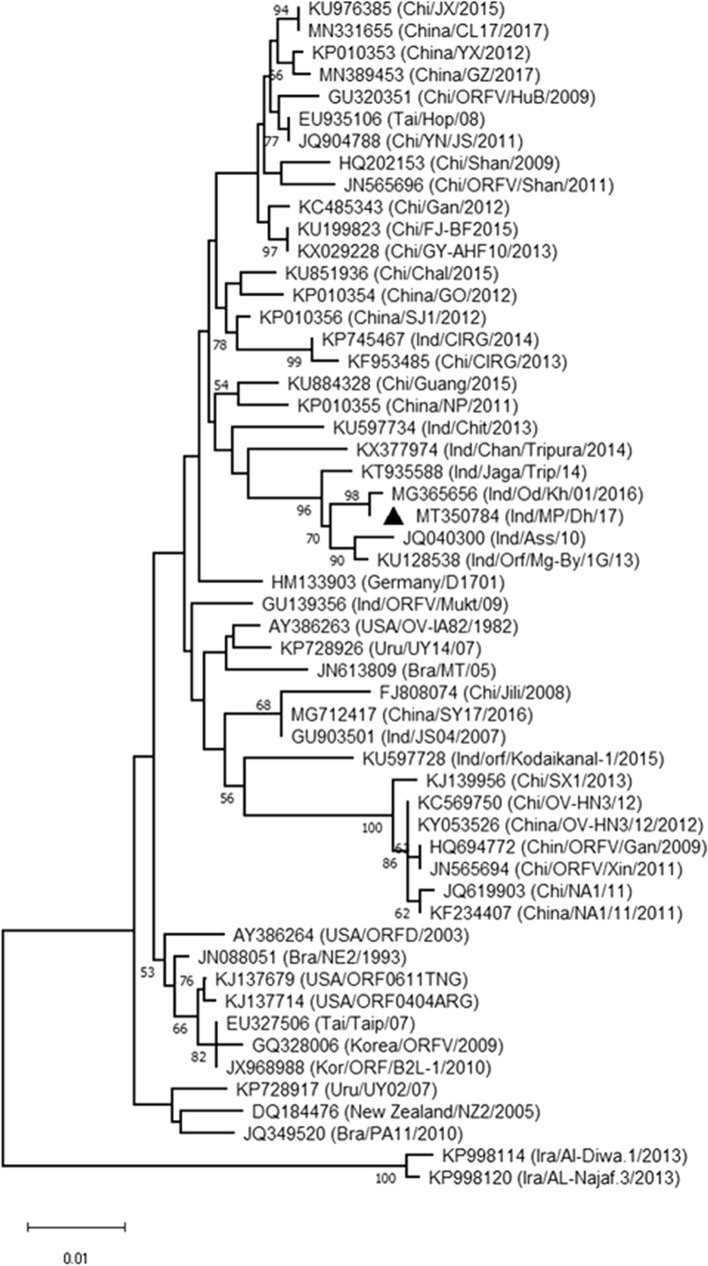
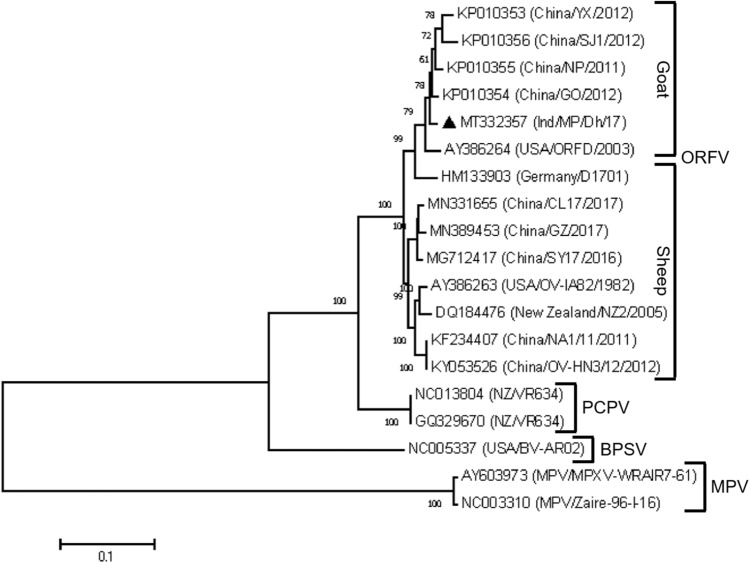
Contagious pustular dermatitis is a disease that primarily infects small ruminants and possesses zoonotic potential. It is caused by orf virus (ORFV), a member of the genus Parapoxvirus. In this study, we evaluated an ORFV outbreak in goats in Madhya Pradesh, a state in central India, during 2017. The transboundary potential of this virus was evaluated by constructing phylogenetic trees. The complete genome sequence of an ORFV isolate named Ind/MP/17 was found to be 139,807 bp in length with 63.7% GC content and 132 open reading frames (ORFs) flanked by 3,910-bp inverted terminal repeats (ITRs). An investigation into evolutionary parameters such as selection pressure (θ = dN/dS) and nucleotide diversity (π) demonstrated that ORFV has undergone purifying selection. A total of 40 recombination events were identified, 21 of which were evident in the Ind/MP/17 genome, indicating its ability to generate new variants.
© 2022. The Author(s), under exclusive licence to Springer-Verlag GmbH Austria, part of Springer Nature.
Conflict of interest statement
The authors declare no conflict of interest.
Figures
References
-
- Haig DM, Mercer AA. Ovine diseases. Orf. Vet Res. 1998;29:311–326. - PubMed
MeSH terms
LinkOut - more resources
Full Text Sources
Research Materials
Miscellaneous
