. 2022 Jun 28;13(3):e0103522.
doi: 10.1128/mbio.01035-22. Epub 2022 May 12.

Ferric Citrate Uptake Is a Virulence Factor in Uropathogenic Escherichia coli

Affiliations

Ferric Citrate Uptake Is a Virulence Factor in Uropathogenic Escherichia coli

Arwen E Frick-Cheng et al. mBio. .

Abstract

More than half of women will experience a urinary tract infection (UTI), with uropathogenic Escherichia coli (UPEC) causing ~80% of uncomplicated cases. Iron acquisition systems are essential for uropathogenesis, and UPEC strains encode highly diverse iron acquisition systems, underlining their importance. However, a recent UPEC clinical isolate, HM7, lacks this diversity and instead encodes the synthesis pathway for a sole siderophore, enterobactin. To determine if HM7 possesses unidentified iron acquisition systems, we performed RNA sequencing under iron-limiting conditions and demonstrated that the ferric citrate uptake system (fecABCDE and fecIR) was highly upregulated. Importantly, there are high levels of citrate within urine, some of which is bound to iron, and the fec system is enriched in UPEC isolates compared to fecal strains. Therefore, we hypothesized that HM7 and other similar strains use the fec system to acquire iron in the host. Deletion of both enterobactin biosynthesis and ferric citrate uptake (ΔfecAentB) abrogates use of ferric citrate as an iron source, and fecA provides an advantage in human urine in the absence of enterobactin. However, in a UTI mouse model, fecA is a fitness factor independent of enterobactin production, likely due to the action of host lipocalin-2 chelating ferrienterobactin. These findings indicate that ferric citrate uptake is used as an iron source when siderophore efficacy is limited, such as in the host during UTI. Defining these novel compensatory mechanisms and understanding the nutritional hierarchy of preferred iron sources within the urinary tract are important in the search for new approaches to combat UTI. IMPORTANCE UPEC, the primary causative agent of uncomplicated UTI, is responsible for five billion dollars in health care costs in the United States each year. Rates of antibiotic resistance are on the rise; therefore, it is vital to understand the mechanisms of UPEC pathogenesis to uncover potential targets for novel therapeutics. Iron acquisition systems used to obtain iron from sequestered host sources are essential for UPEC survival during UTI and have been used as vaccine targets to prevent infection. This study reveals the ferric citrate uptake system is another important iron acquisition system that is highly enriched in UPEC strains. Ferric citrate uptake has not previously been associated with UPEC isolates, underlining the importance of the continued study of these strains to fully understand their mechanisms of pathogenesis.

Keywords: Escherichia coli; iron acquisition; iron transport; pathogenesis; siderophores; urinary tract infection; virulence factors.


Conflict of interest statement

The authors declare no conflict of interest.

Figures
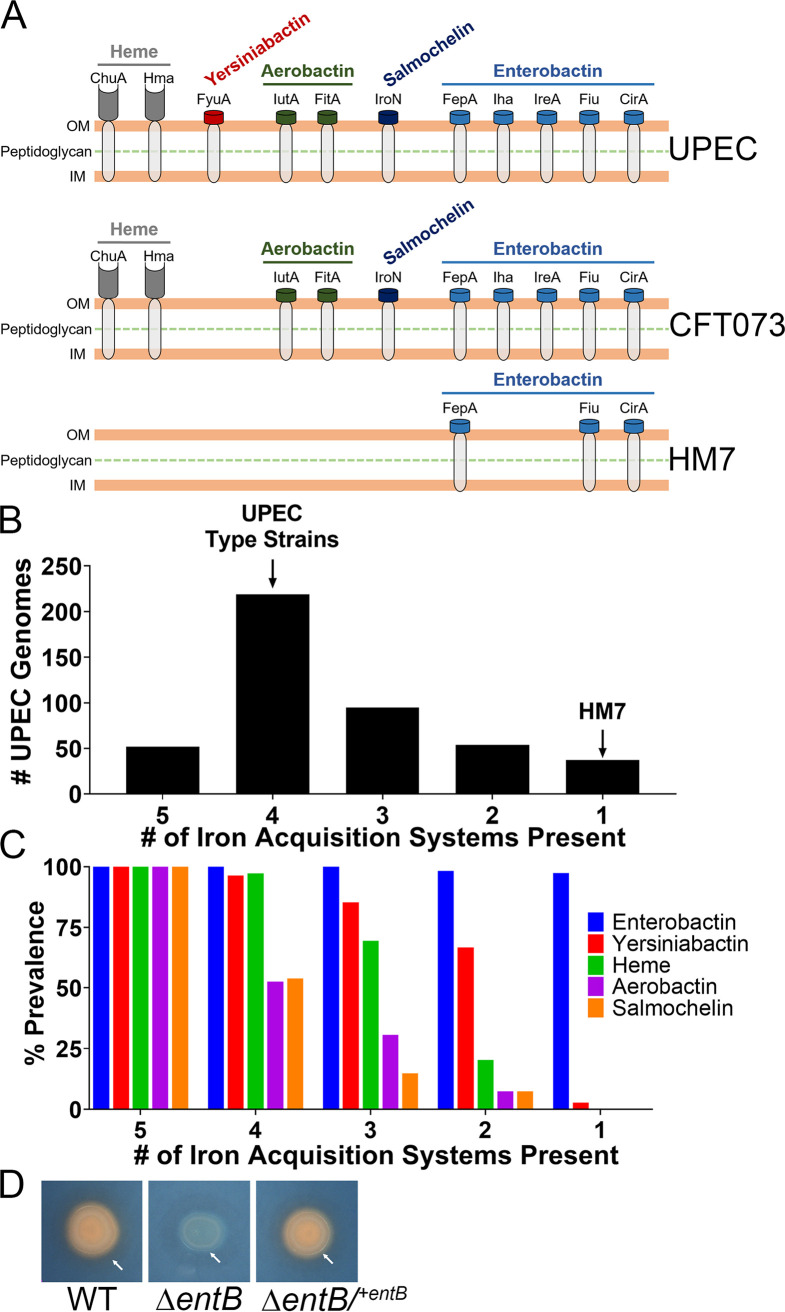
FIG 1
FIG 1
Clinical UPEC isolate HM7 encodes a single siderophore. (A) Models of siderophores, siderophore uptake receptors, and heme receptors in UPEC. “UPEC” indicates all known systems that have been found in UPEC, while “CFT073” and “HM7” illustrate the systems in each of these indicated strains. (B) Number of iron acquisition systems present in a cohort of 457 UPEC strains on the bioinformatics resource PATRIC. The five systems are composed of heme uptake (ChuA or Hma) and four siderophores (enterobactin, salmochelin, aerobactin, and yersiniabactin). Presence was determined by ≥80% protein identity and coverage of select genes for each system: heme uptake (chuA or hma), enterobactin (entB), salmochelin (iroB), aerobactin (iucA), and yersiniabactin (irp1). Sequence was used from strain CFT073 for all genes, with the exception of irp1, where strain 536 was used. Genes selected for siderophores are all involved in biosynthesis. Eleven percent of strains have five systems, 48% of strains have four, 21% of strains have three, 12% of strains have two, and 8% of strains have one. (C) The prevalence of each iron acquisition system within each subdivided group. (D) Siderophore production assayed through growth on CAS agar. Five microliters of overnight LB cultures was spotted onto CAS agar, and the cultures were grown overnight at 37°C. A change from blue to orange indicates siderophore activity. White arrows indicate the colonies in all three strains, and the orange halos in the WT and complemented strains are due to diffusion of secreted siderophore.
FIG 2
FIG 2
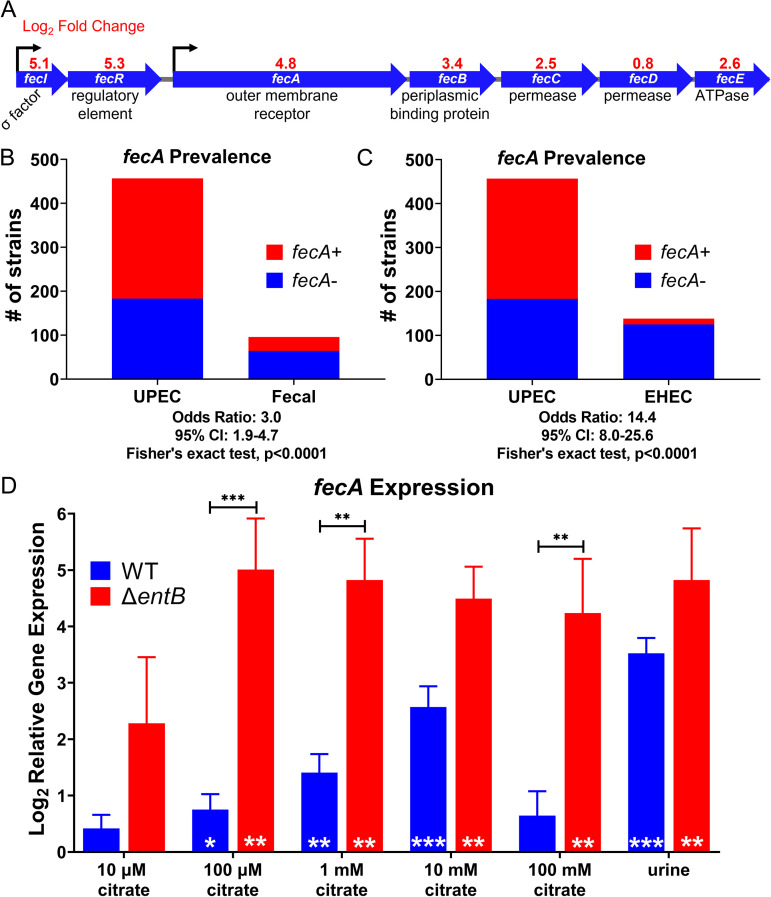
Ferric citrate uptake is a potential iron acquisition system in UPEC. (A) RNA-seq revealed the ferric citrate uptake system (fecABCDE and fecIR) is upregulated in WT HM7 under iron limitation (M9 supplemented with 36 μM FeCl3 versus M9 with 150 μM 2,2′-dipyridyl). (B) fecA is enriched in UPEC strains compared to E. coli fecal isolates. 457 UPEC strains and 96 fecal strains were analyzed; the presence of fecA was determined by ≥80% protein identity and coverage. (C) fecA is enriched in UPEC strains compared to enterohemorrhagic E. coli (EHEC). 457 UPEC strains and 139 EHEC strains were analyzed. (D) Gene expression of fecA in HM7 in either M9 medium with 0.4% glucose supplemented with increasing amounts of citrate or in pooled human urine. Gene expression was assayed through qRT-PCR. Bars are the mean from six biological replicates, and error bars are ±standard error of the mean (SEM). Black asterisks compare gene expression between WT and the ΔentB mutant using mixed-effects analysis with Sidak’s multiple test correction: **, P < 0.01; ***, P < 0.001. White asterisks indicate significant upregulation relative to M9 medium without citrate, determined by one-sample t test: *, P < 0.05; **, P < 0.01; ***, P < 0.001.
FIG 3
FIG 3
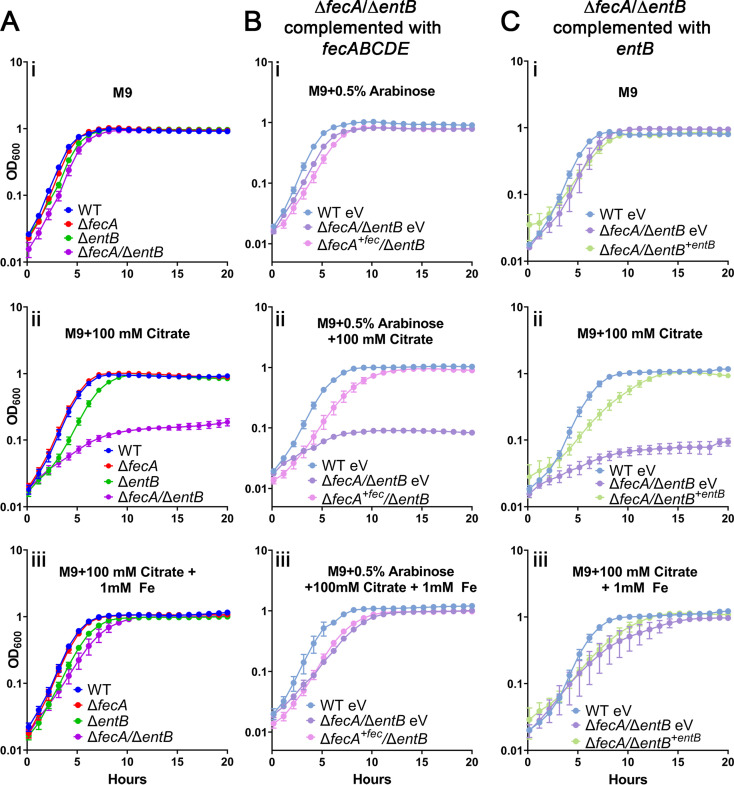
HM7 uses ferric citrate as an iron source through the fec system and enterobactin. Shown is growth in M9 medium (i), M9 medium supplemented with 100 mM citrate (ii), and M9 medium supplemented with both 100 mM citrate and 1 mM FeCl3 (iii) of (A) WT HM7, the ΔfecA and ΔentB single mutants, and the ΔfecAentB double mutant and (B) WT HM7 expressing empty pBAD vector (WT eV), the ΔfecAentB mutant expressing empty pBAD vector (ΔfecA/ΔentB eV), and the ΔfecAentB mutant complemented with fecABCDE (ΔfecA+fecentB). All media under these conditions were supplemented with 0.5% arabinose to induce expression. (C) WT HM7 expressing empty pGEN vector (WT eV), the ΔfecAentB mutant expressing empty pGEN vector (ΔfecA/ΔentB eV), and the ΔfecAentB mutant complemented with entB under the control of its native promoter (ΔfecA/ΔentB+entB). A 0.4% concentration of glucose was used as the sole carbon source under all conditions. Growth curves show averages from three to five biological replicates; error bars are SEM.
FIG 4
FIG 4
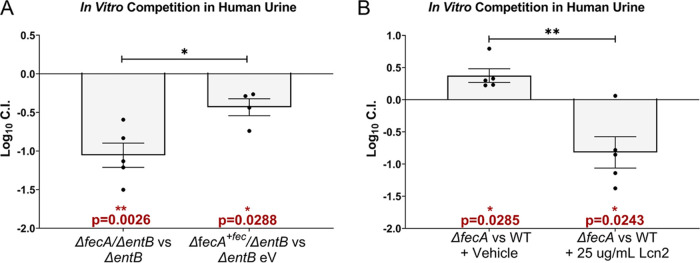
Ferric citrate uptake is an in vitro fitness factor in the absence of enterobactin. In vitro fitness of strains or conditions was determined in ex vivo pooled human urine. All strains were inoculated in a 1:1 ratio and grown for 24 h at 37°C with aeration, and their log10 competitive index (CI) was determined. A log10 CI of <0 indicates the first listed strain was outcompeted by the second. (A) The ΔentB mutant expressing an empty vector (ΔentB eV) and the ΔfecAentB double mutant with the fec operon complemented in transfecA+fec/ΔentB) were competed in urine supplemented with 0.5% arabinose and ampicillin (100 μg/mL). (B) WT HM7 was competed with the ΔfecA mutant, and the urine was supplemented with either recombinant human lipocalin (Lcn2) or an equal volume of vehicle (25% glycerol). Red asterisks indicate a significant competitive disadvantage, determined by one-sample t test: *, P < 0.05; **, P < 0.005. Black asterisks compare log10 CIs between indicated strains or conditions using an unpaired t test: *, P < 0.05; **, P < 0.005. Bars indicate the mean; error bars are ±SEM. Each dot represents an independent experiment.
FIG 5
FIG 5
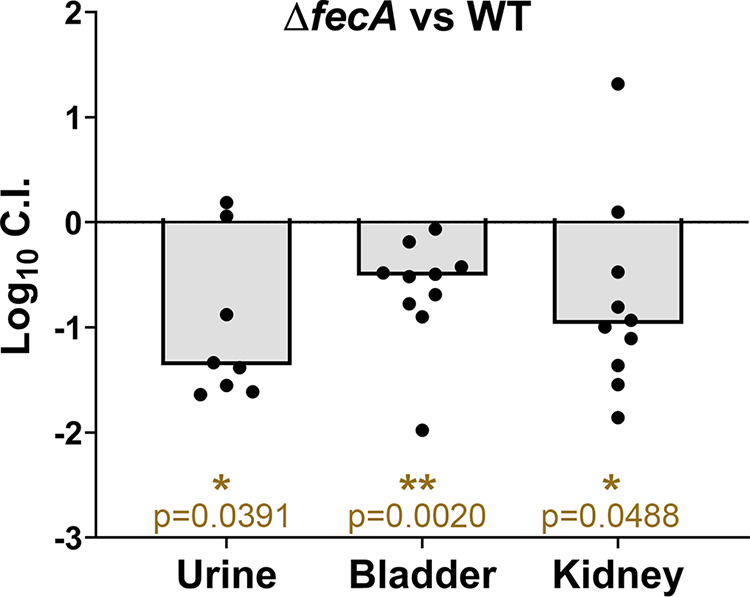
Ferric citrate uptake is an in vivo fitness factor. WT HM7 and the ΔfecA mutant were combined in a 1:1 ratio and transurethrally inoculated into CBA/J mice. Competitive indices were calculated 48 h postinfection. Symbols are individual animals; bars are the median. Significance was determined with Wilcoxon’s signed-rank test: *, P < 0.05; **, P < 0.005.
FIG 6
FIG 6
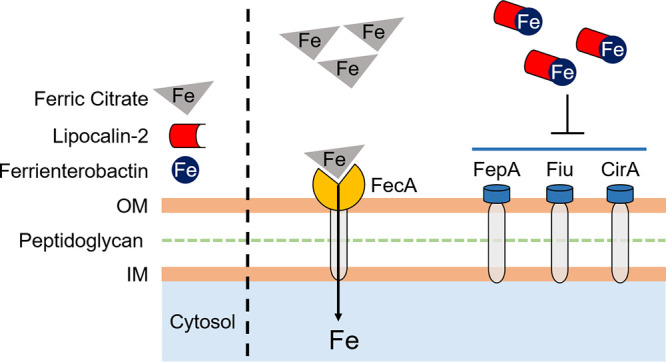
Model of UPEC utilization of ferric citrate. Clinical UPEC isolate HM7 encodes a biosynthetic pathway for a sole siderophore, enterobactin, as well as three enterobactin uptake receptors, FepA, Fiu, and CirA, to acquire iron during infection. In the presence of the immune protein Lcn2, enterobactin is rendered inaccessible to bacteria. In response, HM7 employs ferric citrate uptake through the fec system to acquire iron from the host.

References

    1. Foxman B. 1990. Recurring urinary tract infection: incidence and risk factors. Am J Public Health 80:331–333. doi:10.2105/ajph.80.3.331. - DOI - PMC - PubMed
    1. Flores-Mireles AL, Walker JN, Caparon M, Hultgren SJ. 2015. Urinary tract infections: epidemiology, mechanisms of infection and treatment options. Nat Rev Microbiol 13:269–284. doi:10.1038/nrmicro3432. - DOI - PMC - PubMed
    1. Gupta K, Hooton TM, Wobbe CL, Stamm WE. 1999. The prevalence of antimicrobial resistance among uropathogens causing acute uncomplicated cystitis in young women. Int J Antimicrob Agents 11:305–308. doi:10.1016/s0924-8579(99)00035-7. - DOI - PubMed
    1. O'Hanley P. 1996. Prospects for urinary tract infection vaccines, p 405–425. In Mobley HLT, Warren JW (ed), Urinary tract infections: molecular pathogenesis and clinical management. ASM Press, Washington, DC.
    1. Litwin MS, Saigal CS. 2007. Urinary Tract Infections. In Urologic Diseases in America. NIH Publication No. 12-7865, GPO, Washington, DC.

Publication types