


Current State of Potential Mechanisms Supporting Low Intensity Focused Ultrasound for Neuromodulation
- PMID: 35547195
- PMCID: PMC9081930
- DOI: 10.3389/fnhum.2022.872639
Current State of Potential Mechanisms Supporting Low Intensity Focused Ultrasound for Neuromodulation
Abstract
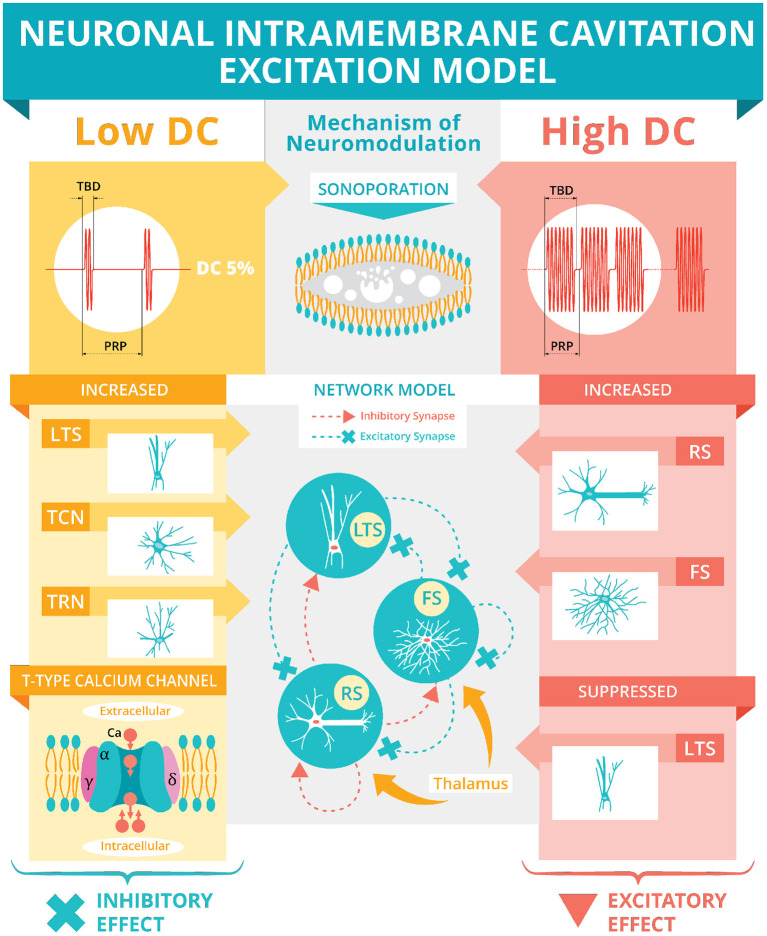
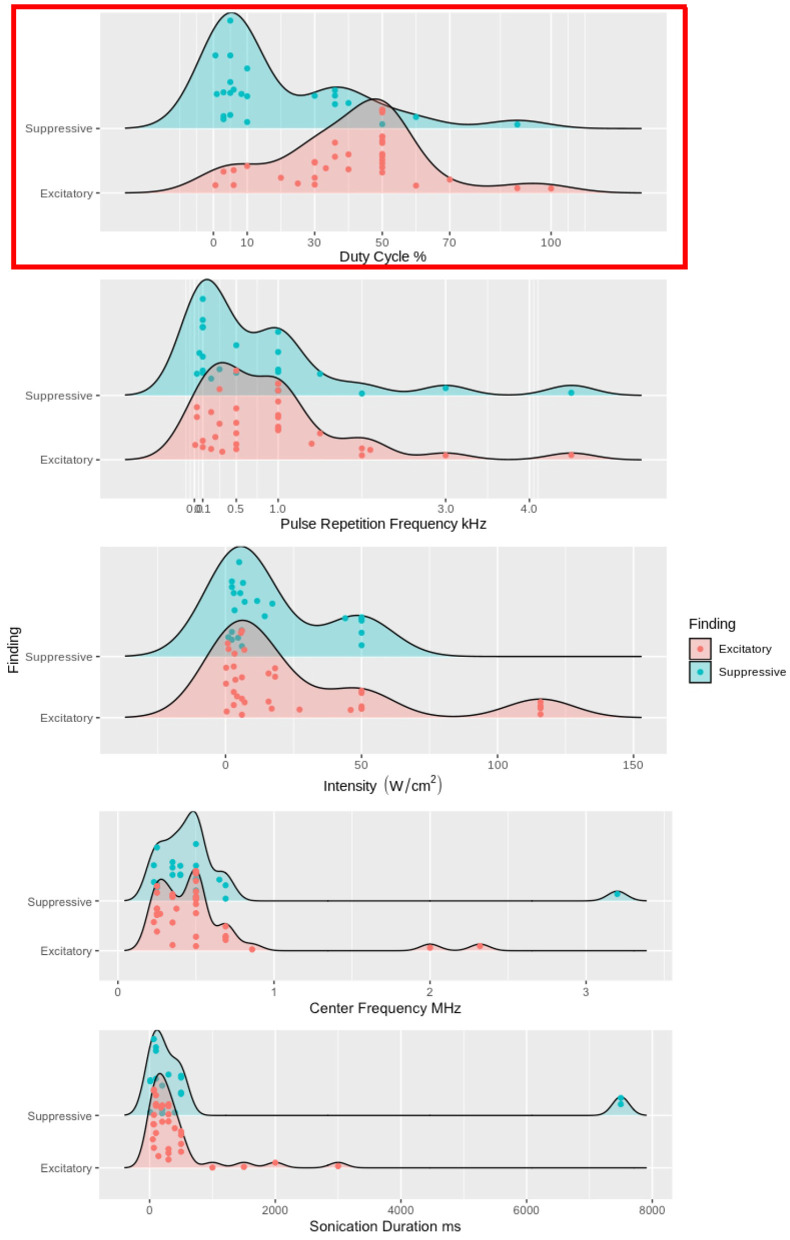
Low intensity focused ultrasound (LIFU) has been gaining traction as a non-invasive neuromodulation technology due to its superior spatial specificity relative to transcranial electrical/magnetic stimulation. Despite a growing literature of LIFU-induced behavioral modifications, the mechanisms of action supporting LIFU's parameter-dependent excitatory and suppressive effects are not fully understood. This review provides a comprehensive introduction to the underlying mechanics of both acoustic energy and neuronal membranes, defining the primary variables for a subsequent review of the field's proposed mechanisms supporting LIFU's neuromodulatory effects. An exhaustive review of the empirical literature was also conducted and studies were grouped based on the sonication parameters used and behavioral effects observed, with the goal of linking empirical findings to the proposed theoretical mechanisms and evaluating which model best fits the existing data. A neuronal intramembrane cavitation excitation model, which accounts for differential effects as a function of cell-type, emerged as a possible explanation for the range of excitatory effects found in the literature. The suppressive and other findings need additional theoretical mechanisms and these theoretical mechanisms need to have established relationships to sonication parameters.
Keywords: focused ultrasound stimulation; low intensity focused ultrasound; neuromodulation; non-invasive brain stimulation; transcranial focused ultrasound.
Copyright © 2022 Dell'Italia, Sanguinetti, Monti, Bystritsky and Reggente.
Conflict of interest statement
AB is founder and major stockholder of Brainsonix Corp. and is a patent holder in the field of FUS brainstimulation. The remaining authors declare that the research was conducted in the absence of any commercial or financial relationships that could be construed as a potential conflict of interest.
Figures
References
-
- Ai L., Mueller J. K., Grant A., Eryaman Y., Legon W. (2016). Transcranial focused ultrasound for BOLD fMRI signal modulation in humans, in 2016 38th Annual International Conference of the IEEE Engineering in Medicine and Biology Society (Orlando, FL: IEEE; ), 1758–1761. 10.1109/EMBC.2016.7591057 - DOI - PubMed
Publication types
LinkOut - more resources
Full Text Sources
