


Using ways of knowing in nursing to develop educational strategies that support knowledge mobilization
- PMID: 35548260
- PMCID: PMC8975233
- DOI: 10.1002/pne2.12037
Using ways of knowing in nursing to develop educational strategies that support knowledge mobilization
Abstract
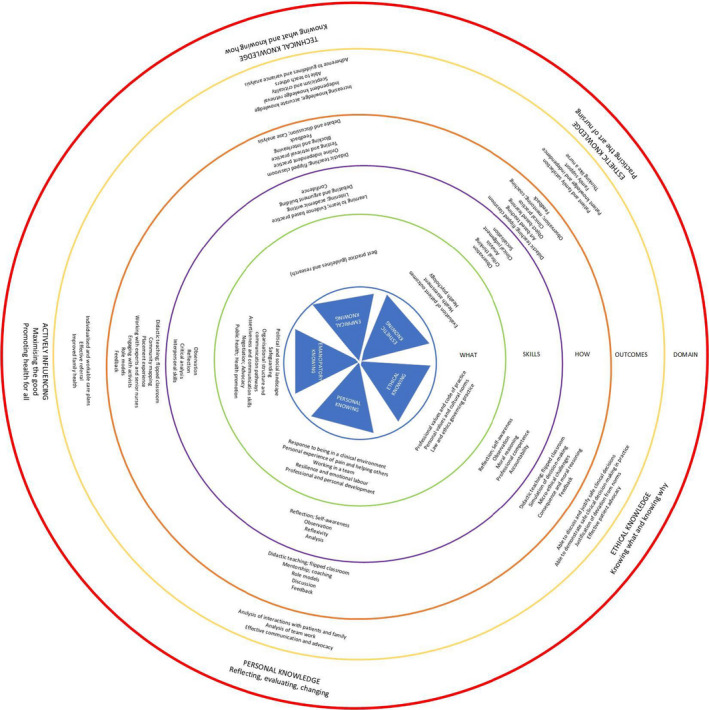
There are continued challenges in achieving effective pain management for children and young people (CYP). Research has found several barriers to effective CYP pain management, which include, but are not limited to, deficiencies in knowledge among nurses and other healthcare professionals. Calls for improvements in and an increase in pain education ensue, in the expectation that an increase in knowledge will lead to an improved pain care for patients. Educational initiatives, as reported in the literature, have tended to focus on increasing empirical knowledge which has not resulted in the anticipated improvements in practice. An exploration of Carper's and Chinn & Kramer's five ways of knowing helps demonstrate why an over-reliance on empirics fails to equip nurses for the realities of clinical practice and does not facilitate knowledge mobilization or improvements in pain care for CYP. In this paper, we explore these ways of knowing to produce a model for knowledge mobilization in (pain) education. Our model puts forward a multifaceted approach to education using the active learning principles which supports and equip nurses to become effective pain practitioners.
Keywords: knowledge mobilization; nurse education; pain.
© 2020 The Authors. Paediatric and Neonatal Pain published by John Wiley & Sons Ltd.
Figures
References
-
- Gagnon MM, Hadjistavropoulos T, Hampton AJ, Stinson J. A Systematic review of knowledge translation (KT) in pediatric pain: Focus on health care providers. Clin J Pain. 2016;32:972‐990. - PubMed
-
- Avian A, Messerer B, Wunsch G, Weinberg A, Kiesling AS, Berghold A. Postoperative paediatric pain prevalence: A retrospective analysis in a university teaching hospital. Int J Nurs Stud. 2016;62:36‐43. - PubMed
-
- Coffelt TA, Bauer BD, Carroll AE. Inpatient characteristics of the child admitted with chronic pain. Pediatrics. 2013;132:e422‐e429. - PubMed
-
- King S, Chambers CT, Huguet A, et al. The epidemiology of chronic pain in children and adolescents revisited: a systematic review. Pain. 2011;152:2729‐2738. - PubMed
-
- Kozlowski LJ, Kost‐Byerly S, Colantuoni E, et al. Pain prevalence, intensity, assessment and management in a hospitalized pediatric population. Pain Manag Nurs. 2014;15:22‐35. - PubMed
Publication types
LinkOut - more resources
Full Text Sources