


The molecular neurobiology and neuropathology of opioid use disorder
- PMID: 35548327
- PMCID: PMC9090195
- DOI: 10.1016/j.crneur.2021.100023
The molecular neurobiology and neuropathology of opioid use disorder
Abstract
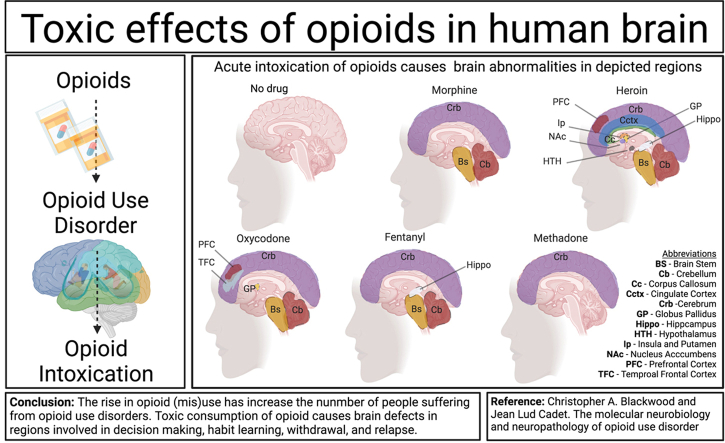
The number of people diagnosed with opioid use disorder has skyrocketed as a consequence of the opioid epidemic and the increased prescribing of opioid drugs for chronic pain relief. Opioid use disorder is characterized by loss of control of drug taking, continued drug use in the presence of adverse consequences, and repeated relapses to drug taking even after long periods of abstinence. Patients who suffer from opioid use disorder often present with cognitive deficits that are potentially secondary to structural brain abnormalities that vary according to the chemical composition of the abused opioid. This review details the neurobiological effects of oxycodone, morphine, heroin, methadone, and fentanyl on brain neurocircuitries by presenting the acute and chronic effects of these drugs on the human brain. In addition, we review results of neuroimaging in opioid use disorder patients and/or histological studies from brains of patients who had expired after acute intoxication following long-term use of these drugs. Moreover, we include relevant discussions of the neurobiological mechanisms involved in promoting abnormalities in the brains of opioid-exposed patients. Finally, we discuss how novel strategies could be used to provide pharmacological treatment against opioid use disorder.
Keywords: Fentanyl; Heroin; Methadone; Neuroimaging; Oxycodone; Postmortem.
Conflict of interest statement
The authors declare that they have no known competing financial interests or personal relationships that could have appeared to influence the work reported in this paper.
Figures


References
-
- Adamides A.A., Cooper D.J., Rosenfeldt F.L., Bailey M.J., Pratt N., Tippett N.…Rosenfeld J.V. Focal cerebral oxygenation and neurological outcome with or without brain tissue oxygen-guided therapy in patients with traumatic brain injury. Acta Neurochir. 2009;151(11):1399–1409. doi: 10.1007/s00701-009-0398-y. - DOI - PubMed
-
- Bach P., Frischknecht U., Reinhard I., Bekier N., Demirakca T., Ende G.…Hermann D. Impaired working memory performance in opioid-dependent patients is related to reduced insula gray matter volume: a voxel-based morphometric study. Eur. Arch. Psychiatr. Clin. Neurosci. 2019 doi: 10.1007/s00406-019-01052-7. - DOI - PubMed
Grants and funding
LinkOut - more resources
Full Text Sources
